
Antiques, Decorative and Fine Arts Auction

Antiques, Decorative and Fine Arts Auction
Lot 71: Carlo Scarpa for Venini Murano Sommerso Bowl with Gold Inclusions, Signed, c. Late 1930s–1940s
2026-04-25T15:00:00Z
Start price: CAD $50
Lot 71:
Carlo Scarpa for Venini Murano Sommerso Bowl with Gold Inclusions, Signed, c. Late 1930s–1940s
Description
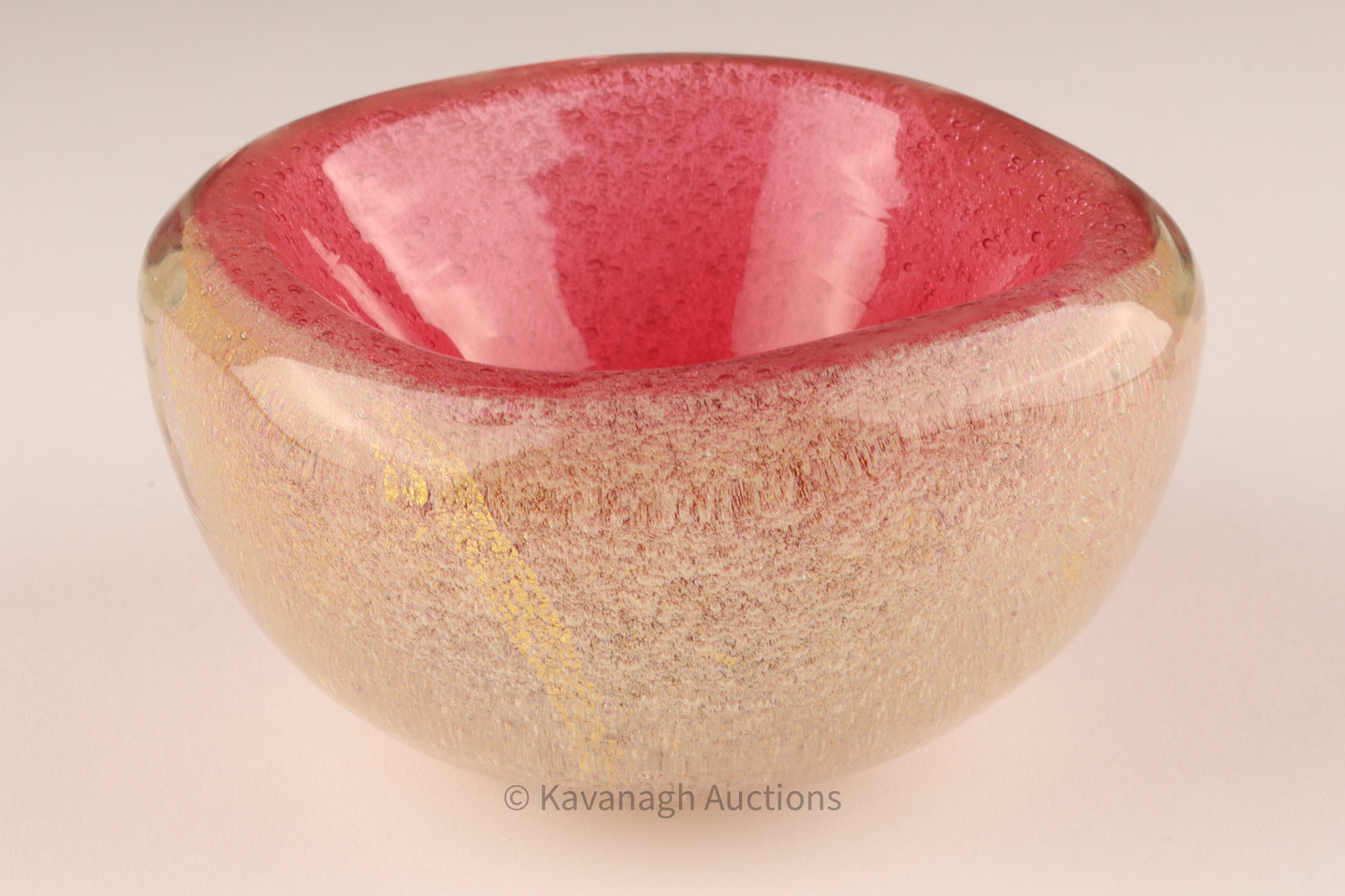
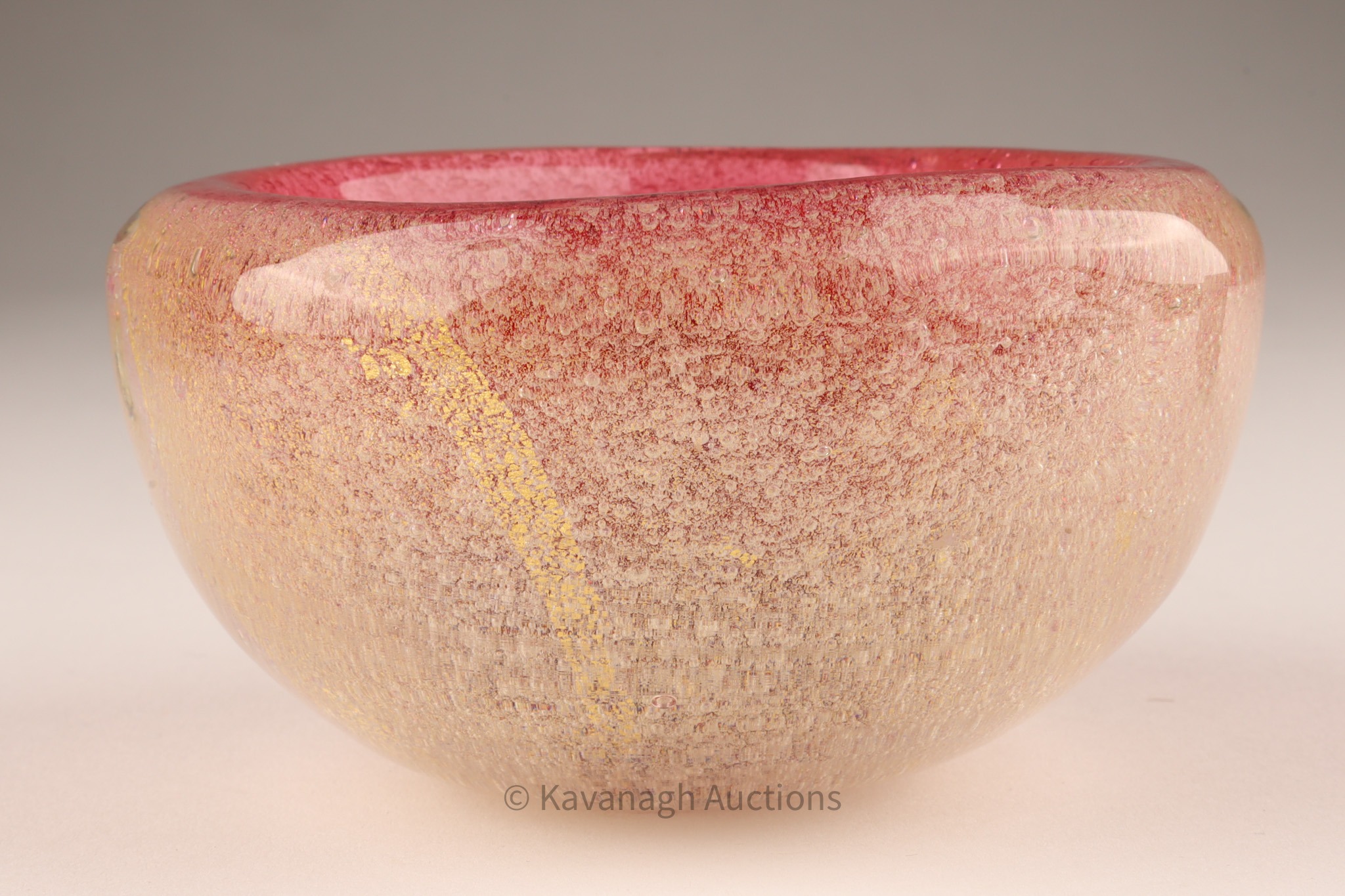
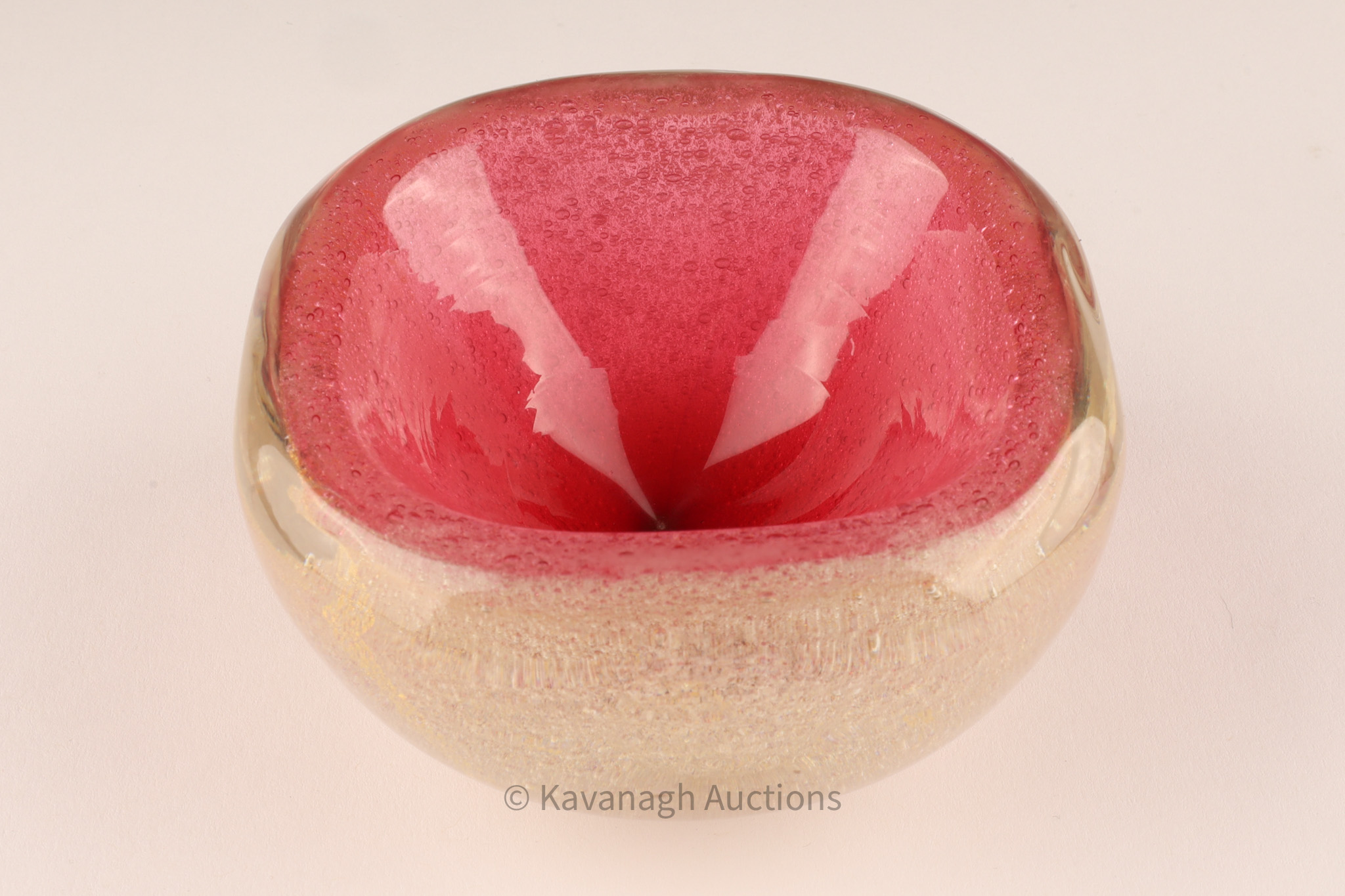
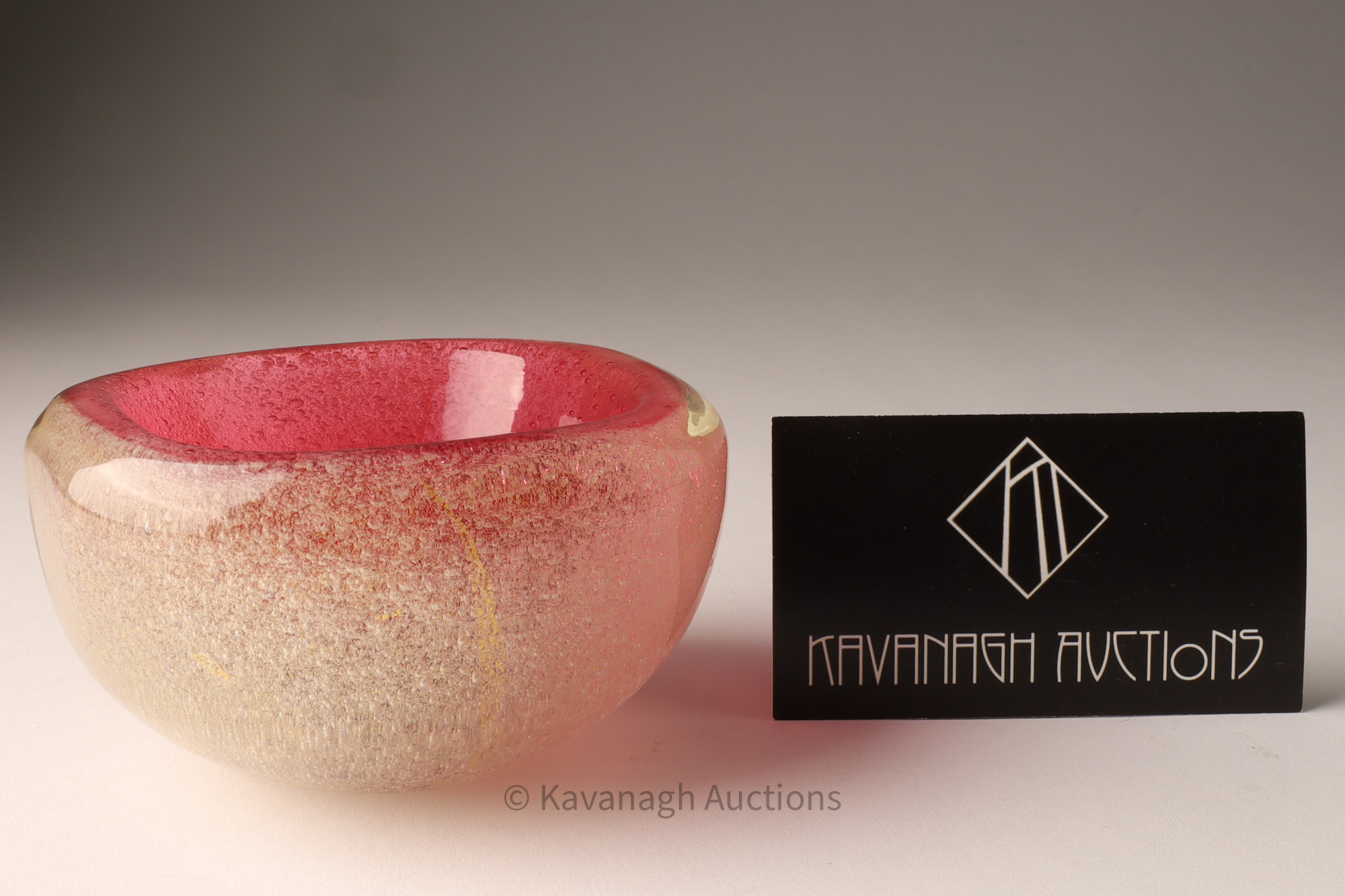
A substantial and visually rich Murano glass bowl designed by Carlo Scarpa for Venini & C., dating to the late 1930s–1940s.
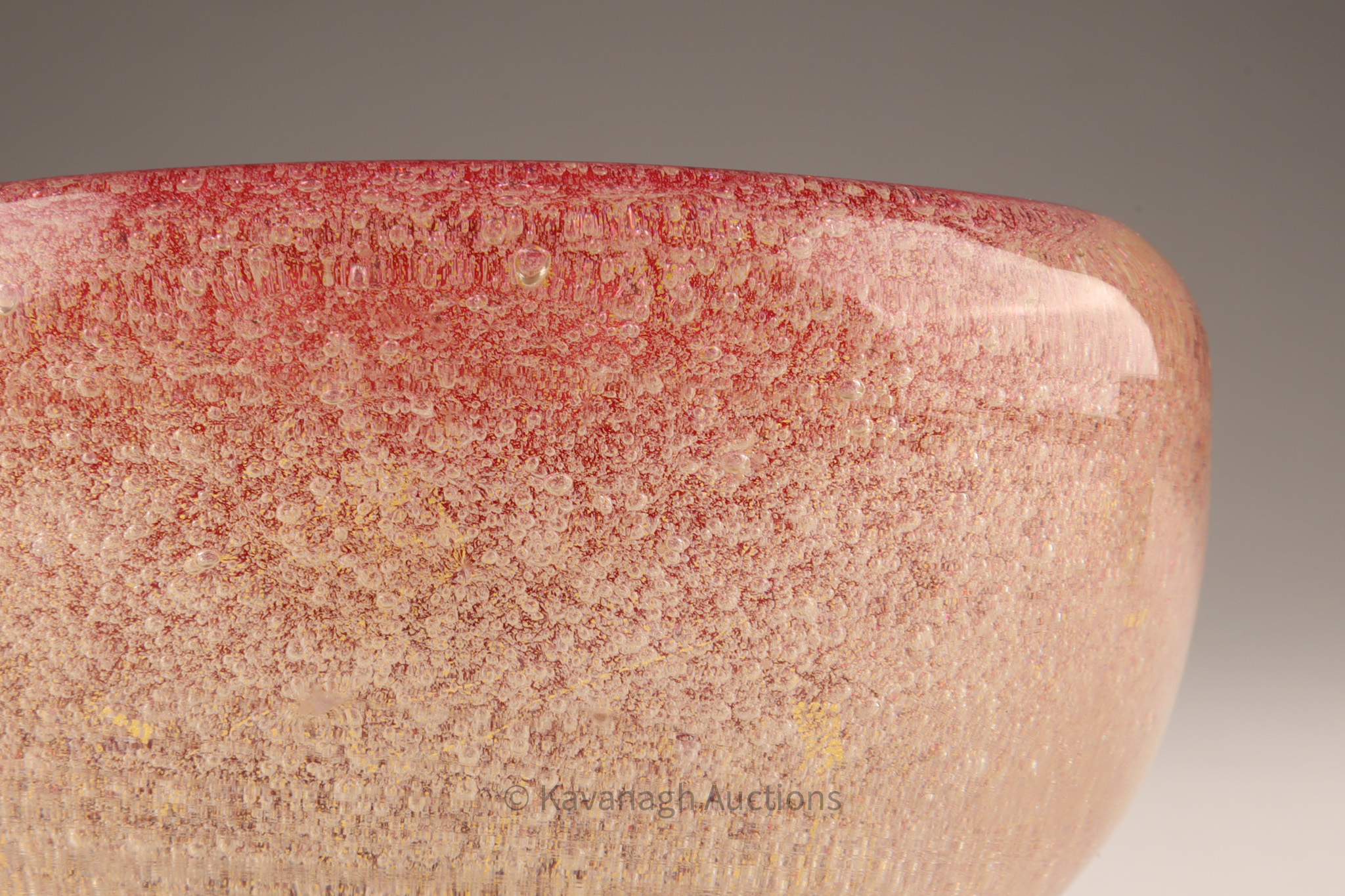
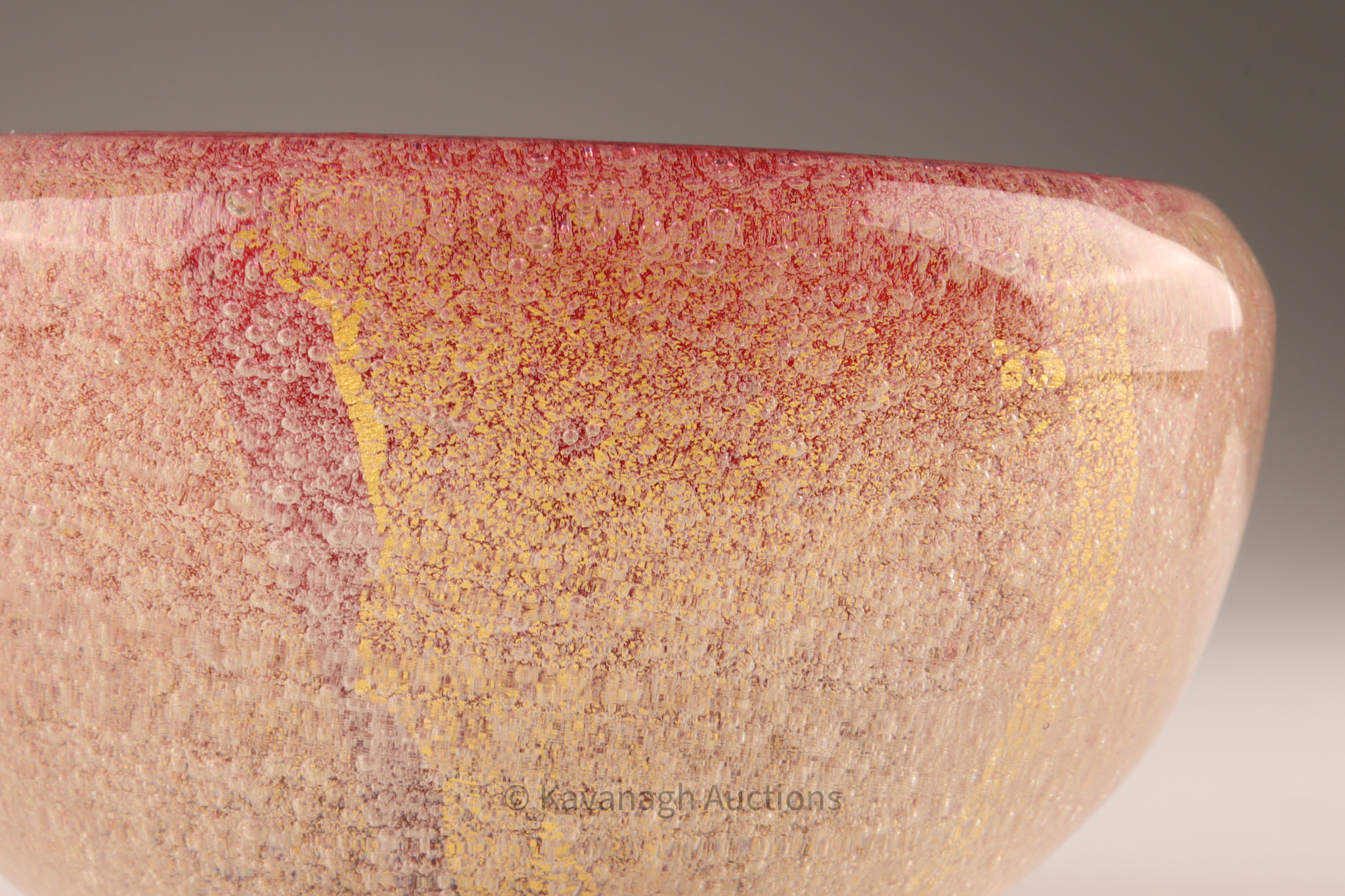
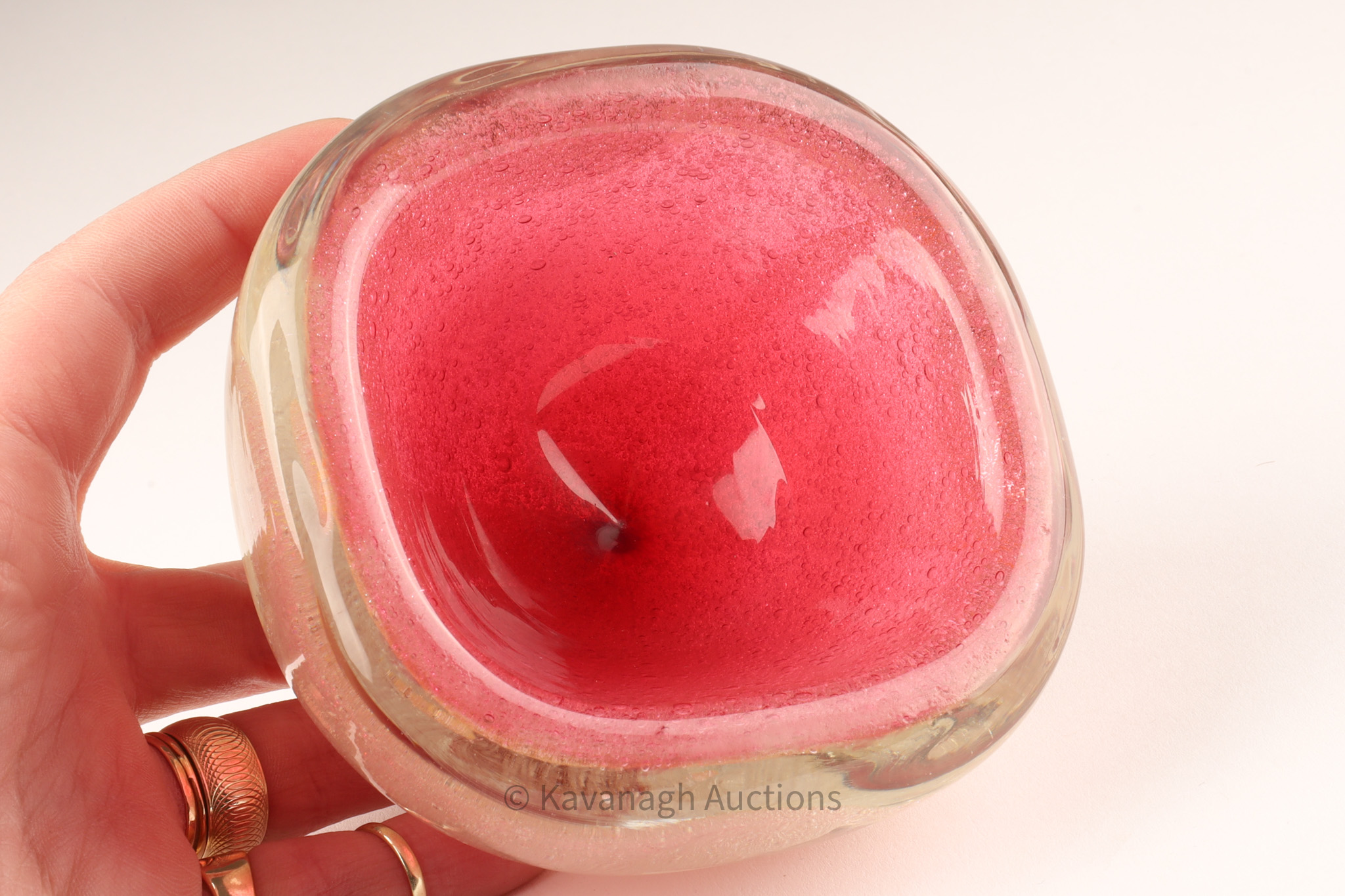
The vessel is executed in thick-walled sommerso construction, featuring a deep ruby-toned interior encased within a clear outer layer. Suspended between these strata are dense micro-bubble inclusions and scattered gold foil, producing a luminous, textural surface with pronounced optical depth. The composition demonstrates a sophisticated interplay of color, light, and internal structure, hallmarks of Scarpa’s early design language at Venini.
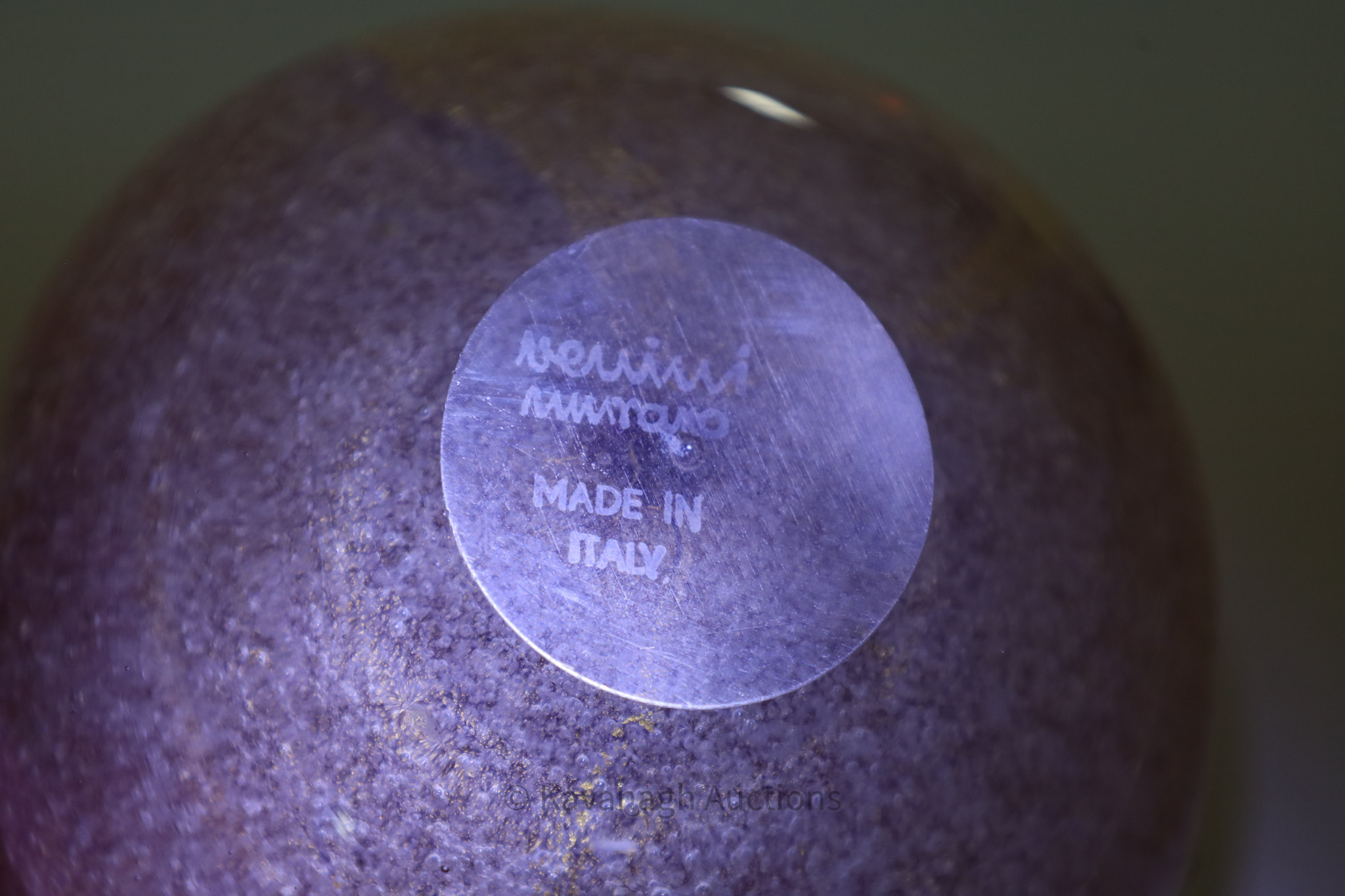
The underside is finished with a polished lens pontil and bears a four-line acid-etched signature:
VENINI MURANO MADE IN ITALY
Details
Designer: Carlo Scarpa (1906–1978)
Manufacturer: Venini & C.
Origin: Murano, Italy
Date: Circa late 1930s–1940s
Technique: Sommerso with air and gold foil inclusions
Material: Hand-blown glass
Color: Ruby interior with clear casing and gold inclusions
Signature: Acid-etched “VENINI MURANO MADE IN ITALY” (four-line mark)
Dimensions: Approx. 10 cm diameter (3¾ in.); height approx. 6 cm (2¼ in.)
Condition
Very good overall condition
Light surface wear and base abrasions consistent with age
No cracks, chips, or restorations observed
Catalogue Note
Carlo Scarpa’s early work for Venini in the late 1930s represents a critical moment in the evolution of modern Murano glass, where traditional techniques were reinterpreted through a more architectural and materially expressive lens.
Comparable finishes are illustrated in I Vetri di un Architetto (see p. 110), while closely related forms appear (see p. 205, no. 30), situating this example within Scarpa’s documented Venini production. The presence of the four-line acid-etched mark supports a dating in the late 1930s to 1940s, aligning with the period in which such signatures became more consistently applied.
Share this lot: