
Antiques, Decorative and Fine Arts Auction

Antiques, Decorative and Fine Arts Auction
Lot 70: Carlo Scarpa for Venini “a Bolle” (Bullicante) Bowl, Amber Glass, Signed Venini Murano Italia, c. 1946–1955
2026-04-25T15:00:00Z
Start price: CAD $50
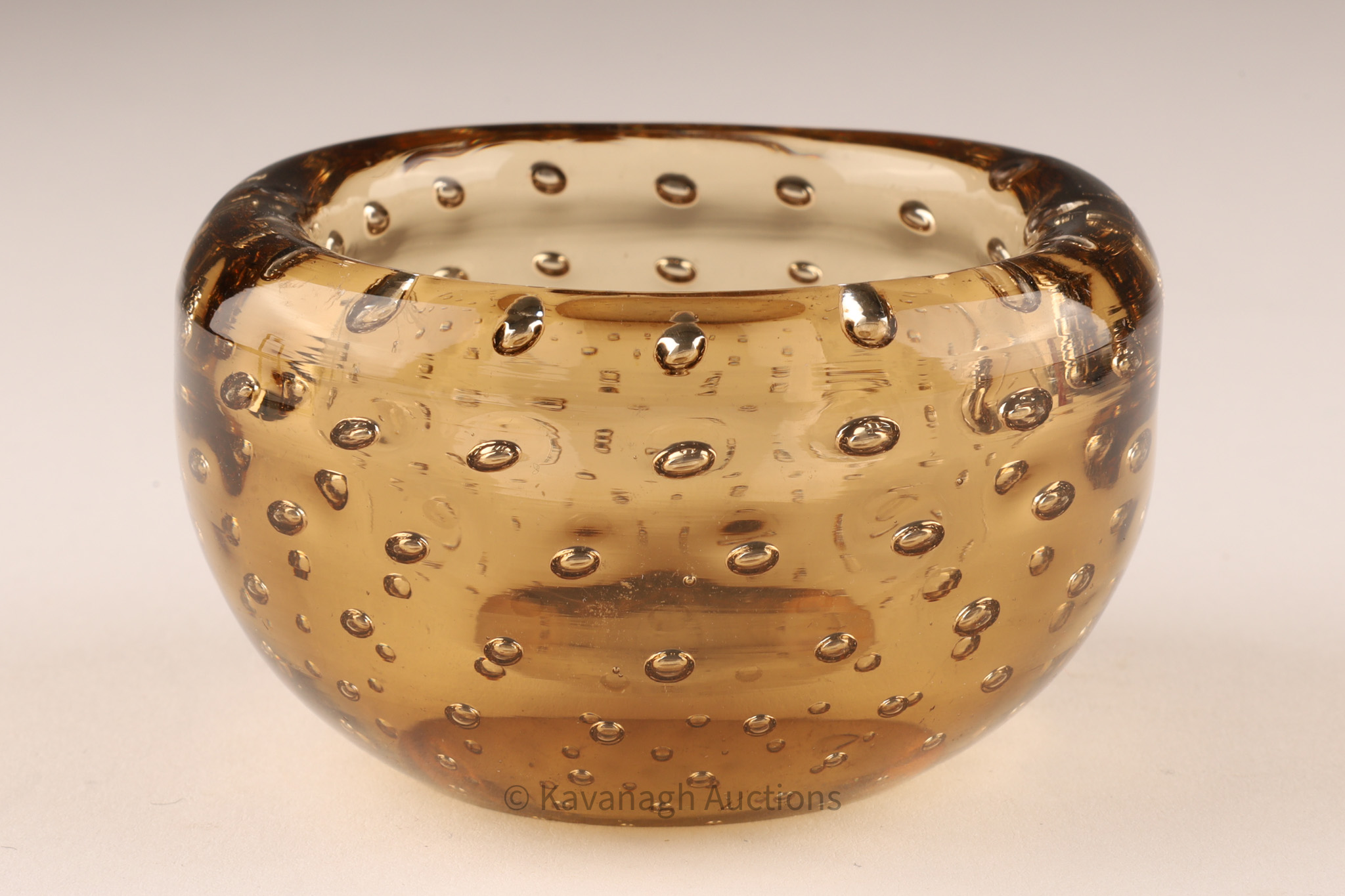
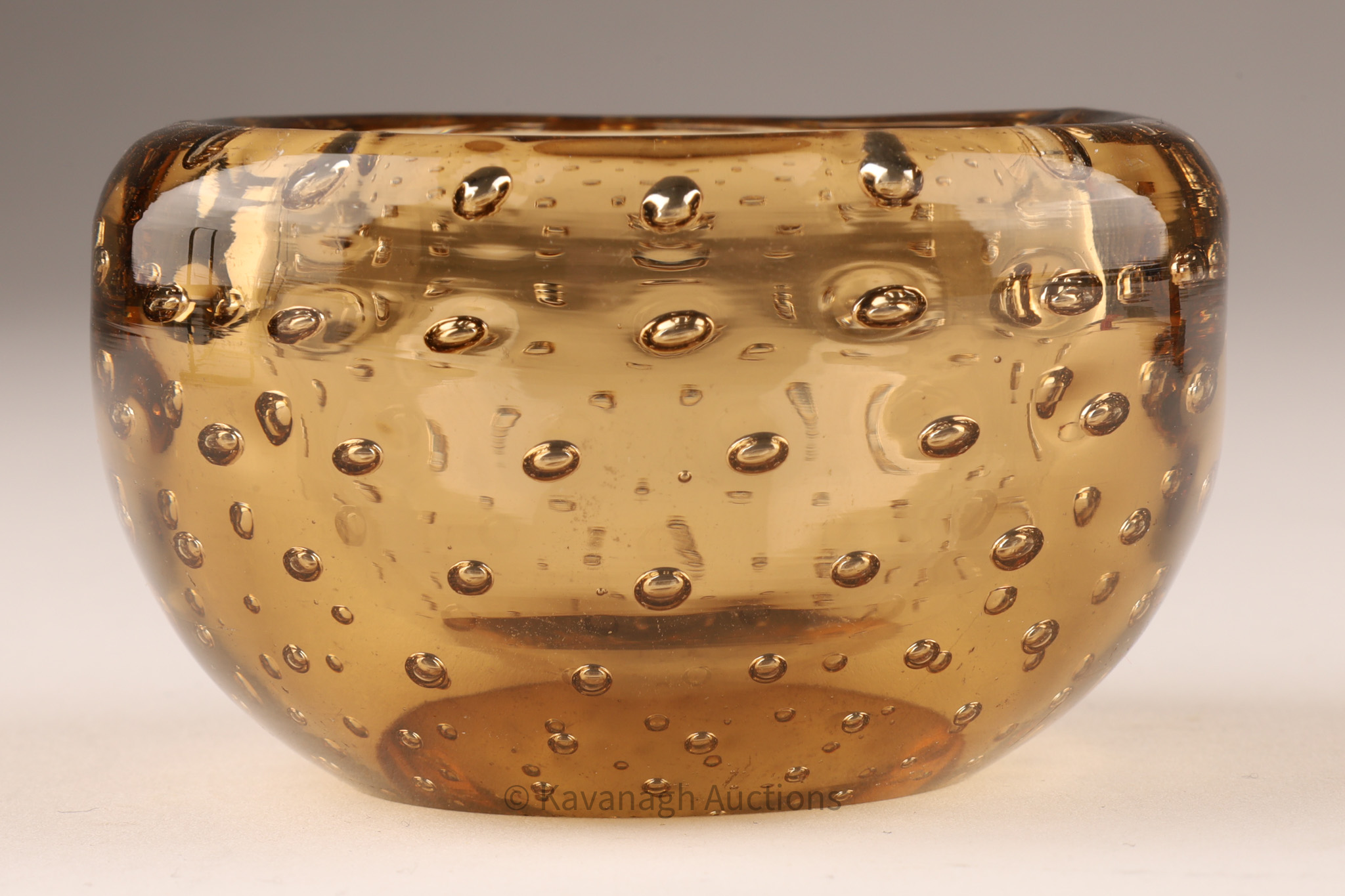
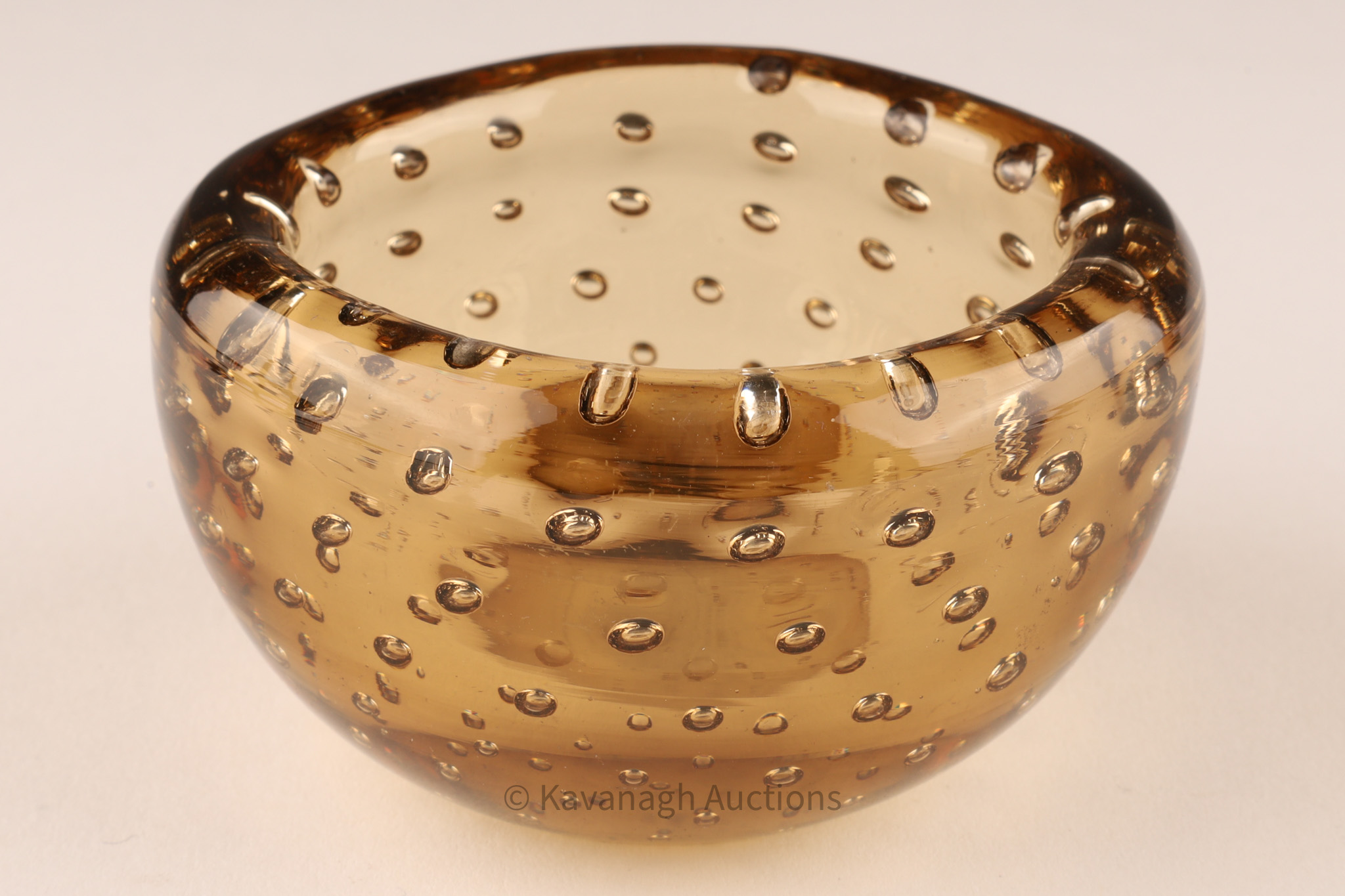
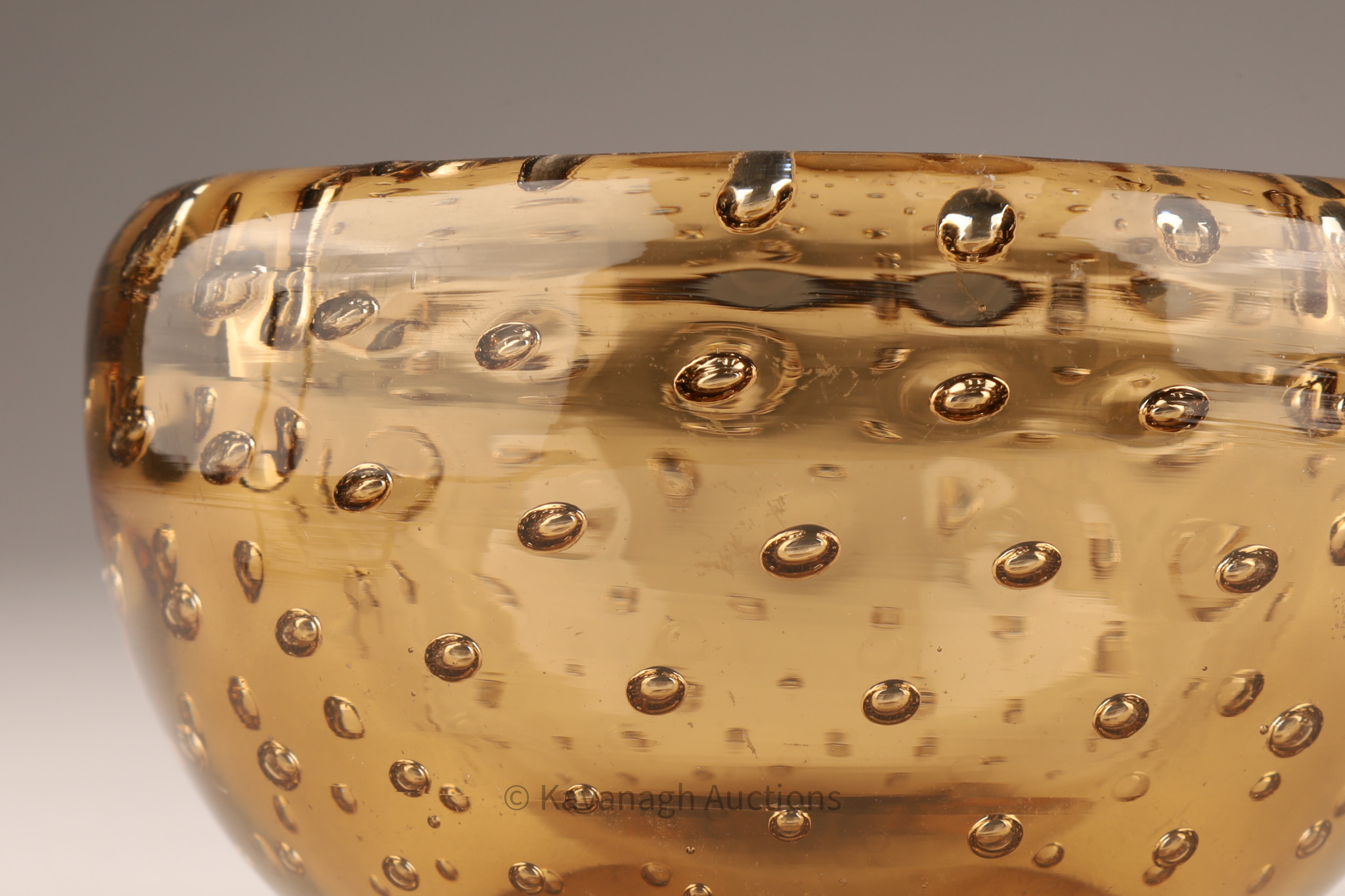
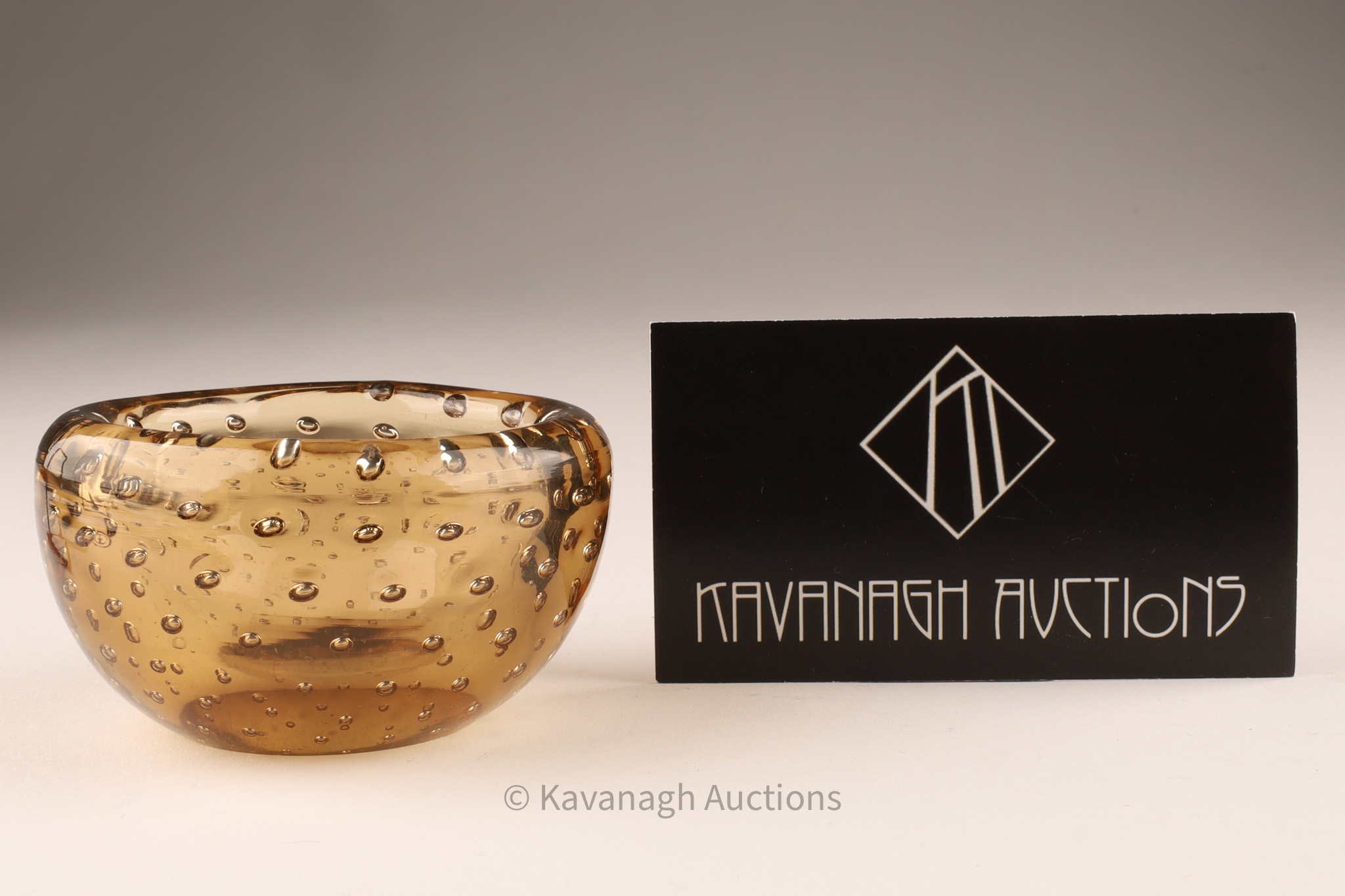
Lot 70:
Carlo Scarpa for Venini “a Bolle” (Bullicante) Bowl, Amber Glass, Signed Venini Murano Italia, c. 1946–1955
Description
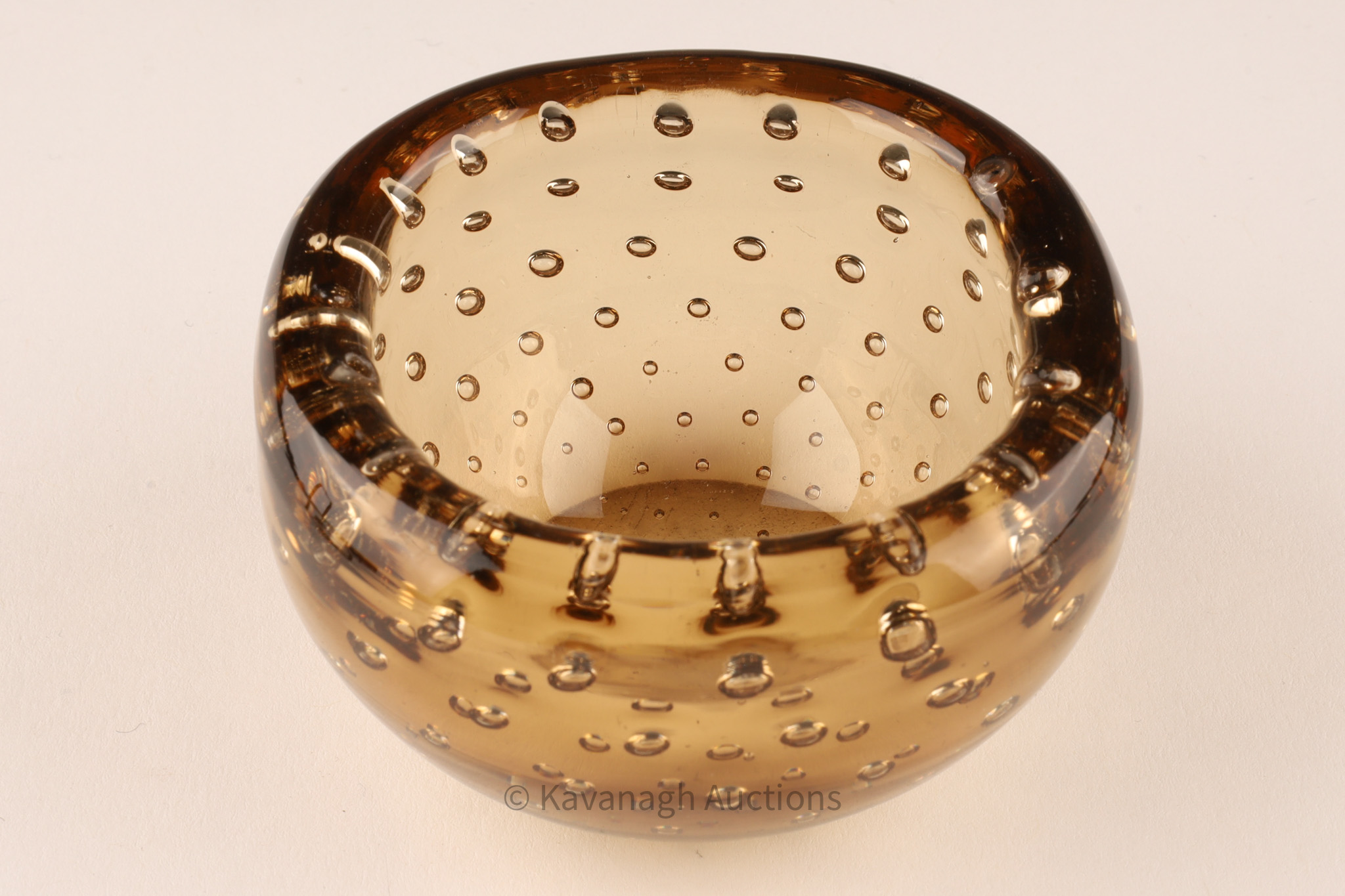
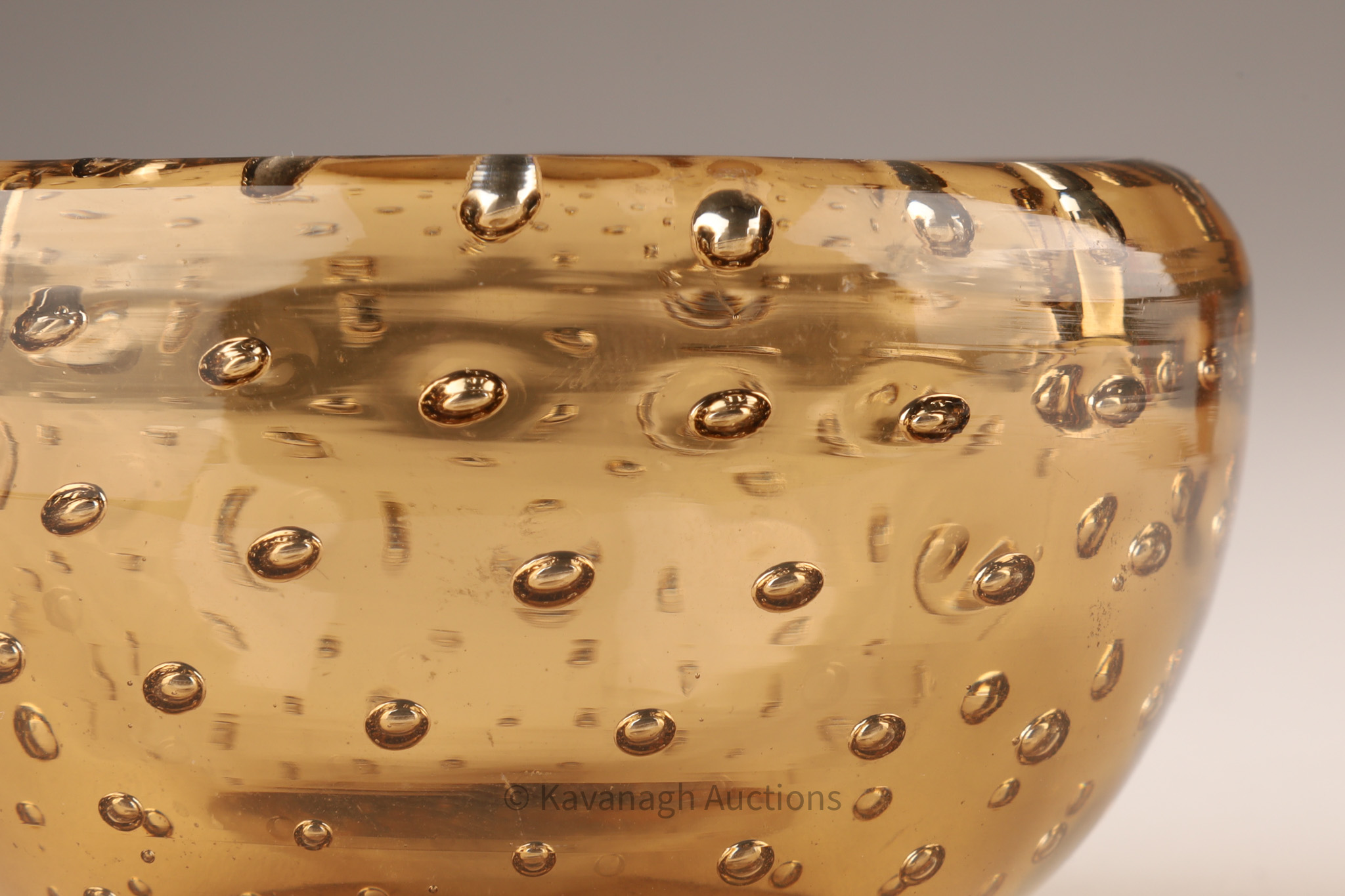
A refined and architectonic Murano glass bowl from the celebrated “a Bolle” (bullicante) series, designed by Carlo Scarpa for Venini, circa 1946–1955.
Executed in transparent smoky amber (fumé) glass, the vessel is formed as a compact hemispherical bowl with thick walls, a gently rounded lip, and a precisely ground flat base.
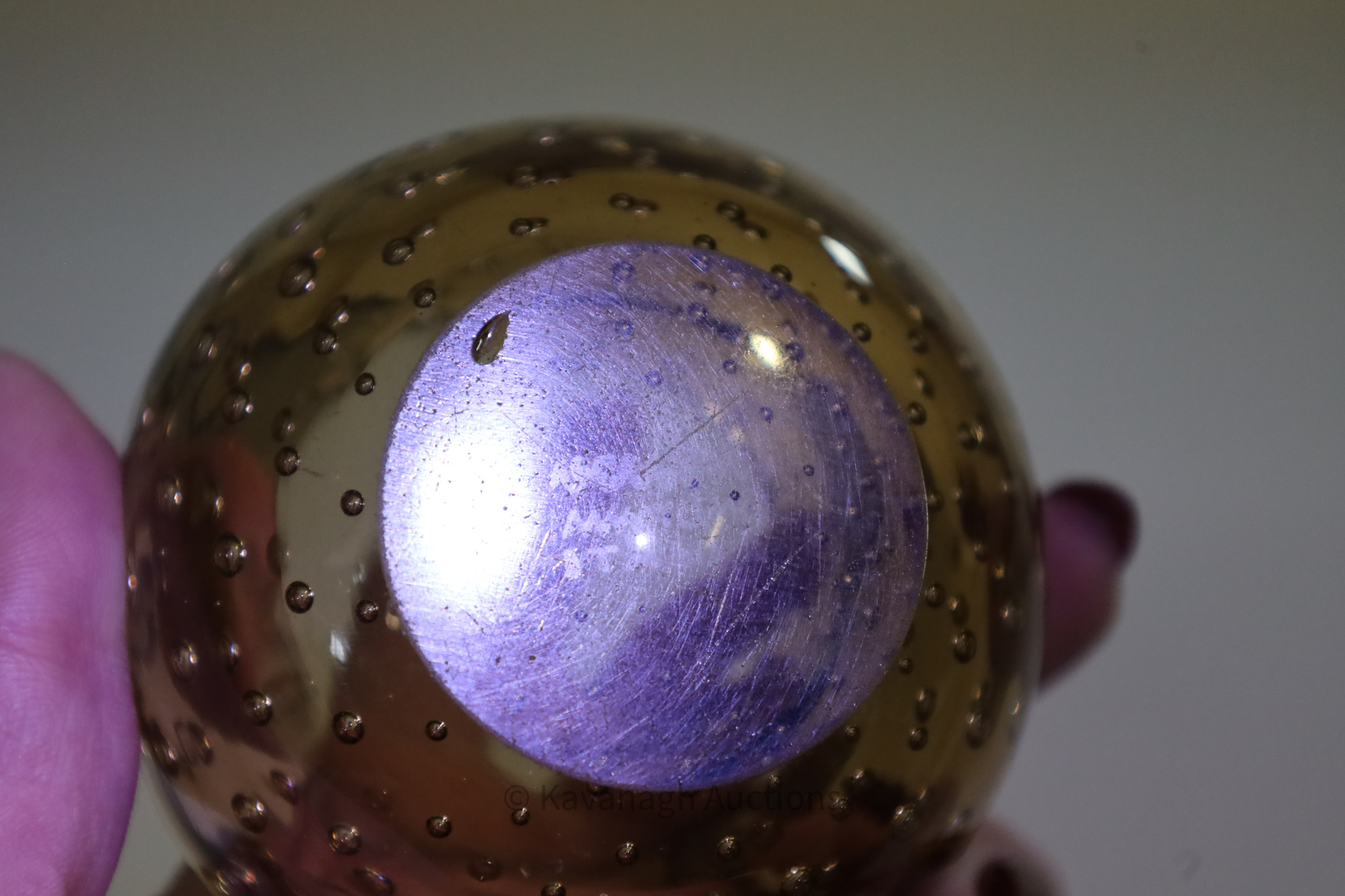
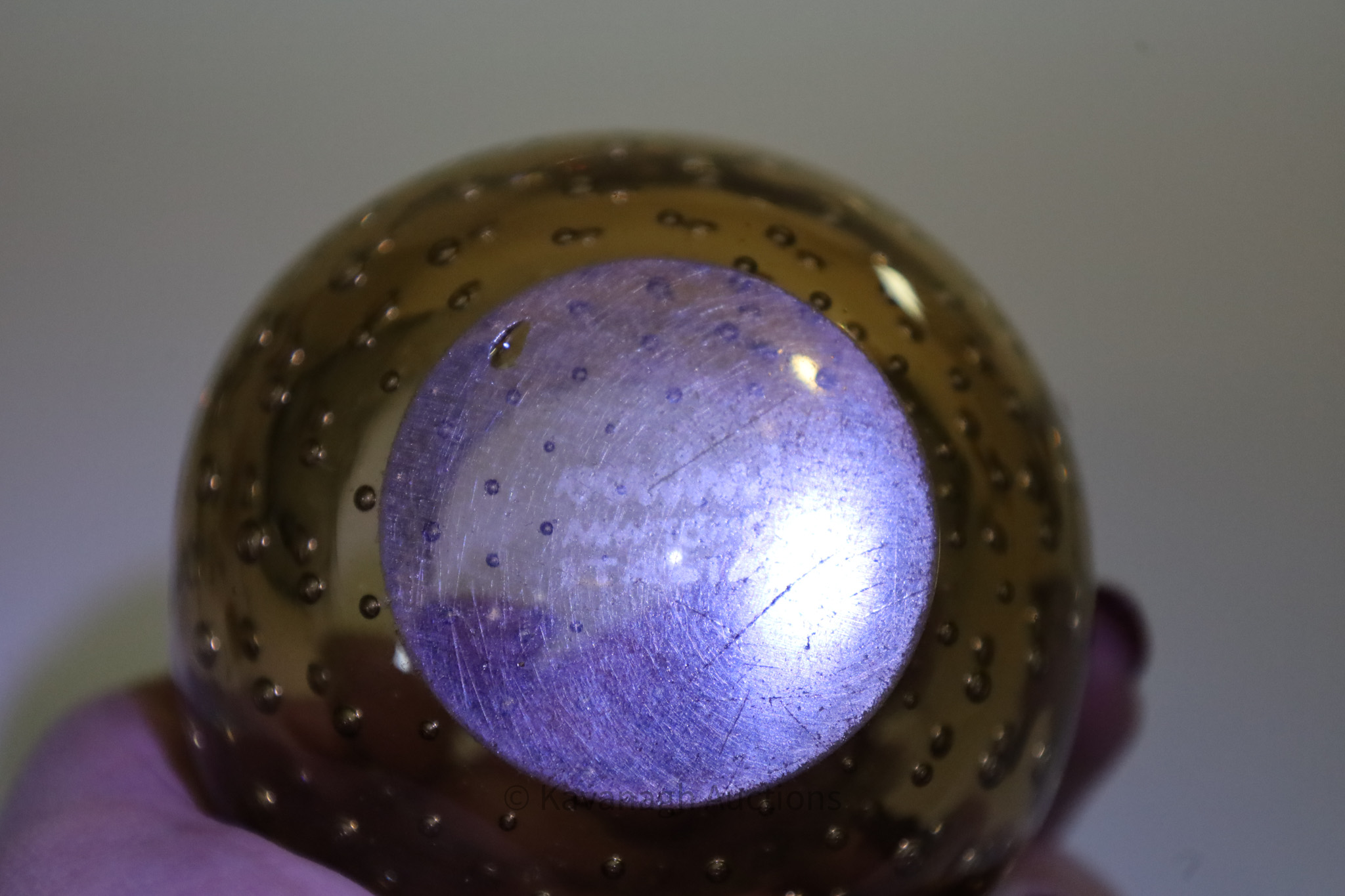
The underside bears a lightly acid-etched three-line signature:
VENINI / MURANO / ITALIA
Details
Designer: Carlo Scarpa (1906–1978)
Manufacturer: Venini
Origin: Murano, Italy
Date: Circa 1946–1955
Model: “a Bolle” (Bullicante) bowl
Material: Hand-blown glass with controlled air inclusions
Color: Transparent smoky amber (fumé)
Signature: Acid-etched “VENINI MURANO ITALIA” (three-line mark)
Dimensions:
Height: 4.3 cm
Diameter: 6.8 cm
Base diameter: 3.0 cm
Condition
Very good overall condition
One bubble burst at the inner rim during production (typical kiln occurrence, not damage)
Light surface wear and base scratches consistent with age
No cracks or restorations observed
Catalogue Note
Carlo Scarpa’s “a Bolle” series for Venini represents one of the most rigorous and technically sophisticated explorations of controlled air inclusion in 20th-century glass. Developed in the immediate post-war period, the bullicante technique involves the systematic trapping of air bubbles between layers of glass, resulting in a highly ordered internal structure.
Comparable examples are illustrated in the literature, including I Vetri di un Architetto, where related forms appear (see p. 111), and closely aligned shapes are documented (see p. 206, no. 46), reinforcing its placement within Scarpa’s canonical Venini output.
Share this lot: