
Antiques, Decorative and Fine Arts Auction

Antiques, Decorative and Fine Arts Auction
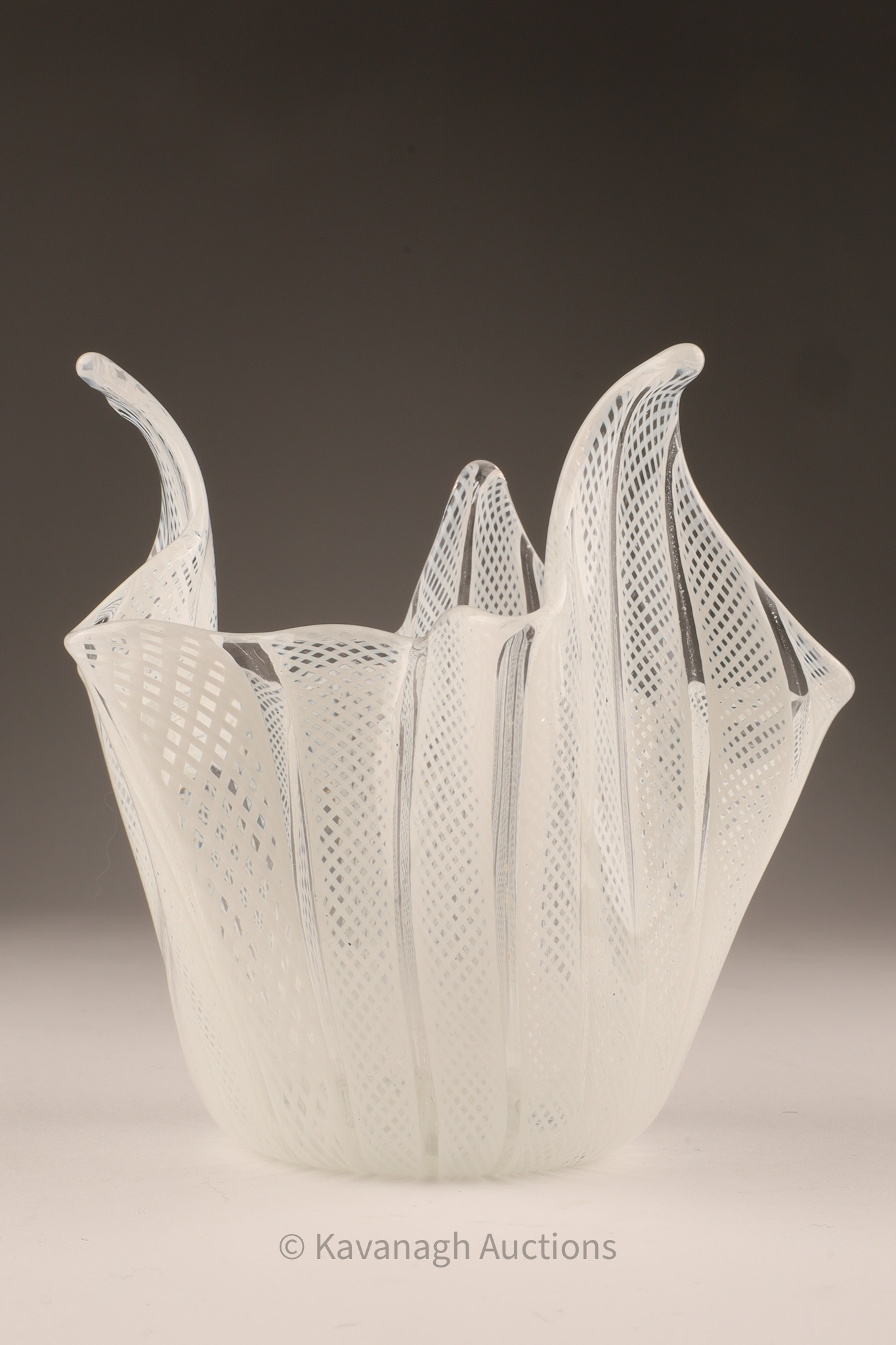
Lot 66: Fulvio Bianconi for Venini Murano Reticello Fazzoletto Glass Vase, Variant of Model 3924, Italy, circa 1950s–1960s
2026-04-25T15:00:00Z
Start price: CAD $50
Lot 66:
Fulvio Bianconi for Venini Murano Reticello Fazzoletto Glass Vase, Variant of Model 3924, Italy, circa 1950s–1960s
Description
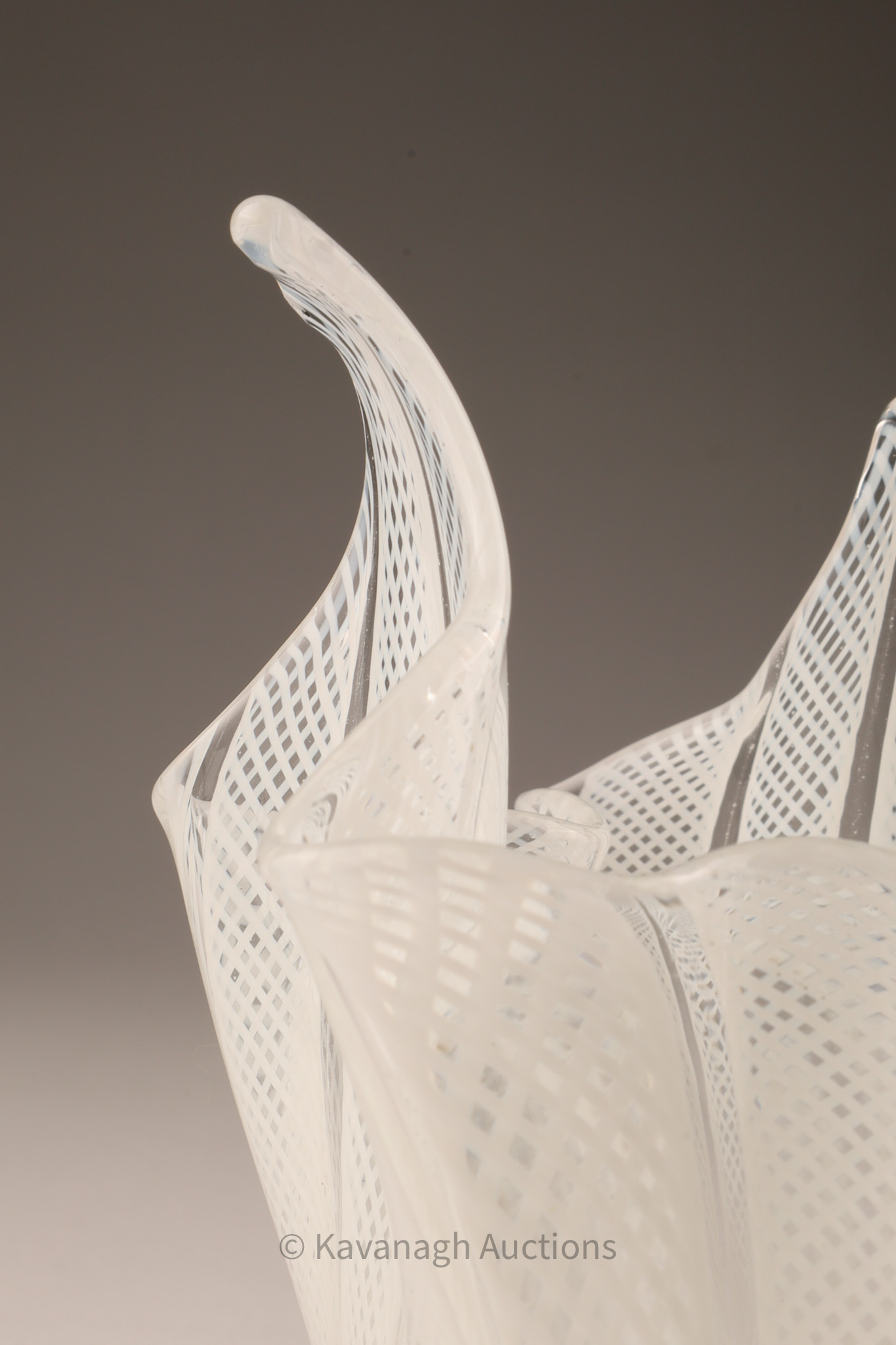
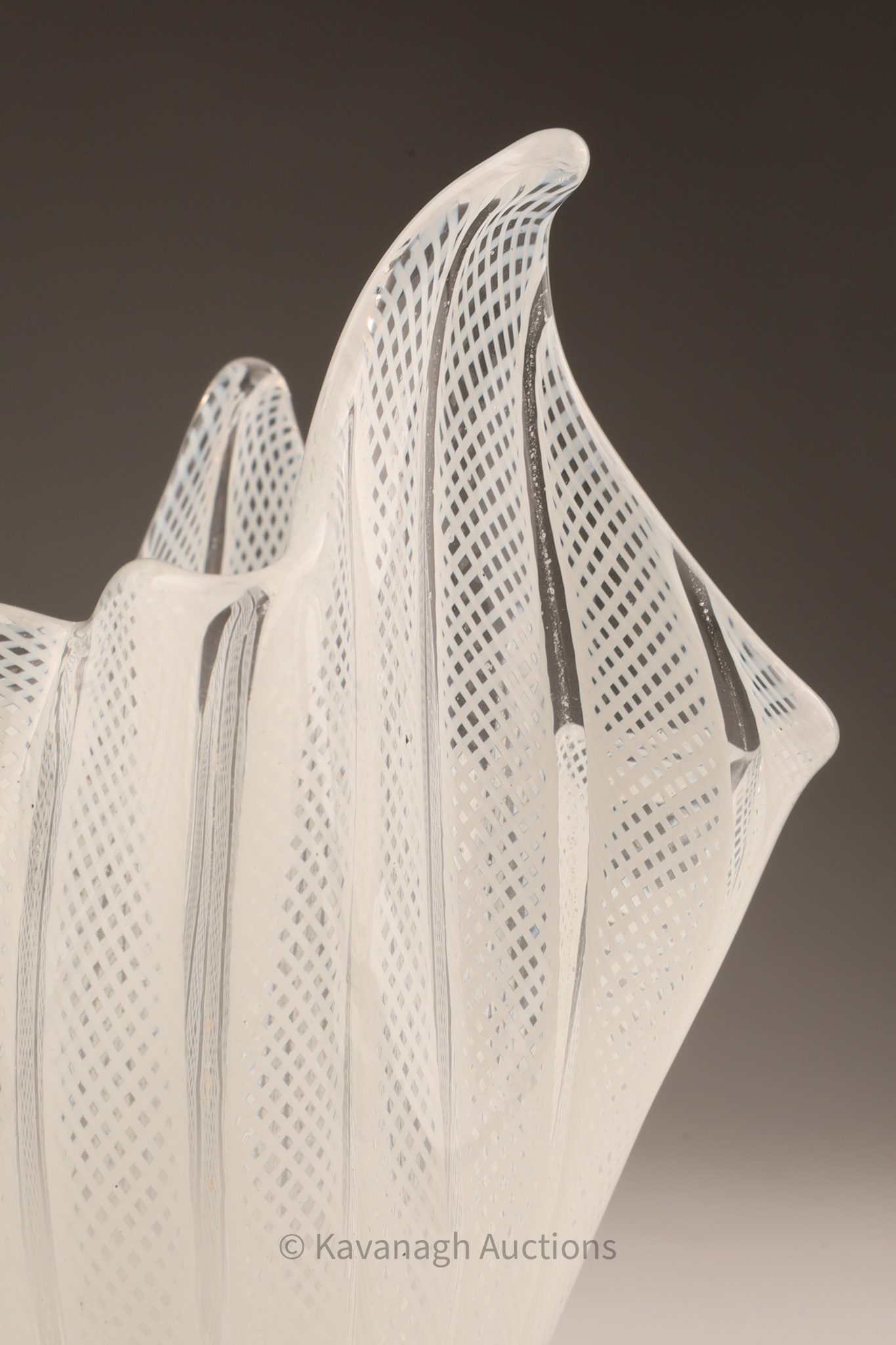
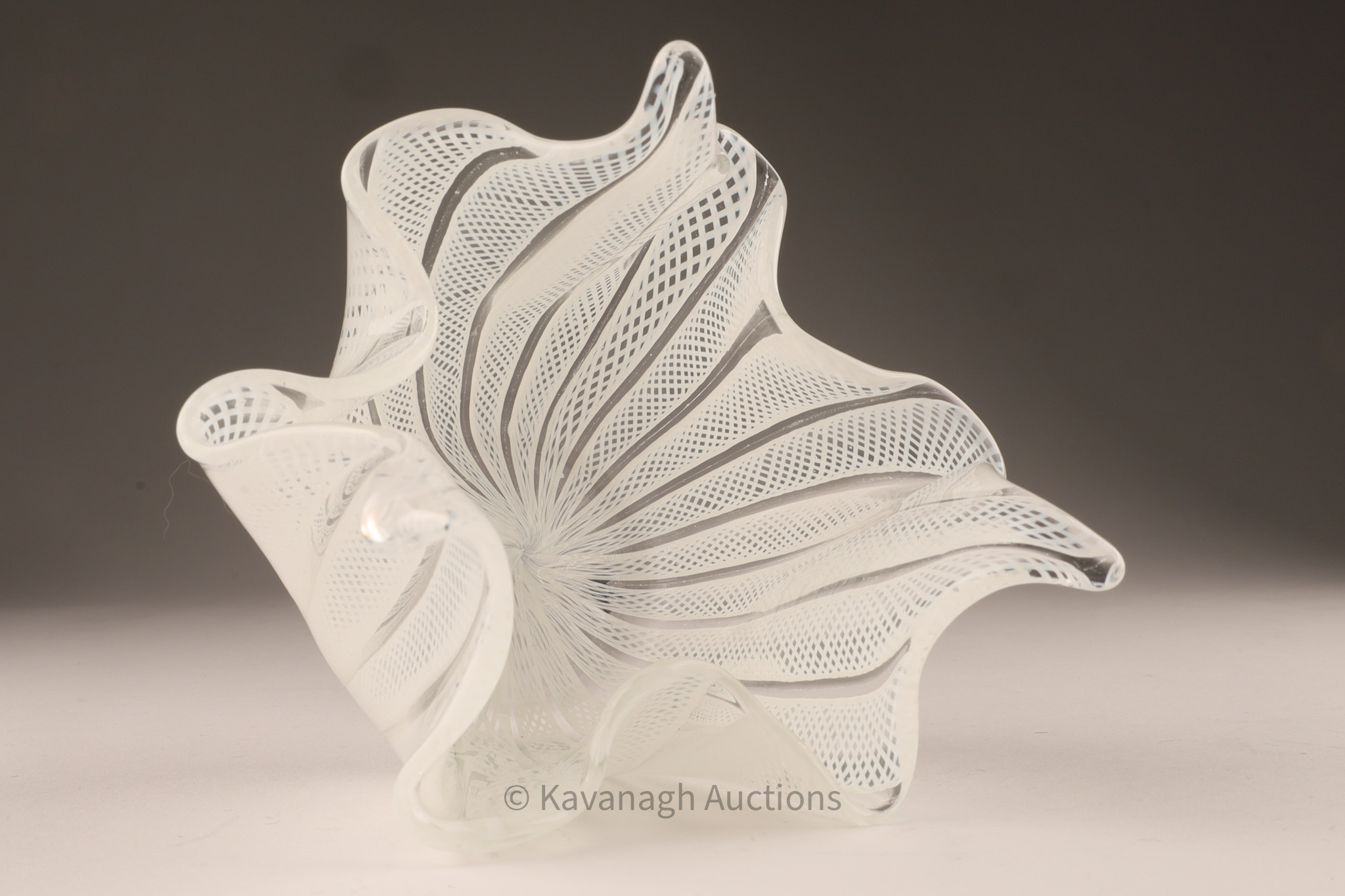
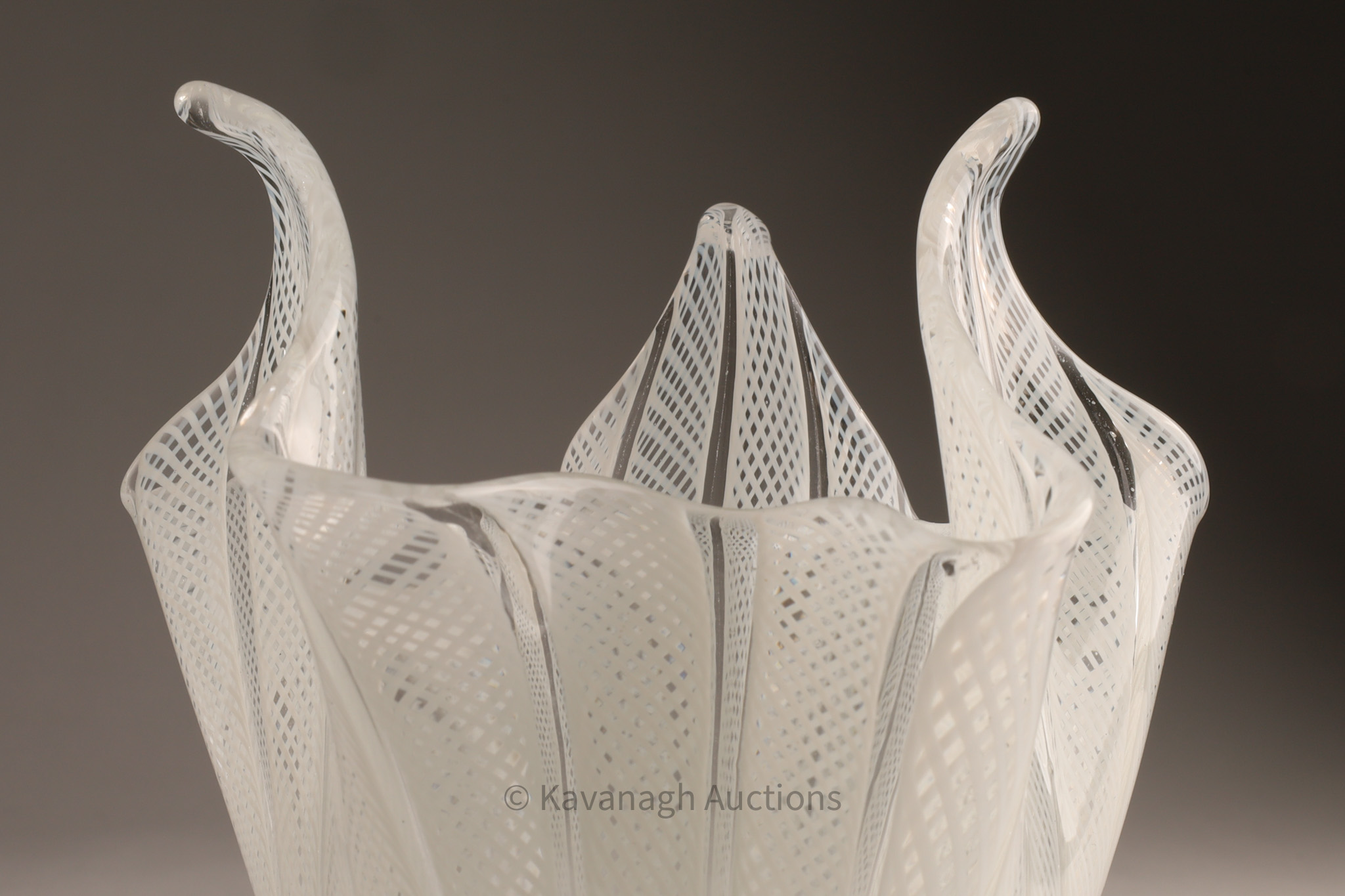
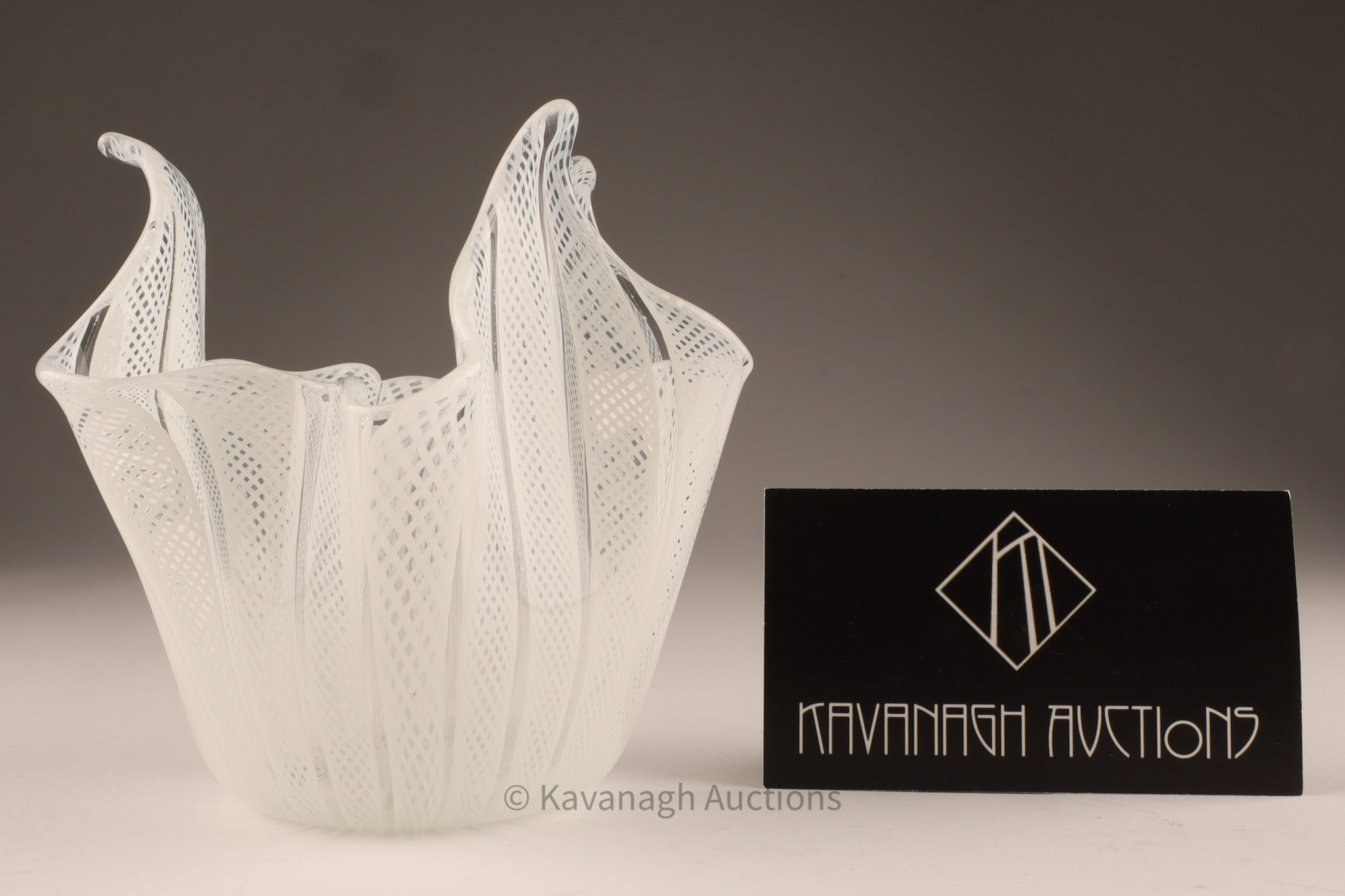
A sculptural Murano glass vase designed by Fulvio Bianconi for Venini, executed in clear glass with reticello (filigrana a reticello) cane work and formed in the iconic fazzoletto (“handkerchief”) profile, circa 1950s–early 1960s.
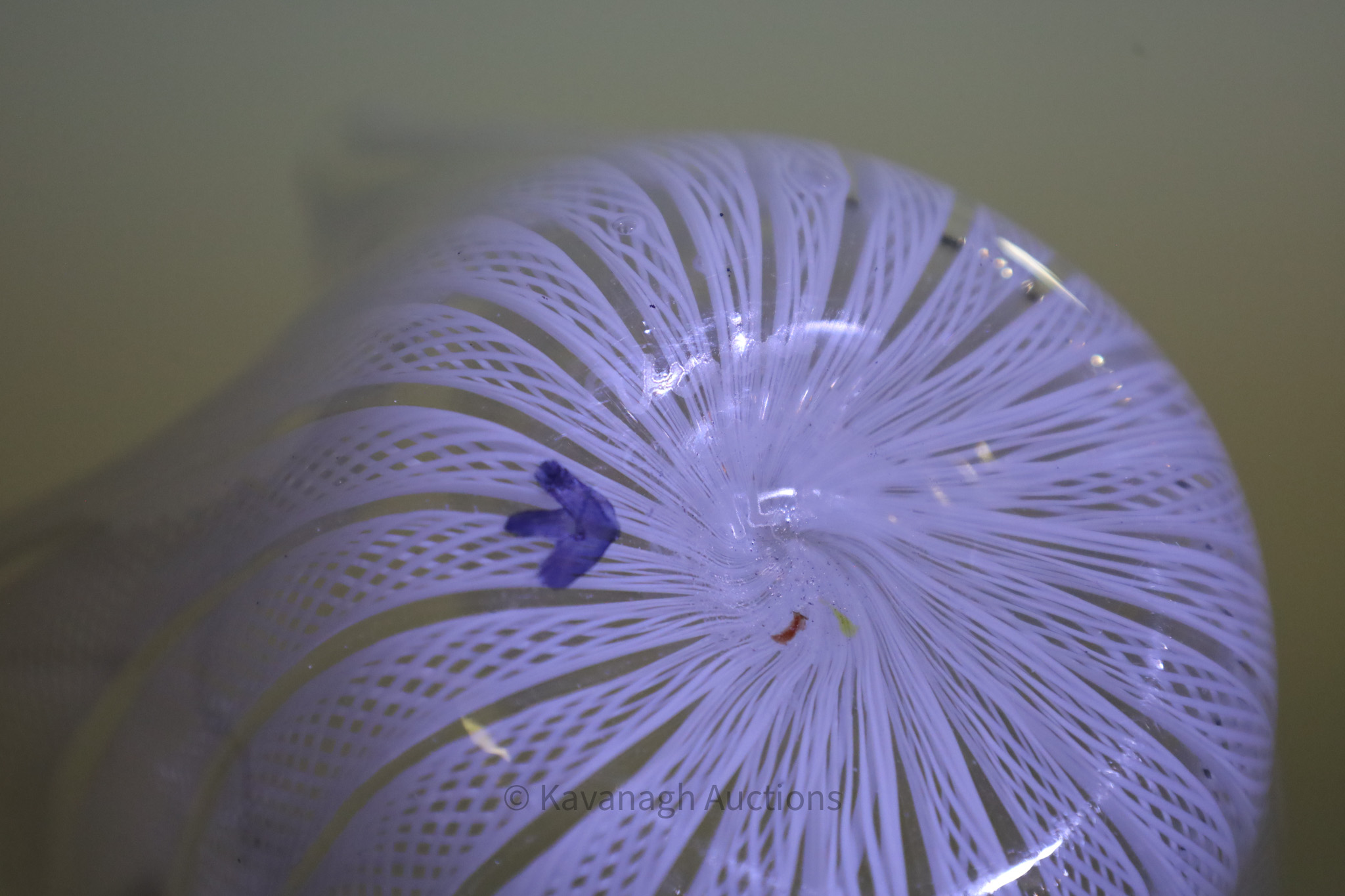
The vessel is hand-blown and drawn into an animated, asymmetrical composition with rising, petal-like lobes. The body is constructed from opposing diagonal cane elements fused into a continuous diamond mesh, producing the characteristic reticello lattice that generates both structural rhythm and optical depth The underside bears an acid-etched signature reading “venini murano italia.”
Details
Designer: Fulvio Bianconi
Manufacturer: Venini & C., Murano
Origin: Italy
Date: Circa 1950s–early 1960s
Technique: Reticello (filigrana a reticello)
Form: Fazzoletto (handkerchief form)
Material: Hand-blown glass
Dimensions: Approx. 11.5 × 11.5 cm (4½ × 4½ in.)
Mark: Acid-etched “venini murano italia”
Condition
Good overall condition
Minor surface wear consistent with age
No cracks or restorations observed
Catalogue Note
The fazzoletto form, introduced at Venini in 1948 through the collaboration of Fulvio Bianconi and Paolo Venini, stands as one of the defining achievements of modern Murano glass. Conceived as a translation of soft fabric into molten glass, the form allowed for continuous variation and technical experimentation across production.
Within this lineage, reticello examples represent a particularly sophisticated development, combining the fluidity of the handkerchief form with the structural complexity of crossed cane work. Documented models, including those illustrated in I Vetri di un Architetto and related Venini catalogues (notably model 3924), demonstrate the integration of reticello, zanfirico, and lattimo techniques within this series.
The present vase should be understood as a variant within this documented reticello fazzoletto group, distinguished by its balanced proportions, clear lattice articulation, and restrained yet dynamic silhouette.
Share this lot: