
Antiques, Decorative and Fine Arts Auction

Antiques, Decorative and Fine Arts Auction
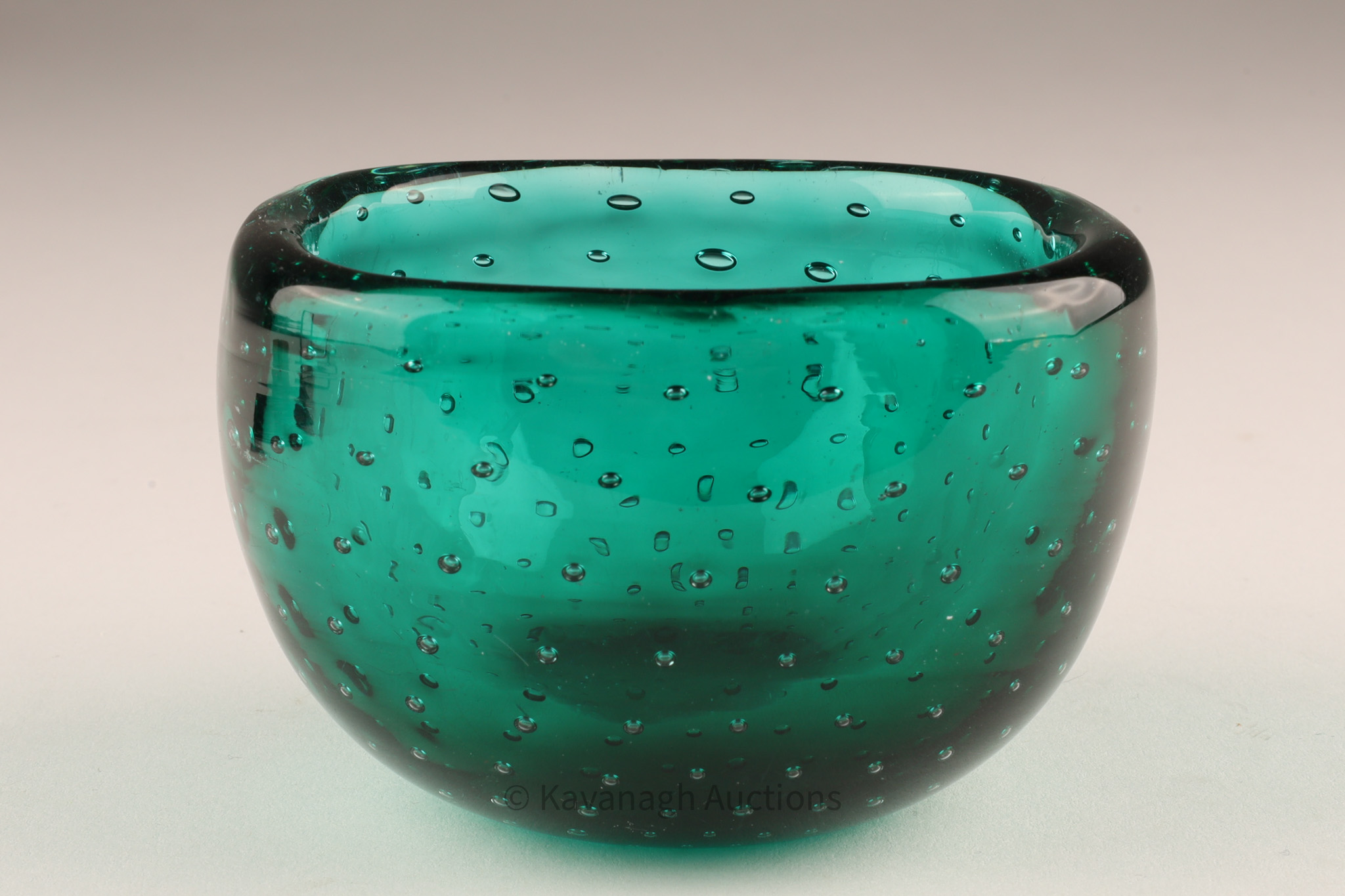
Lot 65: Carlo Scarpa Era Venini Murano Bollicine Glass Bowl, Emerald Green, Signed, circa 1938-1946
2026-04-25T15:00:00Z
Start price: CAD $100
Lot 65:
Carlo Scarpa Era Venini Murano Bollicine Glass Bowl, Emerald Green, Signed, circa 1938-1946
Description
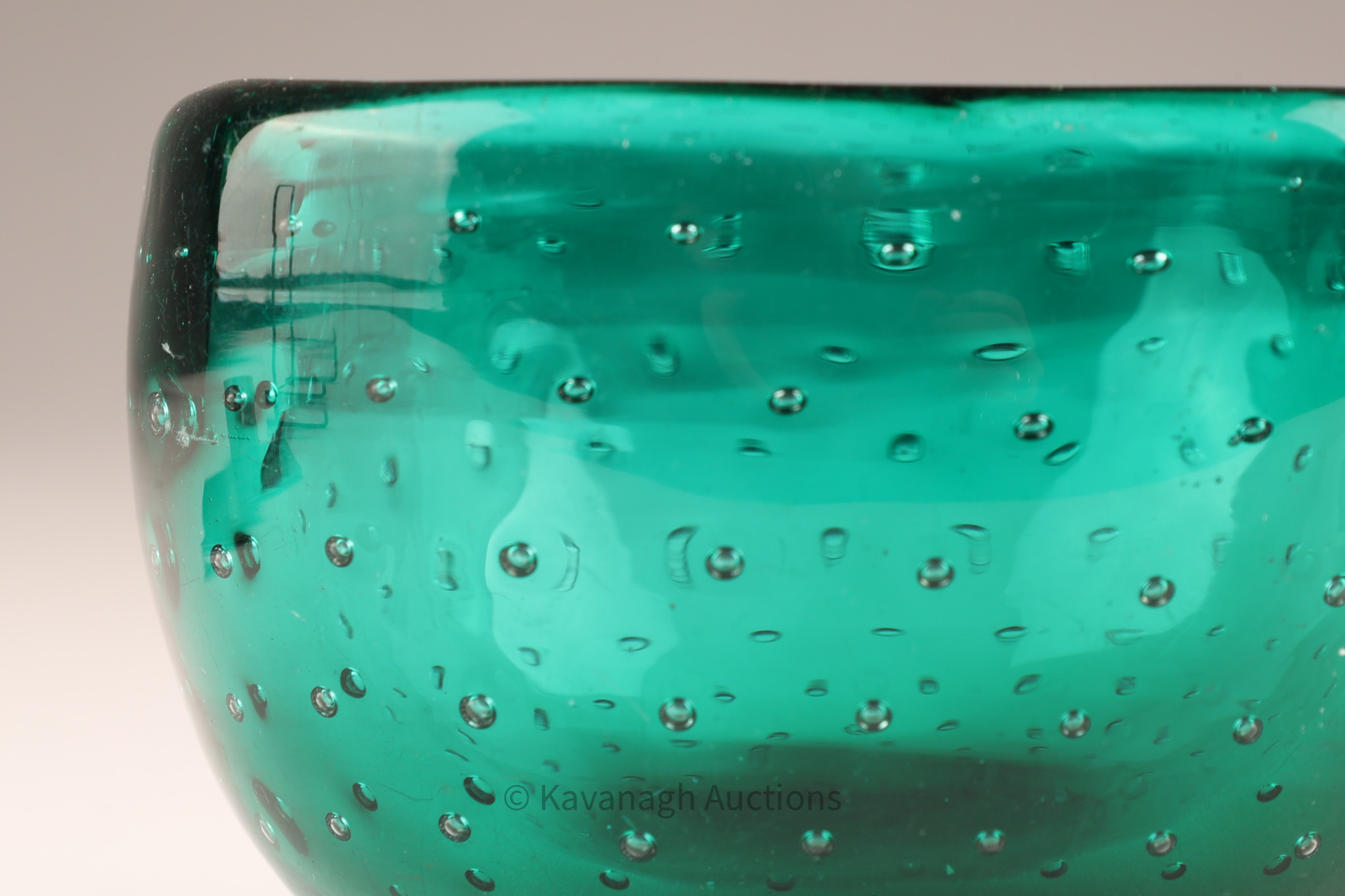
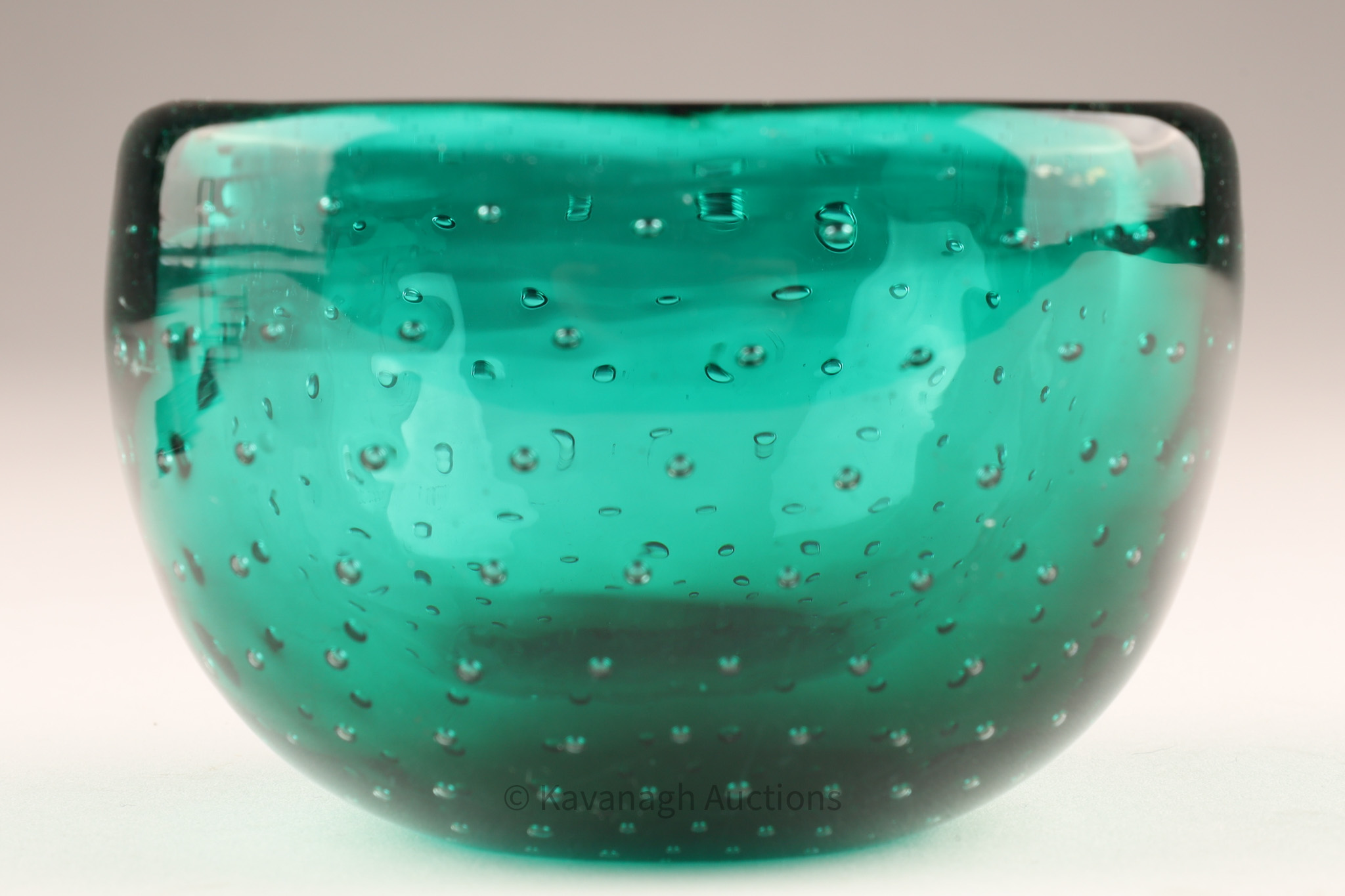
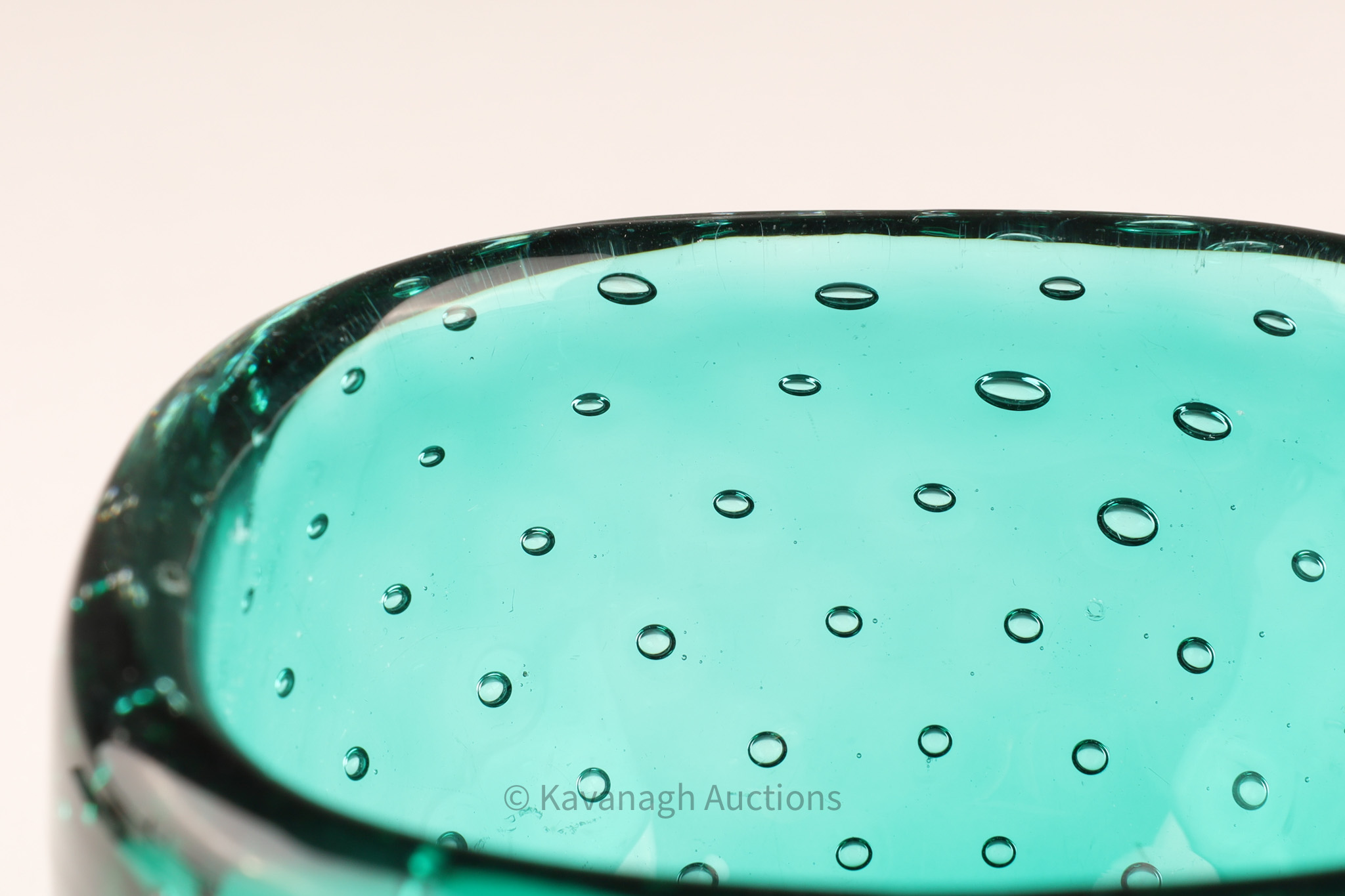
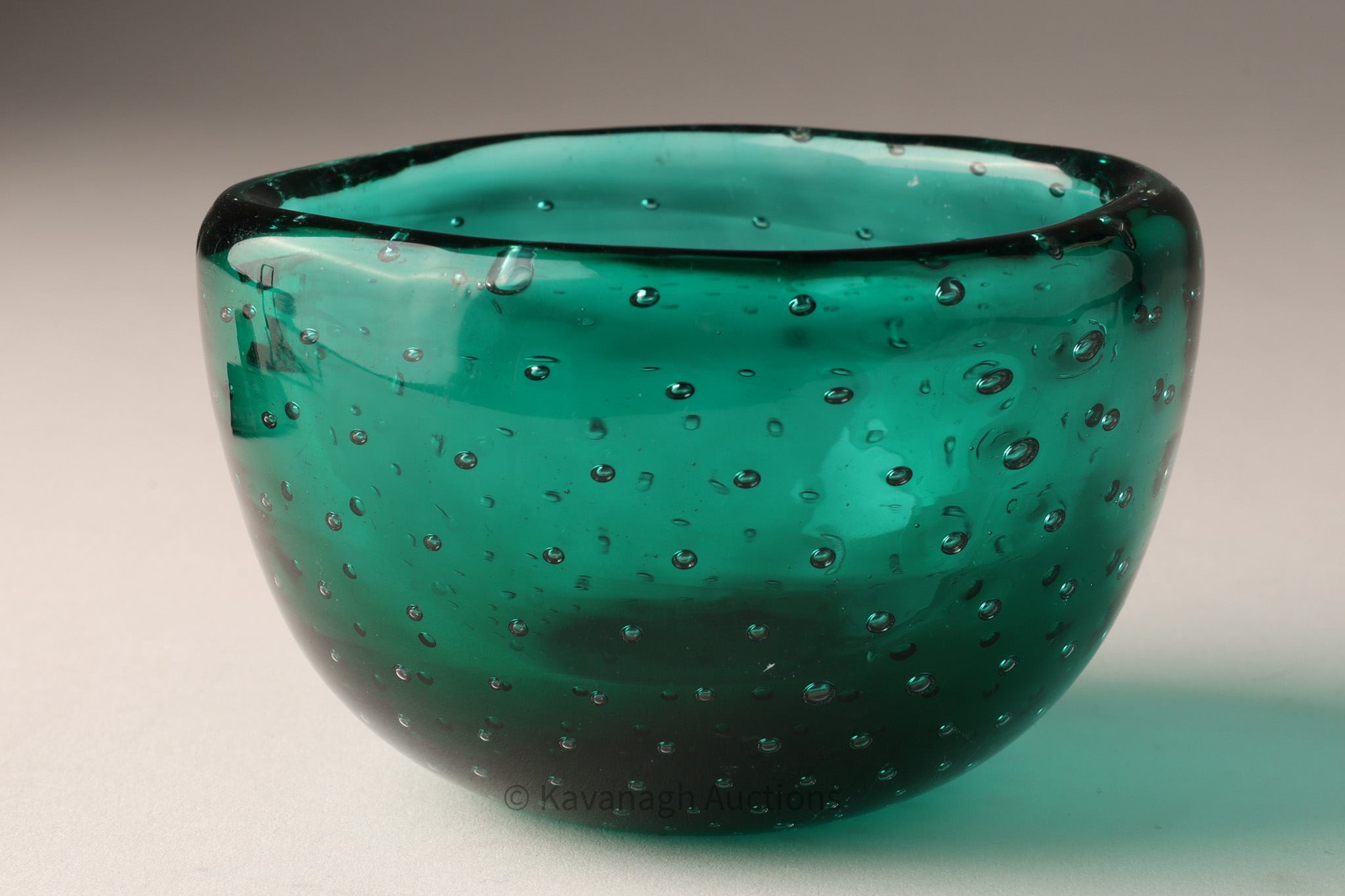
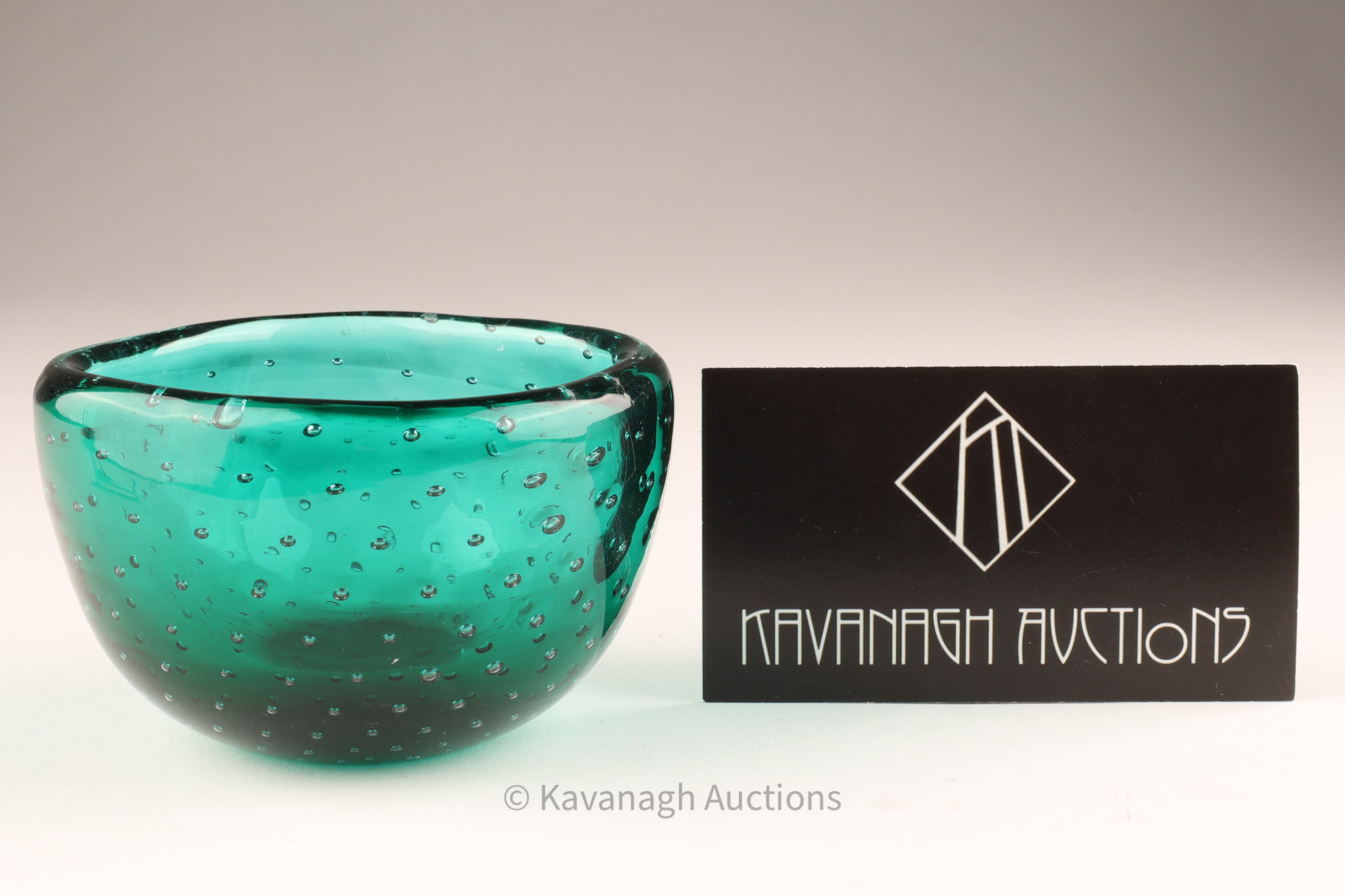
A finely executed Murano glass bowl produced by Venini & C. during the Carlo Scarpa period, rendered in richly saturated emerald-green glass with dense internal bollicine (controlled bubble inclusions), circa 1938-1946.
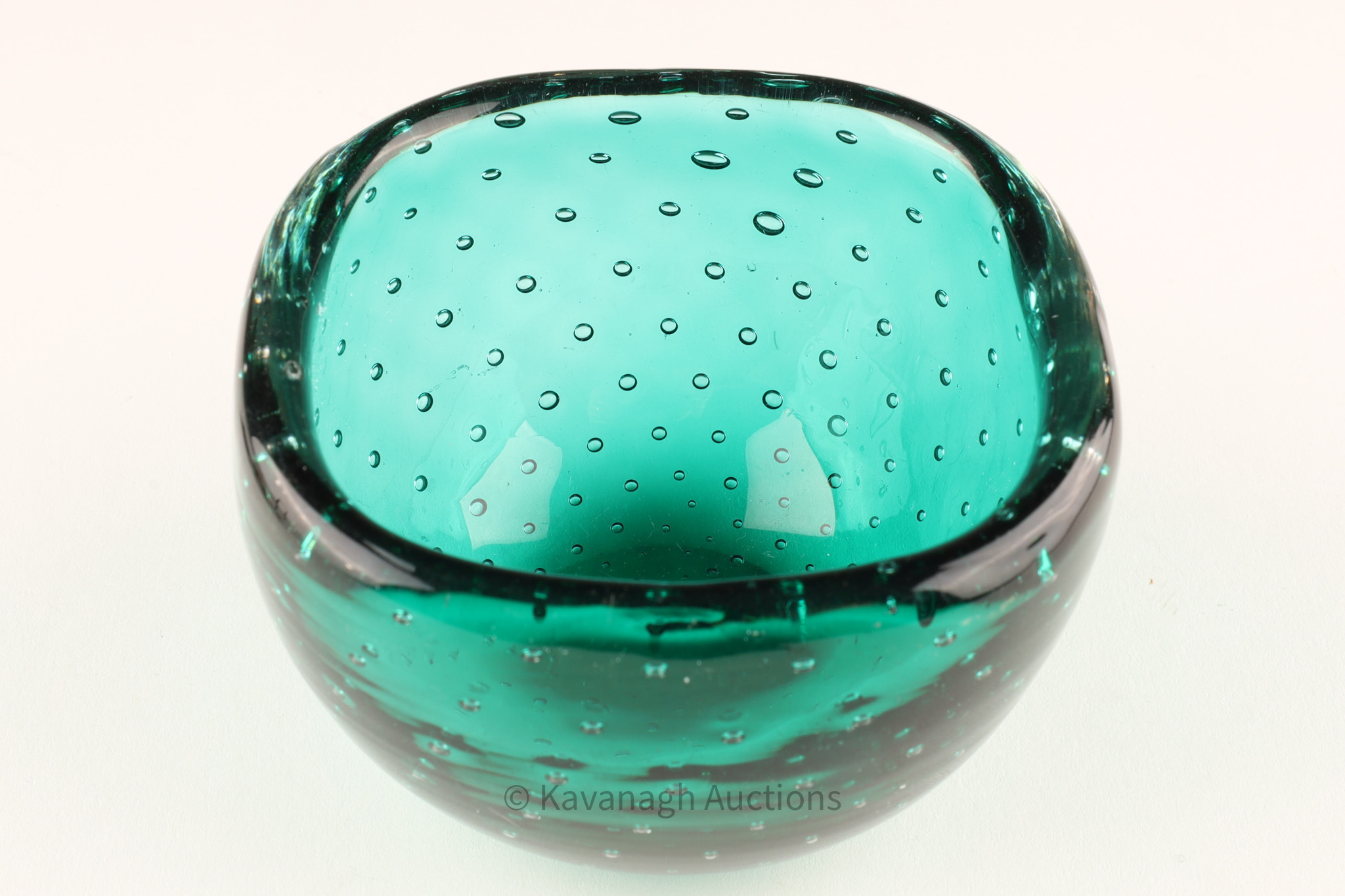
The bowl is formed in a substantial, homogeneous glass mass, evenly seeded with a field of minute air bubbles punctuated by occasional larger spherical inclusions.
The form is compact and architecturally resolved, with a gently rounded profile, softly squared rim, and a deep interior well.
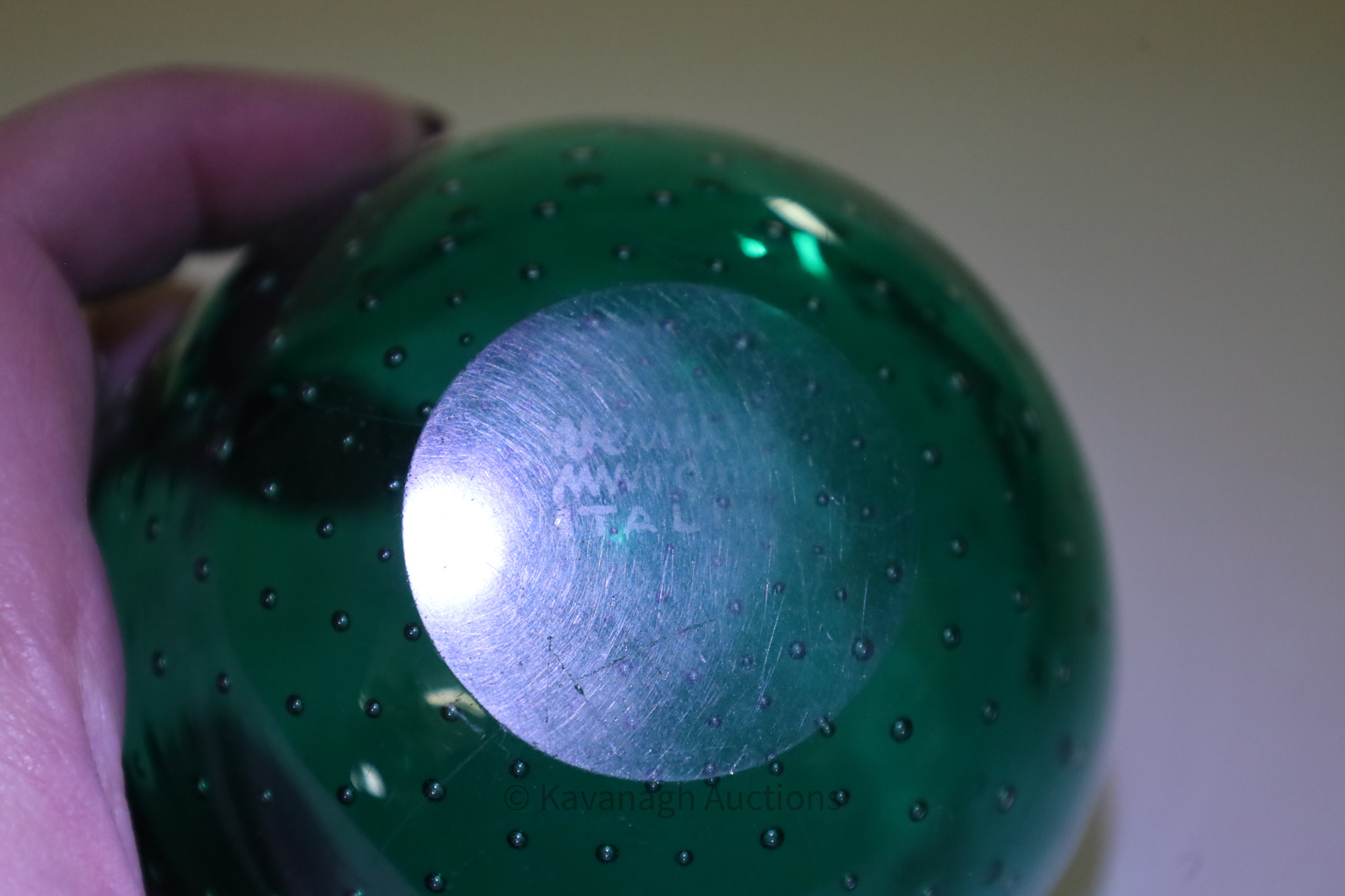
The underside is ground and polished with a visible pontil area and bears an acid-etched three-line signature reading “venini murano italia.”
Details
Designer: Carlo Scarpa (1906-1978), period of design
Manufacturer: Venini & C., Murano
Origin: Murano, Italy
Date: Circa 1938-1946
Medium: Hand-blown glass with bollicine inclusions
Technique: Bullicante (controlled bubble inclusions within solid glass mass)
Color: Emerald green
Dimensions: 8.3 × 8.3 × 5.3 cm (3¼ × 3¼ × 2⅛ in.)
Mark: Acid-etched “venini murano italia” (three-line mark)
Condition
No cracks, chips, or restorations observed
One small open bubble at the rim, inherent to manufacture
Light surface wear and minor base abrasions consistent with age and use
Catalogue Note
Carlo Scarpa’s tenure at Venini in the 1930s and early 1940s marked a fundamental shift in the language of Murano glass, as traditional Venetian techniques were reinterpreted through a modern, architecturally driven sensibility. Central to this transformation was the development of bollicine (bullicante) glass, in which controlled air inclusions are suspended within thick glass volumes to create a dynamic interplay of light, depth, and internal structure.
The present bowl belongs to this mature Scarpa-era production, where the distribution of bubbles is both deliberate and atmospheric, contributing to a sense of visual density without rigid patterning. The absence of layered construction underscores its position within the bollicine tradition rather than sommerso developments, emphasizing instead the purity of mass and the optical behavior of light within a single, saturated color field.
The compact scale and softly squared geometry align with documented Venini forms illustrated in I Vetri di un Architetto (see pp. 111 and 205–206, including related models 30, 33, and 46), where variations of hemispherical and squared bowls demonstrate the breadth of Scarpa’s formal exploration during this period.
Share this lot: