
Antiques, Decorative and Fine Arts Auction

Antiques, Decorative and Fine Arts Auction
Lot 64: Carlo Scarpa for Venini Murano Jade Green Bullicante Glass Square Vide-Poche, Signed, c. 1930s-40s
2026-04-25T15:00:00Z
Start price: CAD $100
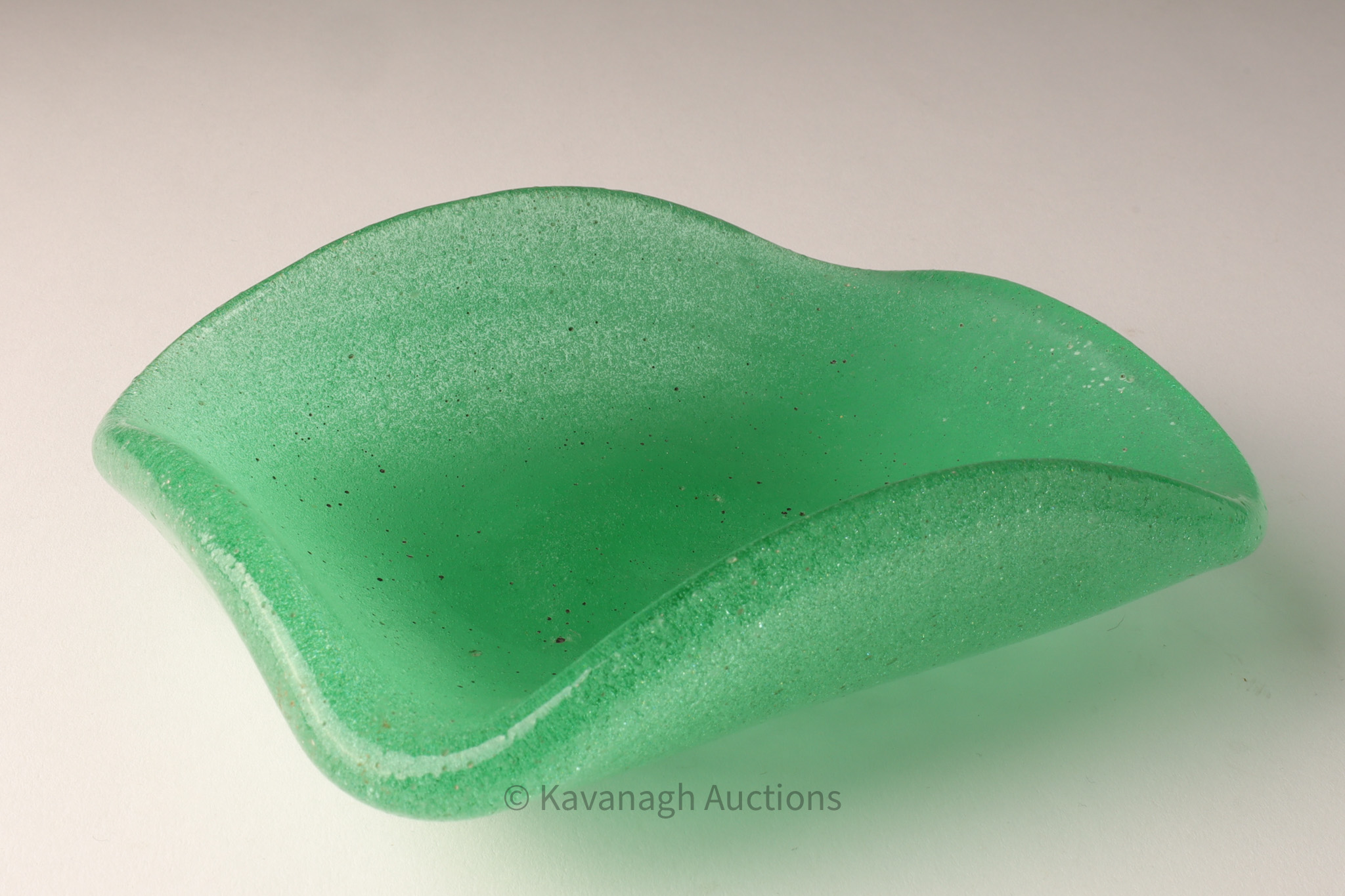
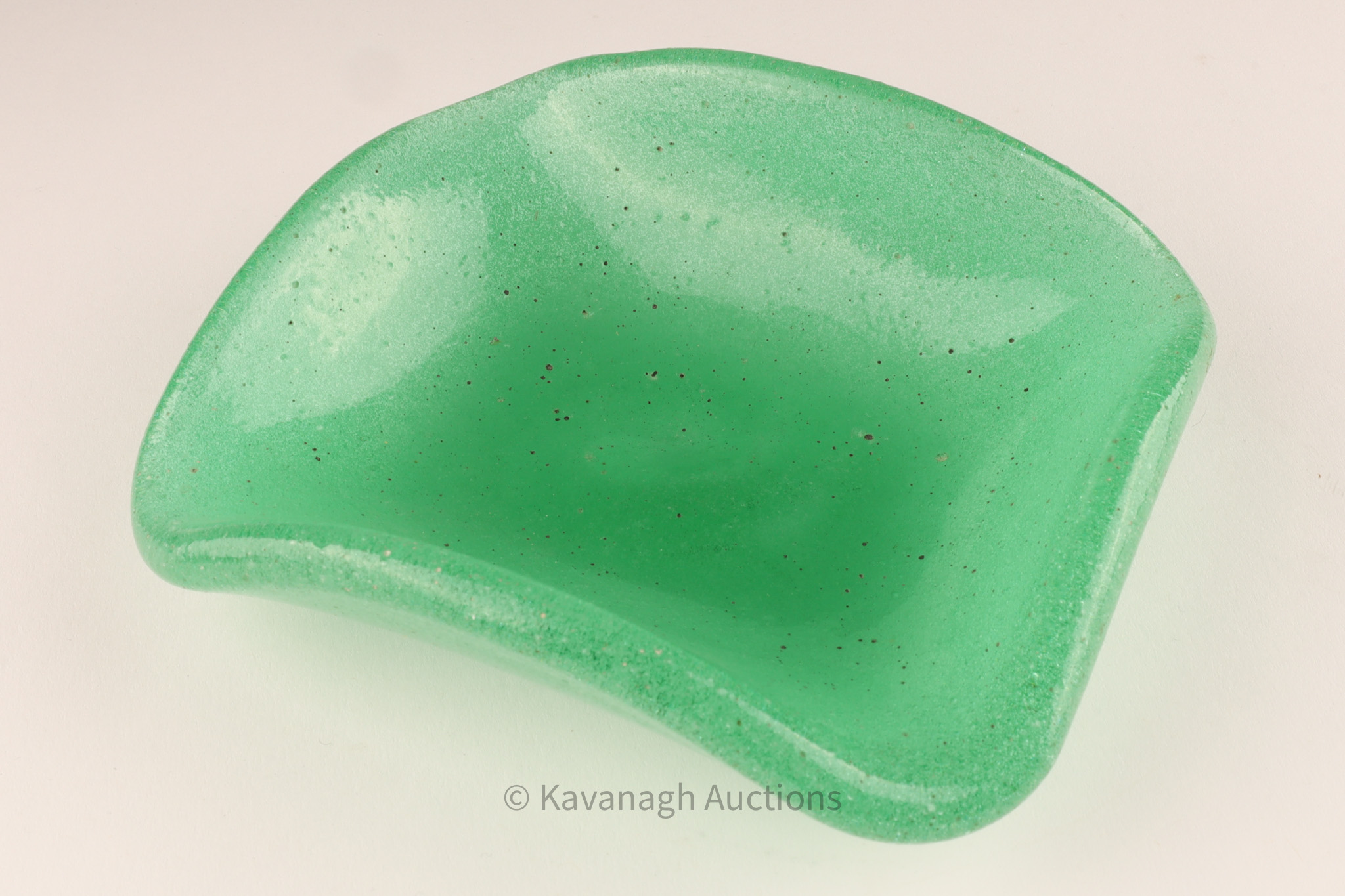
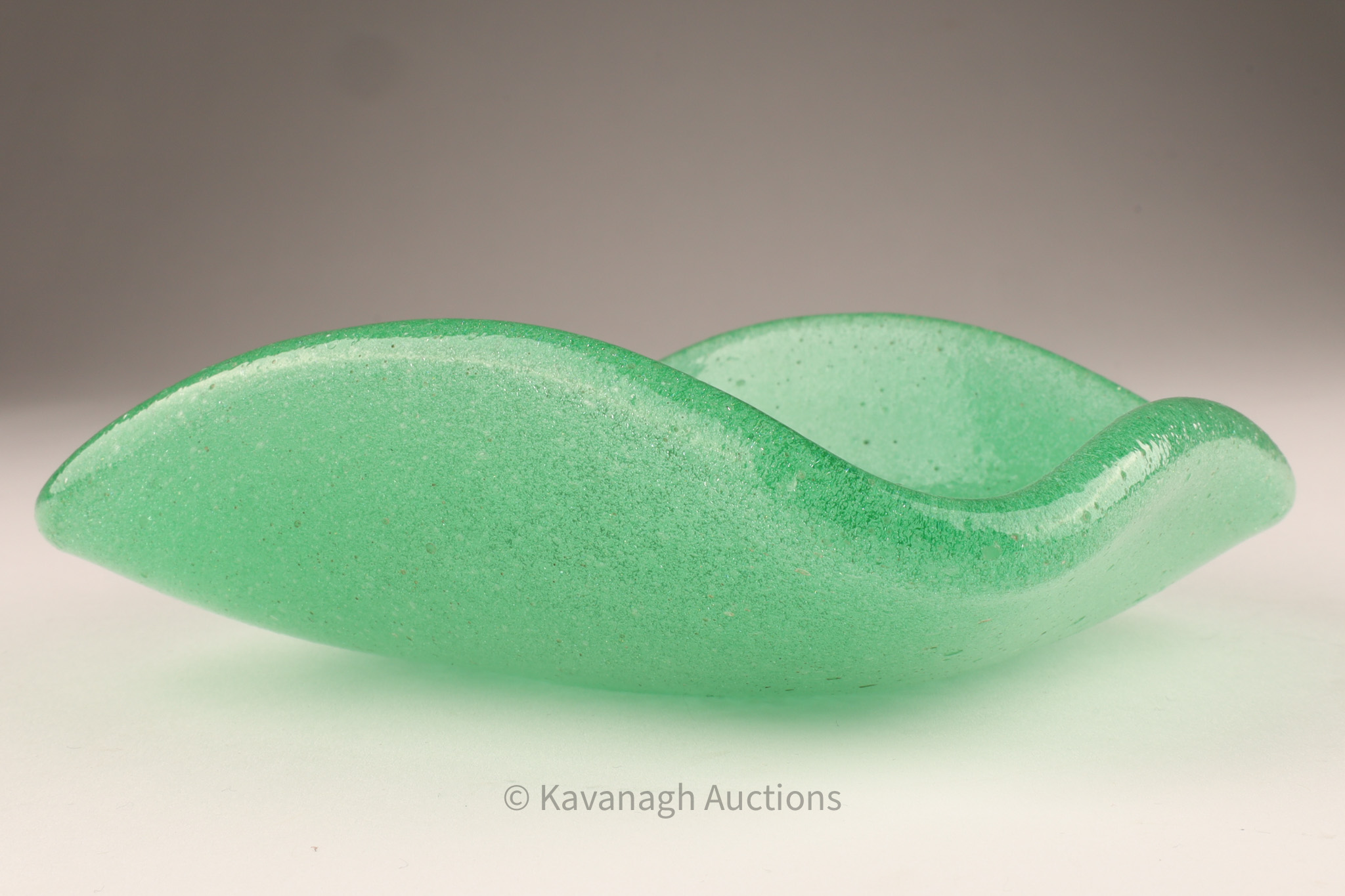
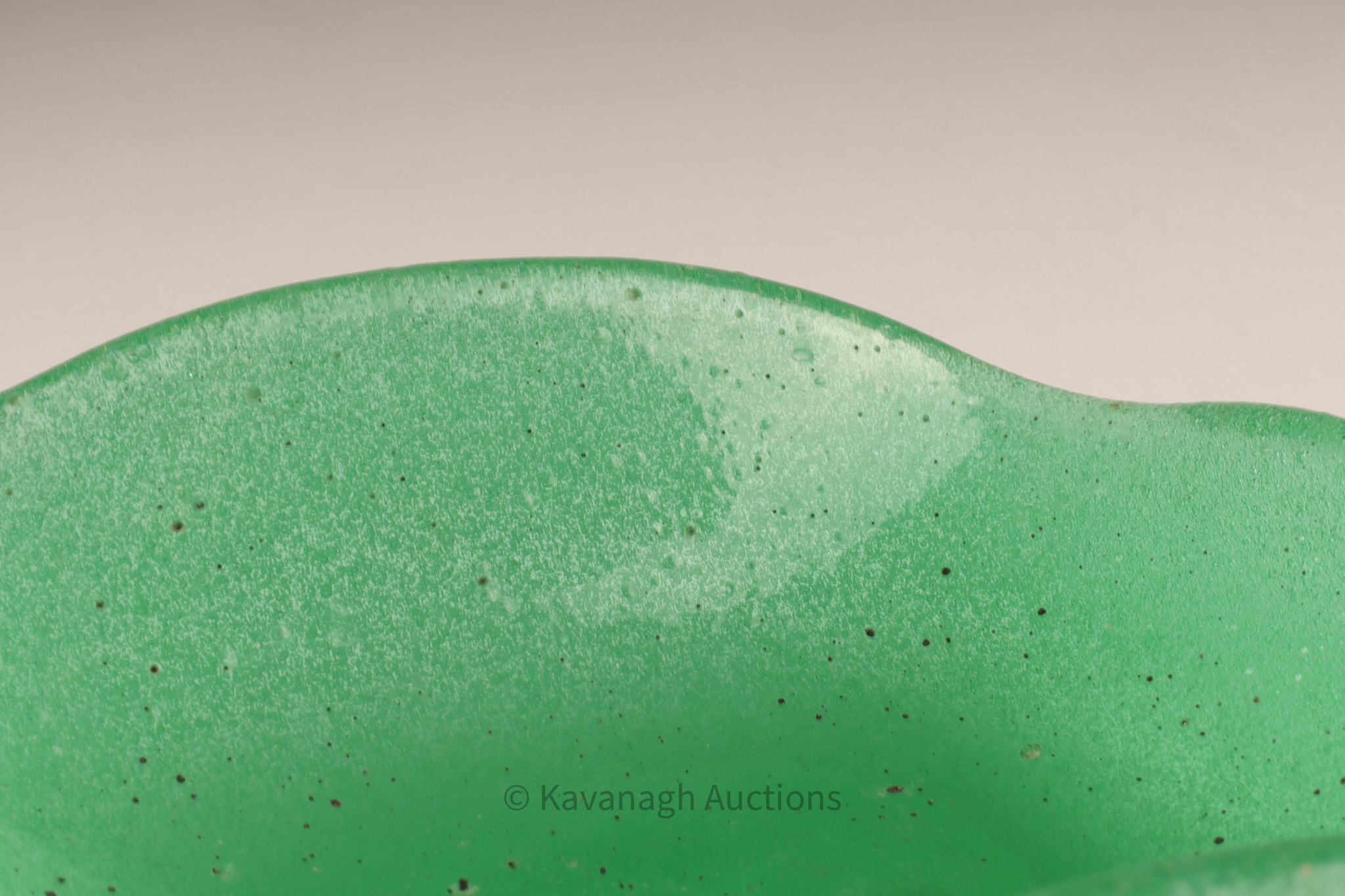
Lot 64:
Carlo Scarpa for Venini Murano Jade Green Bullicante Glass Square Vide-Poche, Signed, c. 1930s-40s
Description
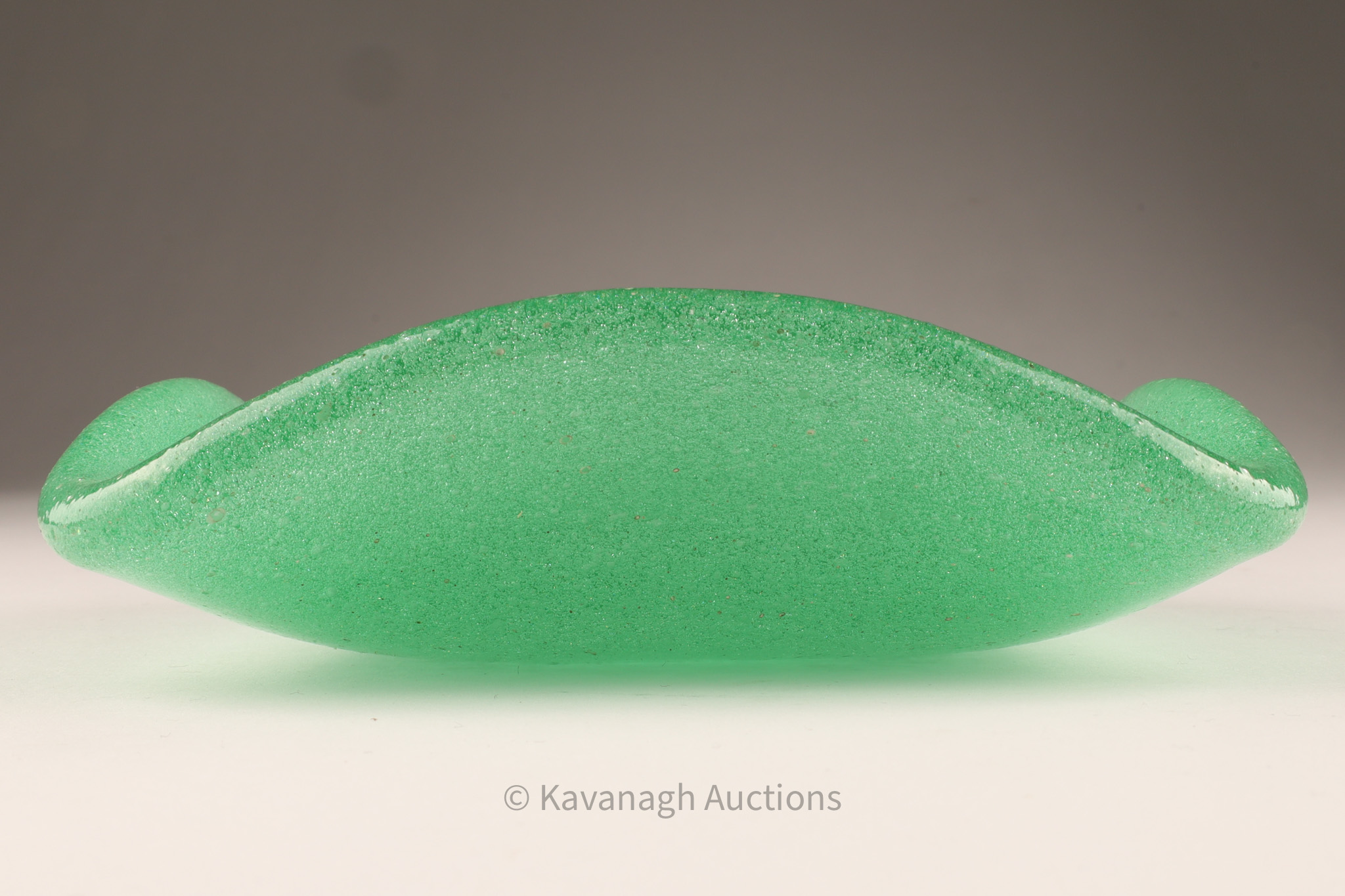
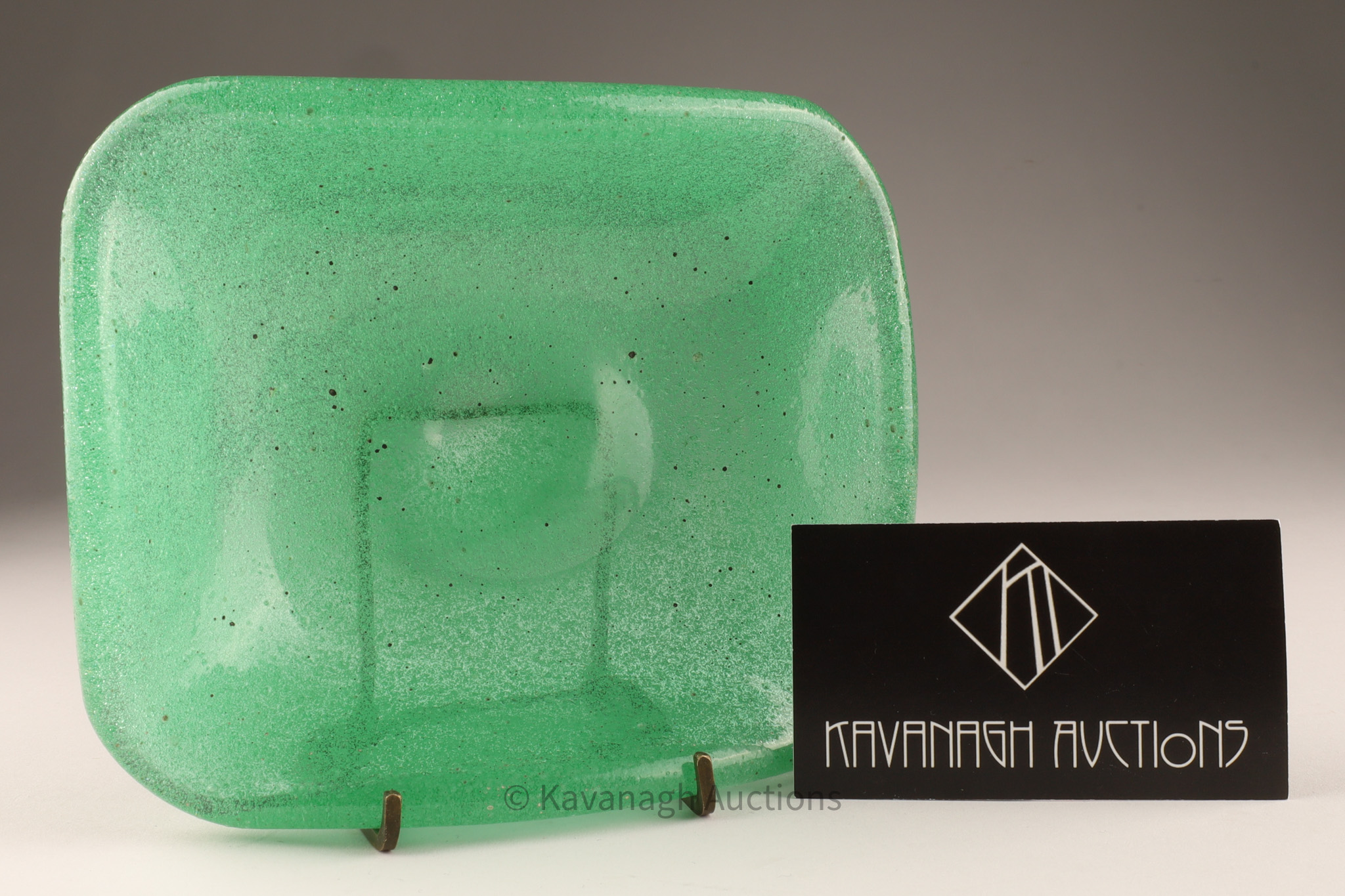
A sculptural Murano glass vide-poche executed in jade green glass with dense internal bollicine inclusions, produced by Venini during the period of Carlo Scarpa’s artistic direction, Murano, circa late 1930s to early 1940s.
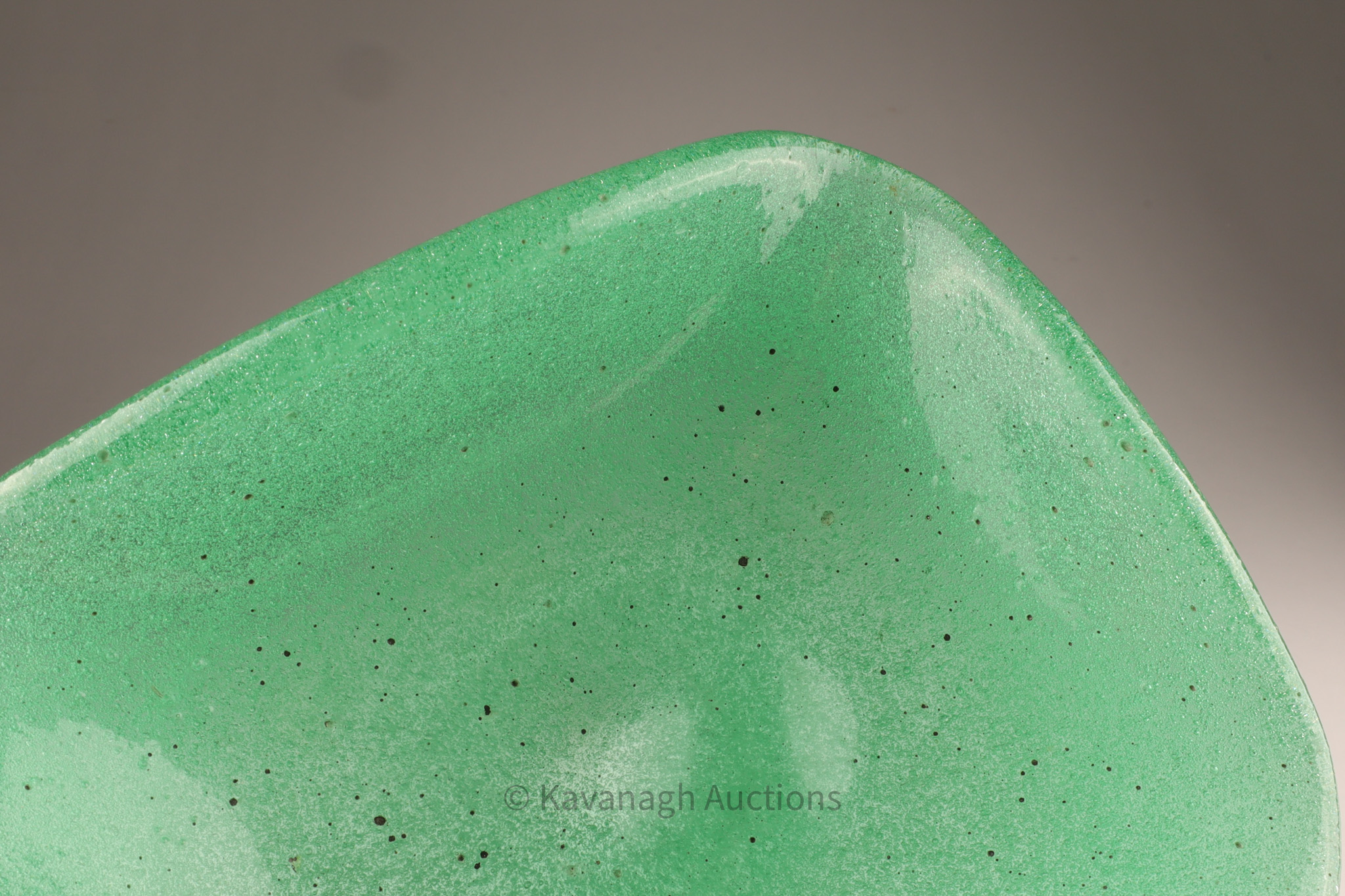
The glass body is densely populated with fine air bubbles suspended throughout the material, creating a granular, atmospheric texture characteristic of Scarpa-era experimentation at Venini. The surface retains a softly diffused, slightly satin appearance.
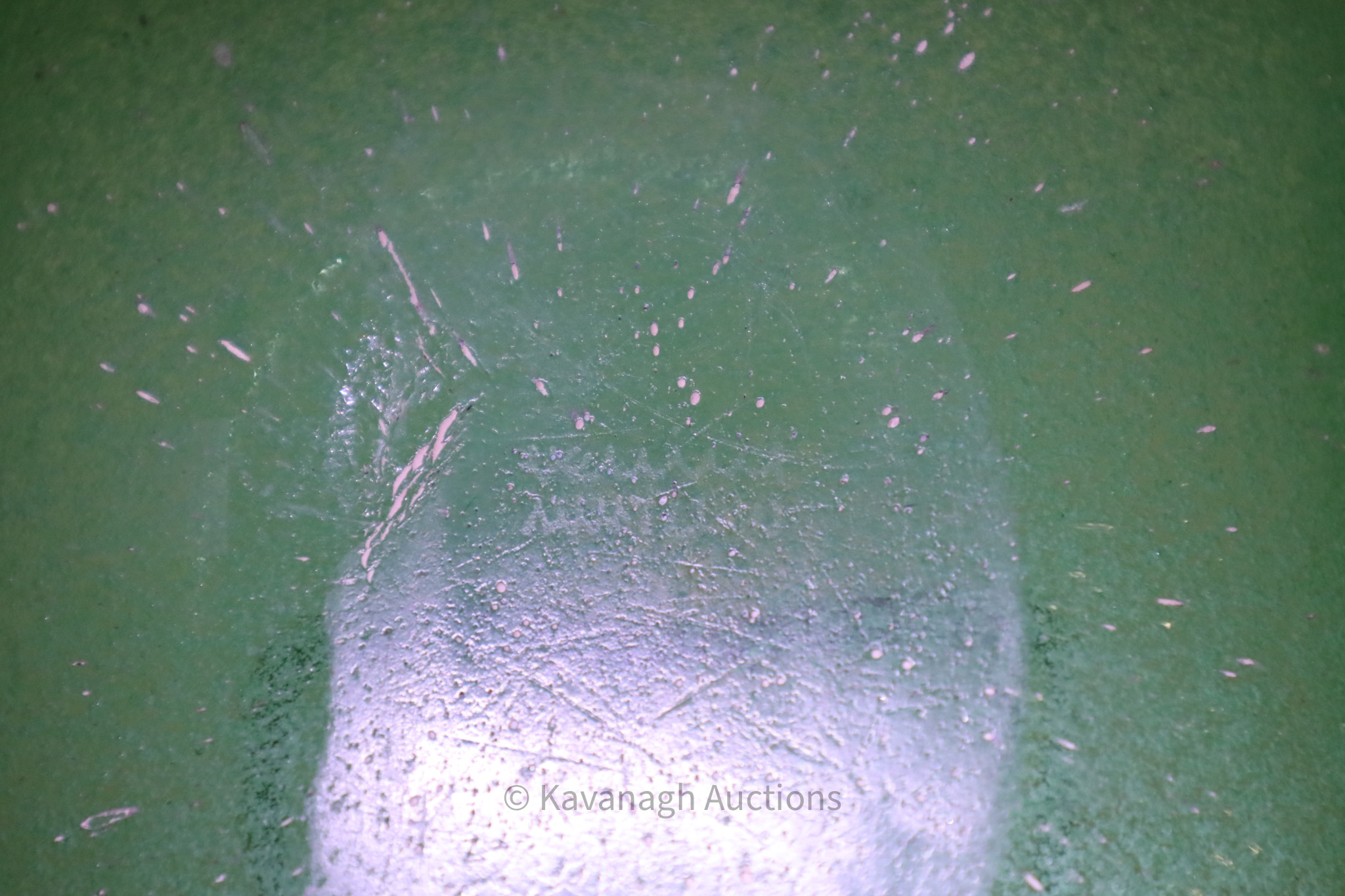
The underside is concave and polished, bearing an acid-etched mark reading “VENINI MURANO, ” consistent with early production from the late interwar and immediate pre-war period.
Details
Designer: Carlo Scarpa (1906-1978), for Venini (design period)
Manufacturer: Venini & C., Murano
Origin: Murano, Italy
Date / Period: Circa late 1930s–early 1940s
Medium: Hand-blown Murano glass with dense bollicine inclusions
Color: Jade green (verde giada)
Form: Square vide-poche / dish (variant form)
Dimensions: 15.5 × 12.5 × 5 cm (6.1 × 4.9 × 2 in.)
Marks: Acid-etched “VENINI MURANO” to underside
Condition:
Minor surface wear and light abrasions consistent with age
No observed cracks, chips, or restorations
Catalogue Note
Carlo Scarpa’s tenure at Venini in the 1930s and early 1940s marked a pivotal moment in Murano glass, characterized by a shift from decorative surface pattern toward an exploration of mass, internal structure, and the optical behavior of glass. Among these innovations, works incorporating dense fields of controlled air inclusions—commonly referred to as bollicine—demonstrate a materially driven approach in which light and volume are inseparable.
The present vide-poche reflects this experimental phase through its compact yet substantial form and its finely dispersed bubble matrix, which transforms the glass into a softly luminous, granular field. The restrained square geometry, with gently rounded edges and a subtly concave interior, aligns with Scarpa’s architectural sensibility, where form is conceived as a balance between structure, surface, and void.
Comparable works illustrating similar material treatment and compositional logic are published in Marino Barovier, I Vetri di un Architetto: Carlo Scarpa 1932–1947, including examples on pp. 104 and 111, as well as bowl forms such as no. 46 on p. 206. While differing in format, the present example is consistent with this documented body of production and may be understood as a variant within the broader bollicine series developed during Scarpa’s direction.
Examples in jade green glass—often described as verde giada—are particularly associated with early Venini production and are valued for their depth, softness, and tonal complexity. The presence of the early acid-etched mark further supports dating to this formative period.
Share this lot: