
Antiques, Decorative and Fine Arts Auction

Antiques, Decorative and Fine Arts Auction
Lot 63: Carlo Scarpa for Venini Murano Ruby Red Sommerso a Bollicine Triangular Glass Bowl, Signed, Model Variant, c. 1950
2026-04-25T15:00:00Z
Start price: CAD $50
Lot 63:
Carlo Scarpa for Venini Murano Ruby Red Sommerso a Bollicine Triangular Glass Bowl, Signed, Model Variant, c. 1950
Description
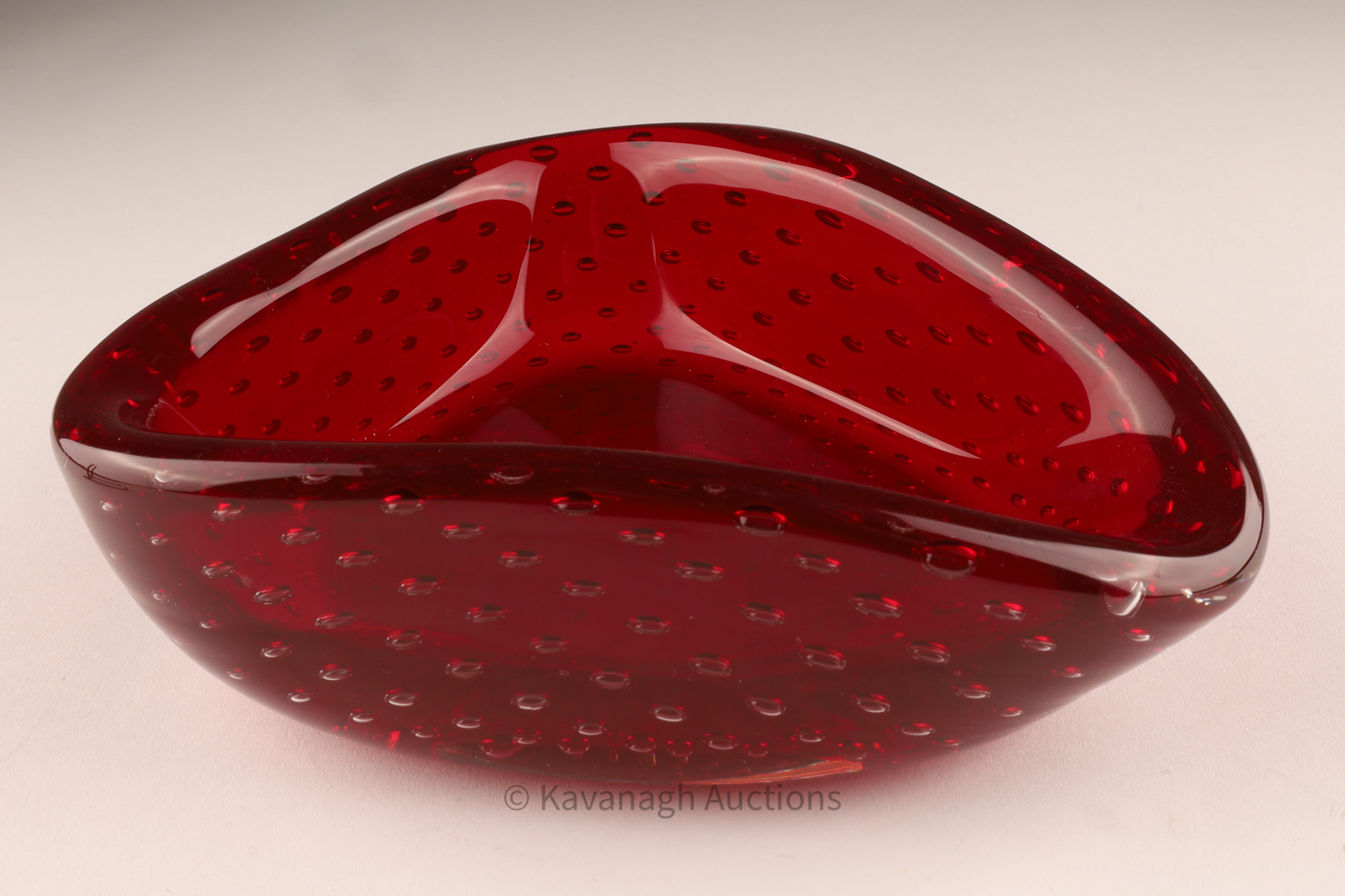
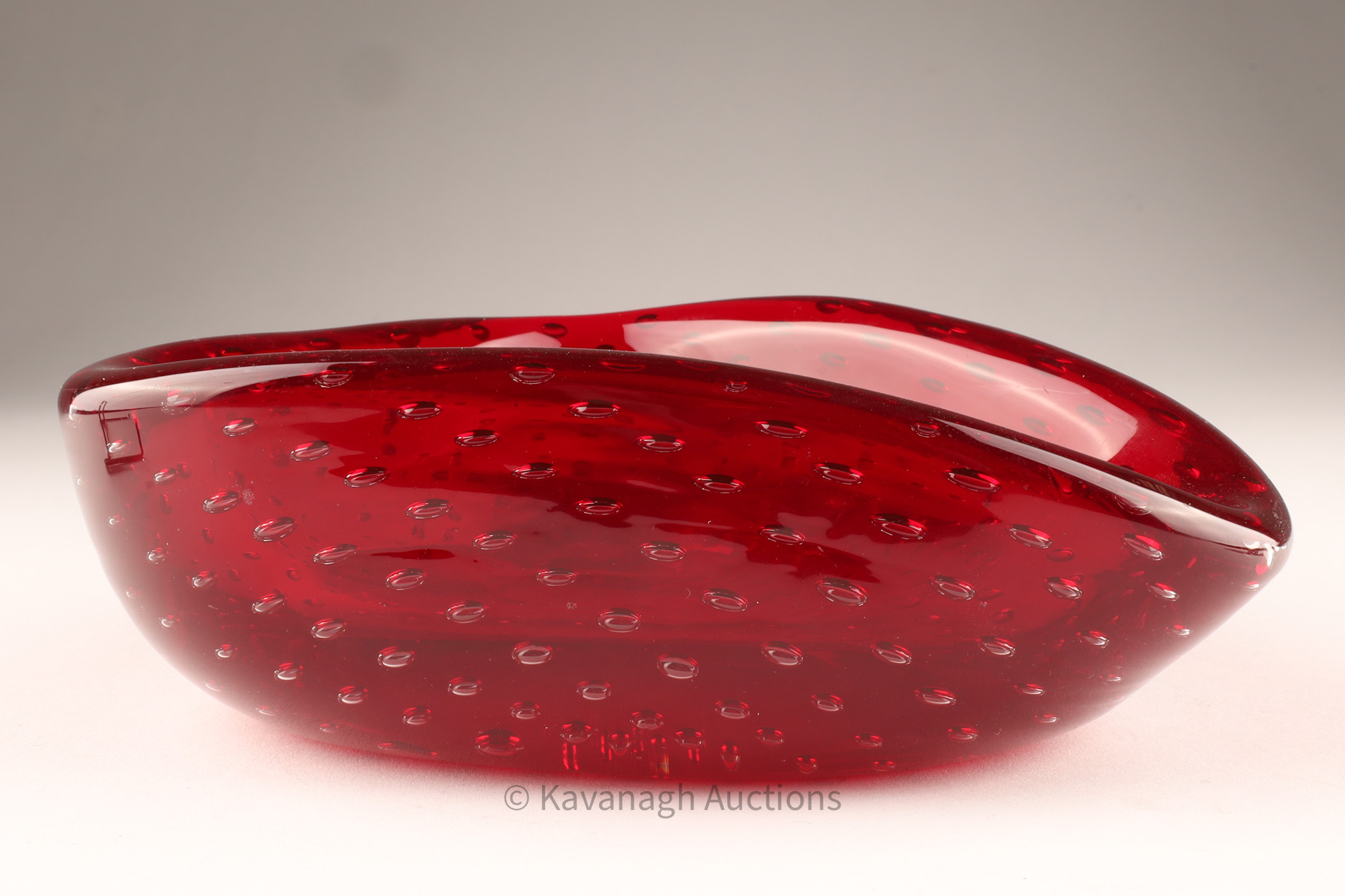
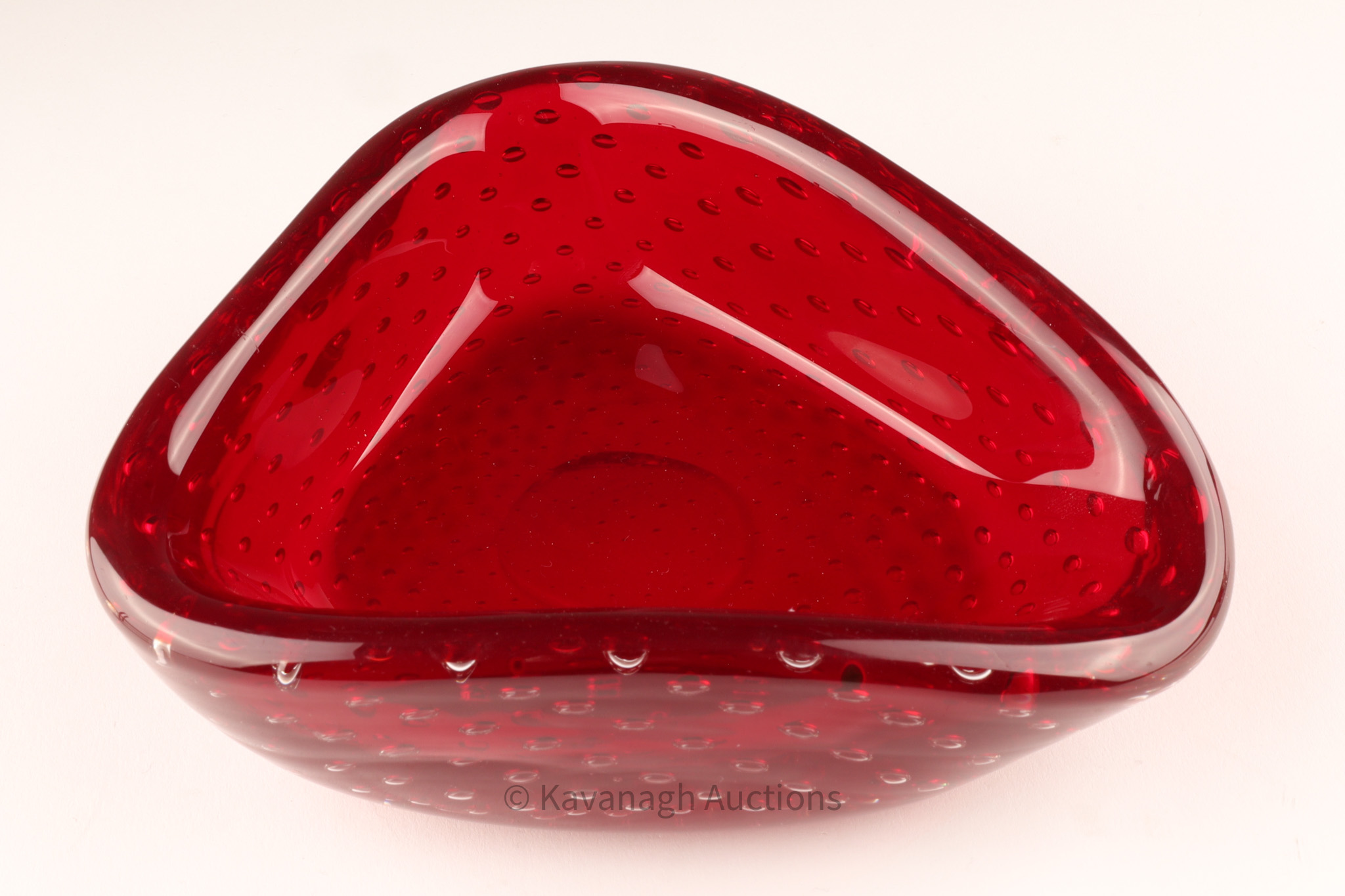
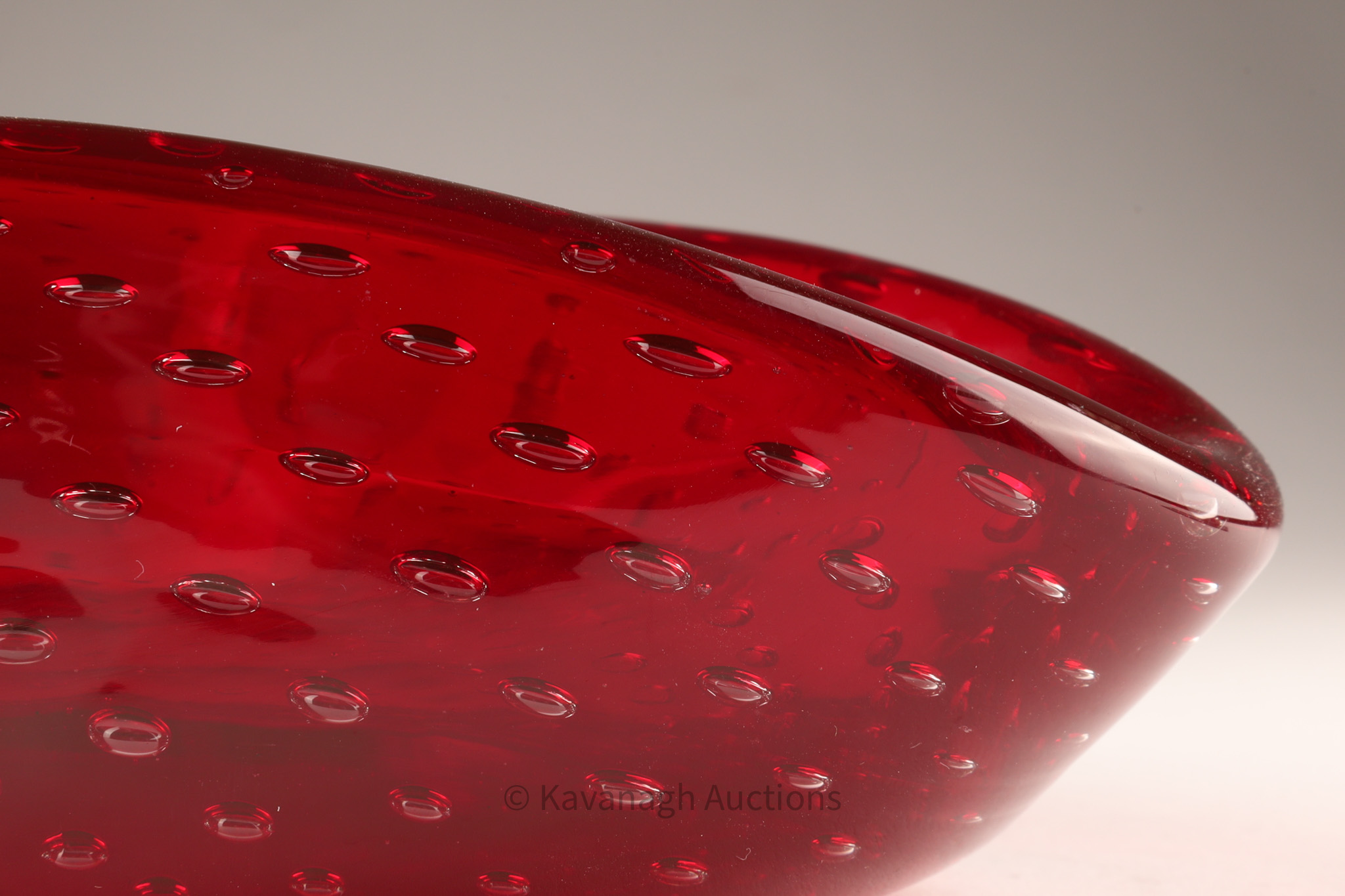
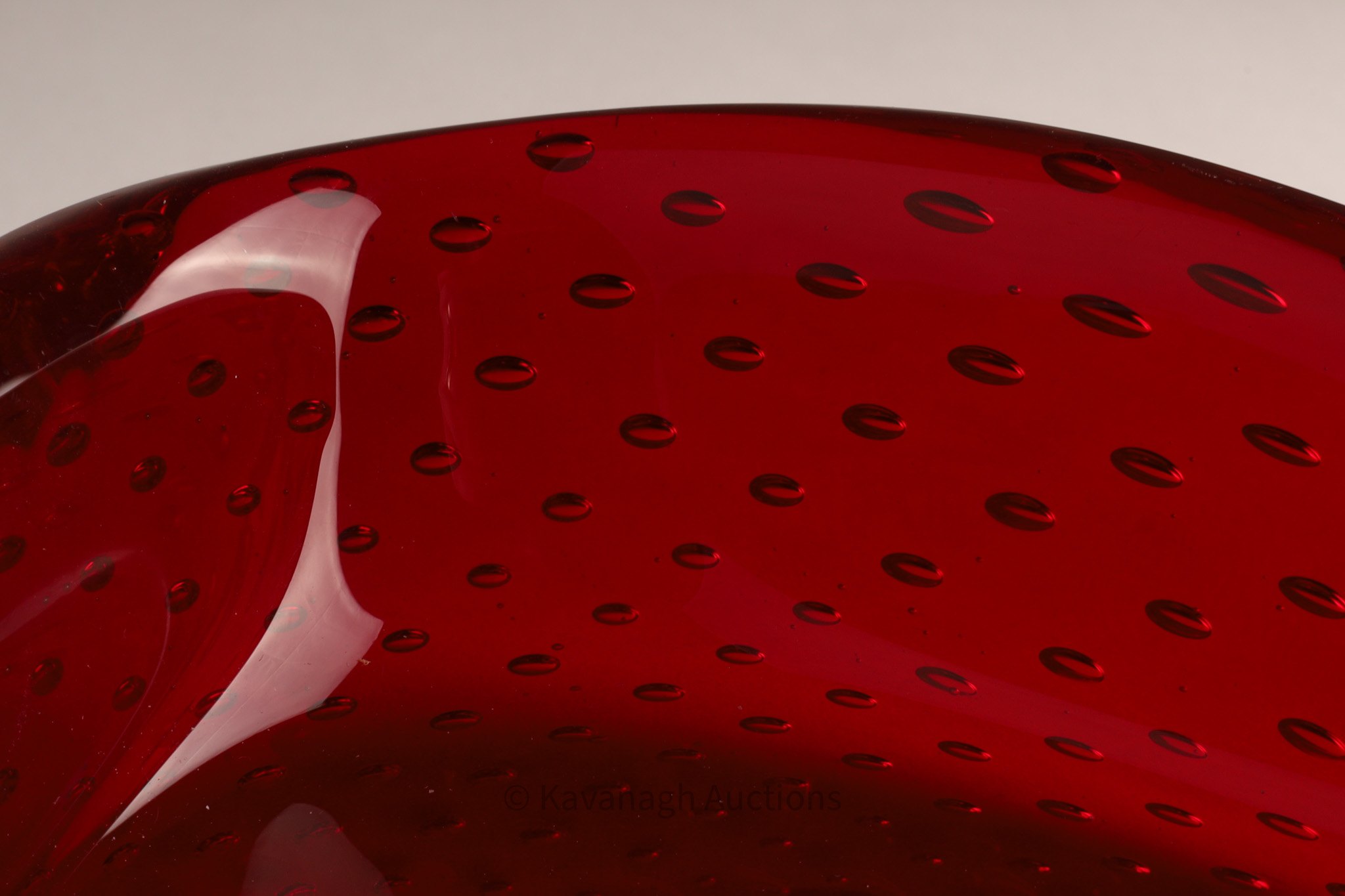
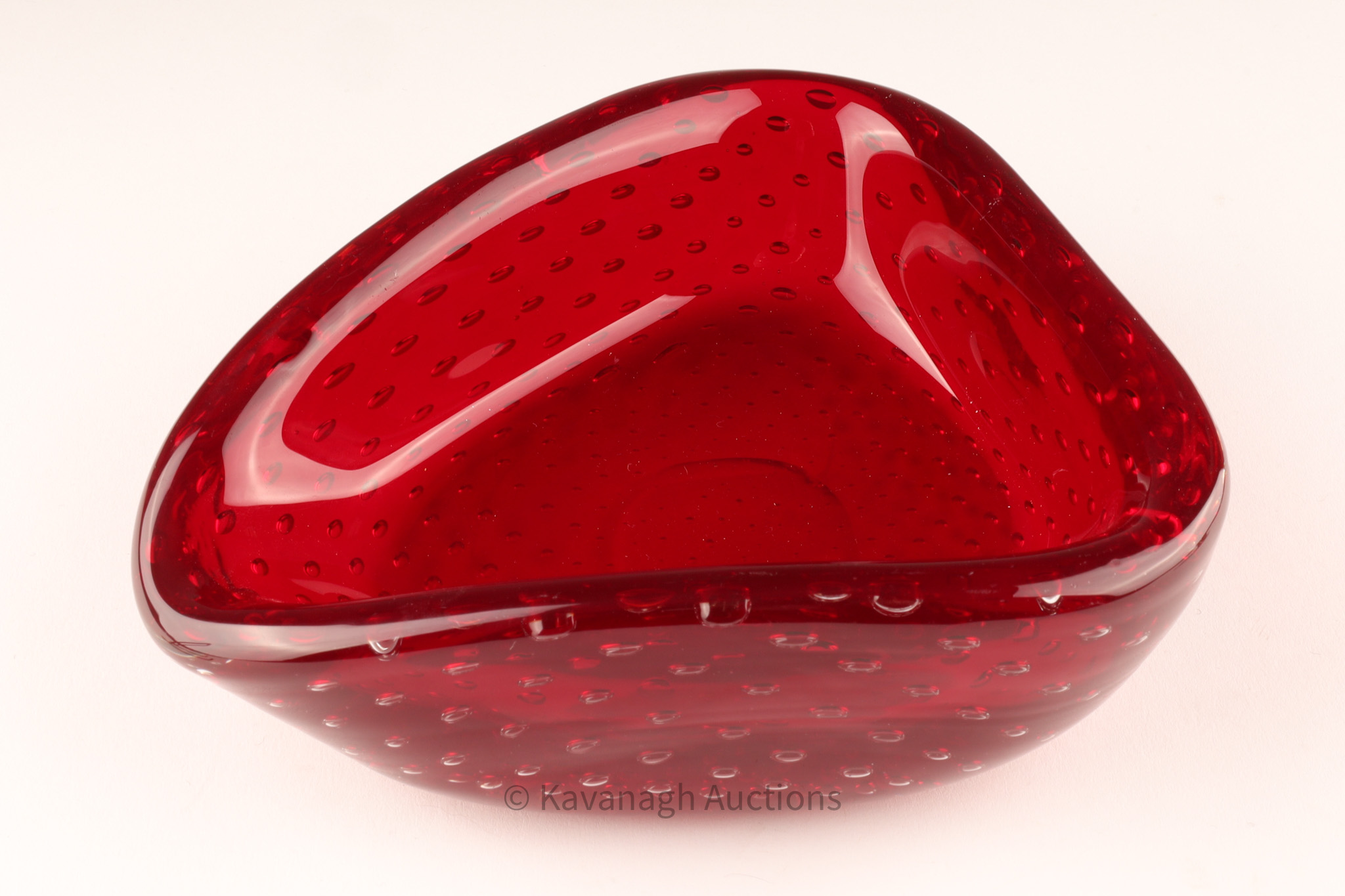
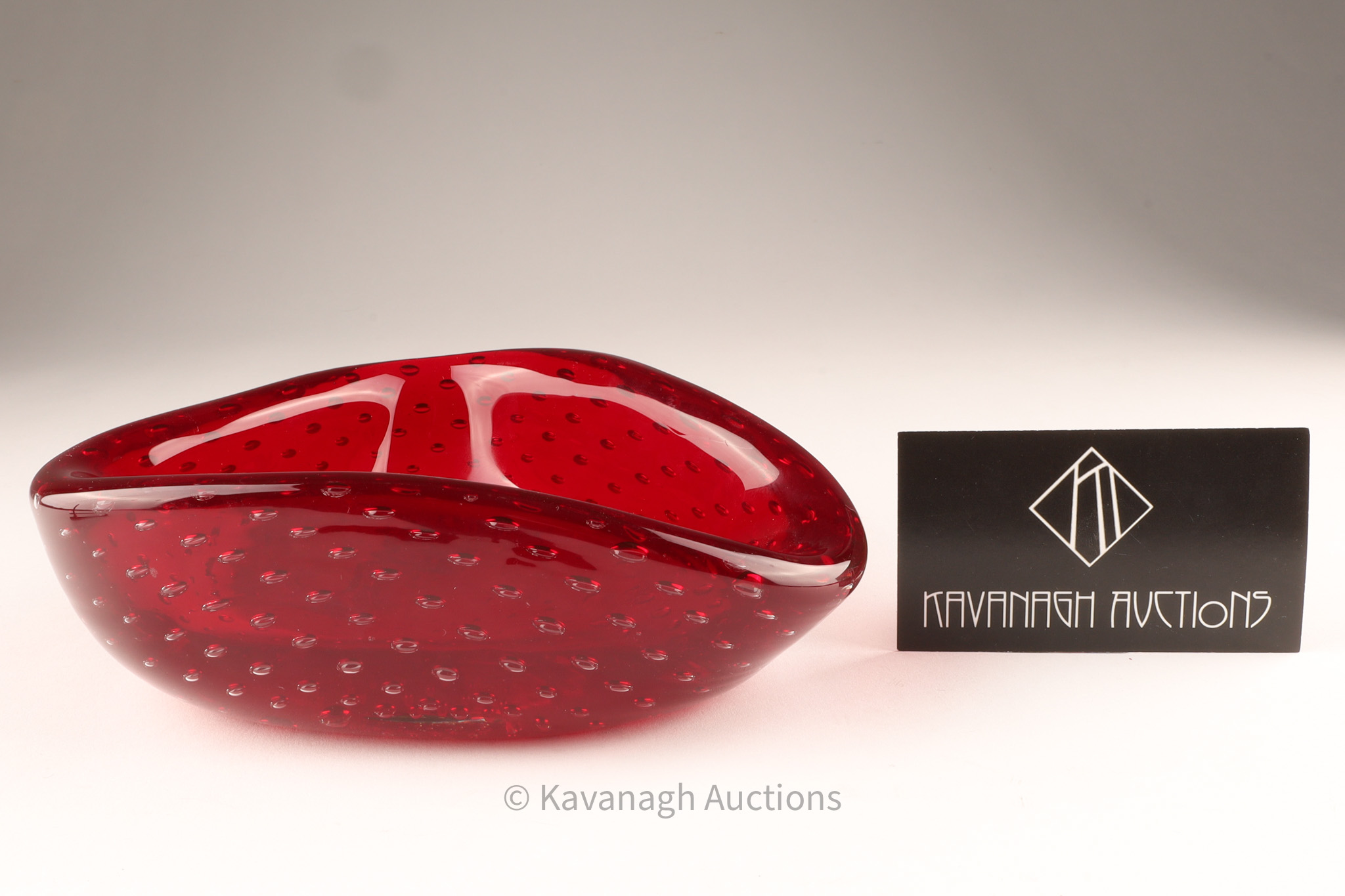
A substantial Murano glass bowl executed in transparent ruby-red glass with dense internal bollicine (controlled bubble inclusions), produced by Venini and attributable to designs by Carlo Scarpa, circa 1950.
The form is conceived as a softly rounded triangle, articulated with three recessed interior lobes divided by gently modeled ridges. This configuration creates a dynamic interplay between geometry and organic curvature, a defining characteristic of Scarpa’s postwar work at Venini, where traditional Venetian techniques were reinterpreted through a modern, architectural lens.
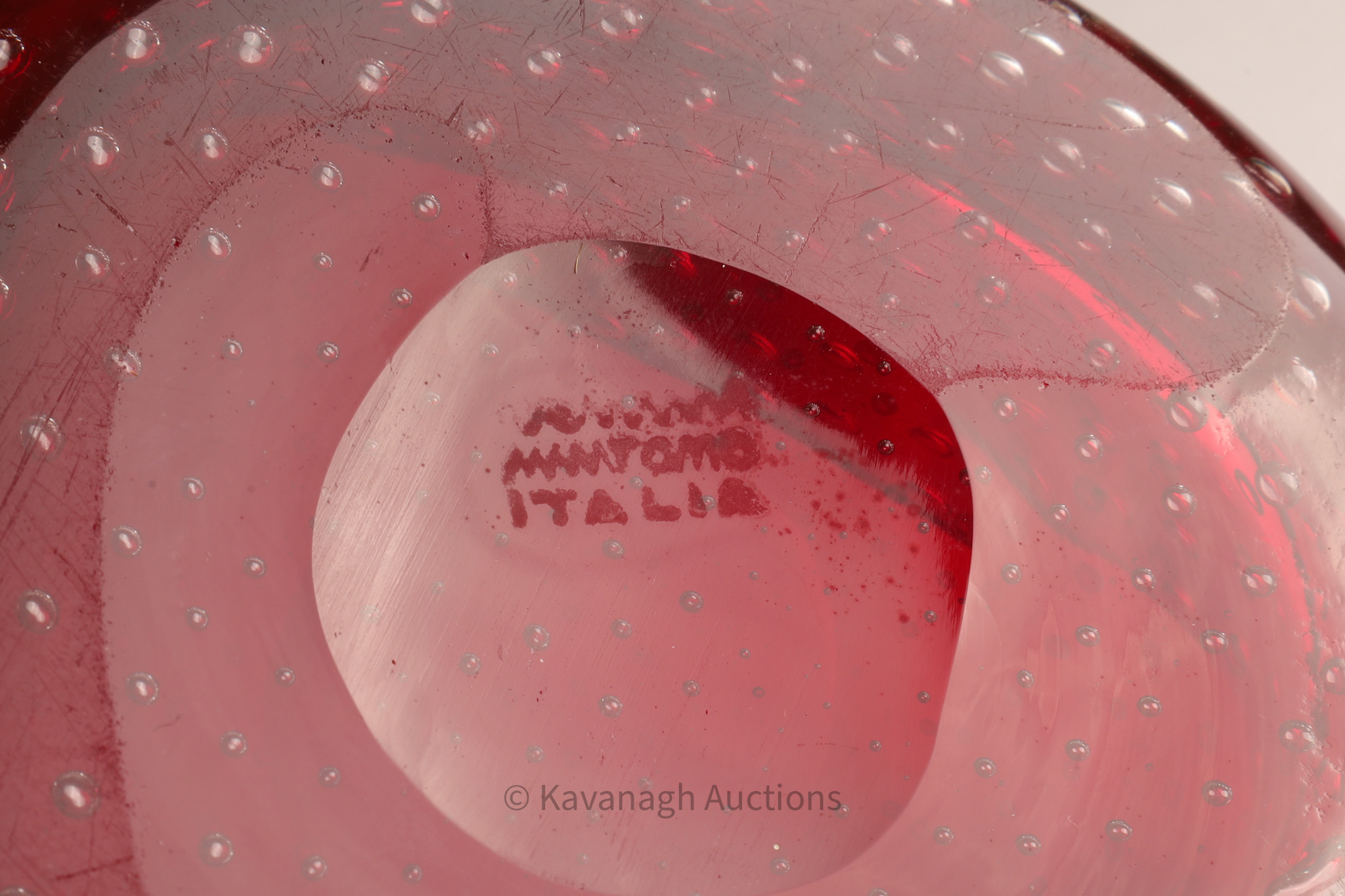
The underside is flat-polished and bears a three-line acid-etched mark reading “VENINI MURANO ITALIA, ” consistent with mid-20th-century production.
Details
Designer: Carlo Scarpa (Italian, 1906-1978), for Venini (model variant)
Manufacturer: Venini & C., Murano
Origin: Murano, Italy
Date / Period: Circa 1950
Medium: Hand-blown Murano glass, sommerso with bollicine inclusions
Color: Transparent ruby red
Dimensions: Approx. 18 × 12.75 × 6 cm (7 × 5 × 2.5 in.)
Marks: Acid-etched “VENINI MURANO ITALIA” to base
Condition:
Good overall condition
Light surface wear and minor base abrasions consistent with age and use
No cracks, chips, or restorations observed
Catalogue Note
Carlo Scarpa’s collaboration with Venini represents one of the most innovative periods in 20th-century glassmaking, during which traditional Murano techniques were reimagined through a modernist and materially driven approach. Among these developments, the sommerso a bollicine technique stands out for its integration of controlled air inclusions within thick, layered glass, transforming the material into a field of depth, light, and internal movement.
The present bowl belongs to this important series and demonstrates Scarpa’s mature exploration of mass and structure in the late 1940s and early 1950s. The dense and evenly distributed bollicine create a rhythmic internal texture, while the substantial sommerso construction enhances the perception of volume and optical depth. Unlike earlier, more purely organic forms, works of this period reveal a growing interest in geometric articulation and spatial division.
Comparable works from this sommerso a bollicine series are illustrated in Marino Barovier, Carlo Scarpa: Venini 1932–1947, including examples on p. 111 and model forms such as no. 46 on p. 206, which demonstrate similar material treatment, scale, and conceptual approach. While the present bowl differs in its more complex triangular articulation, it may be understood as a variant within this documented group of experimental production.
Share this lot: