
Antiques, Decorative and Fine Arts Auction

Antiques, Decorative and Fine Arts Auction
Lot 203: Carle Van Loo (1705-1765) 18th c. French Sanguine Academy Study of Feet
2026-04-25T15:00:00Z
Start price: CAD $100
Lot 203:
Carle Van Loo (1705-1765) 18th c. French Sanguine Academy Study of Feet
Description
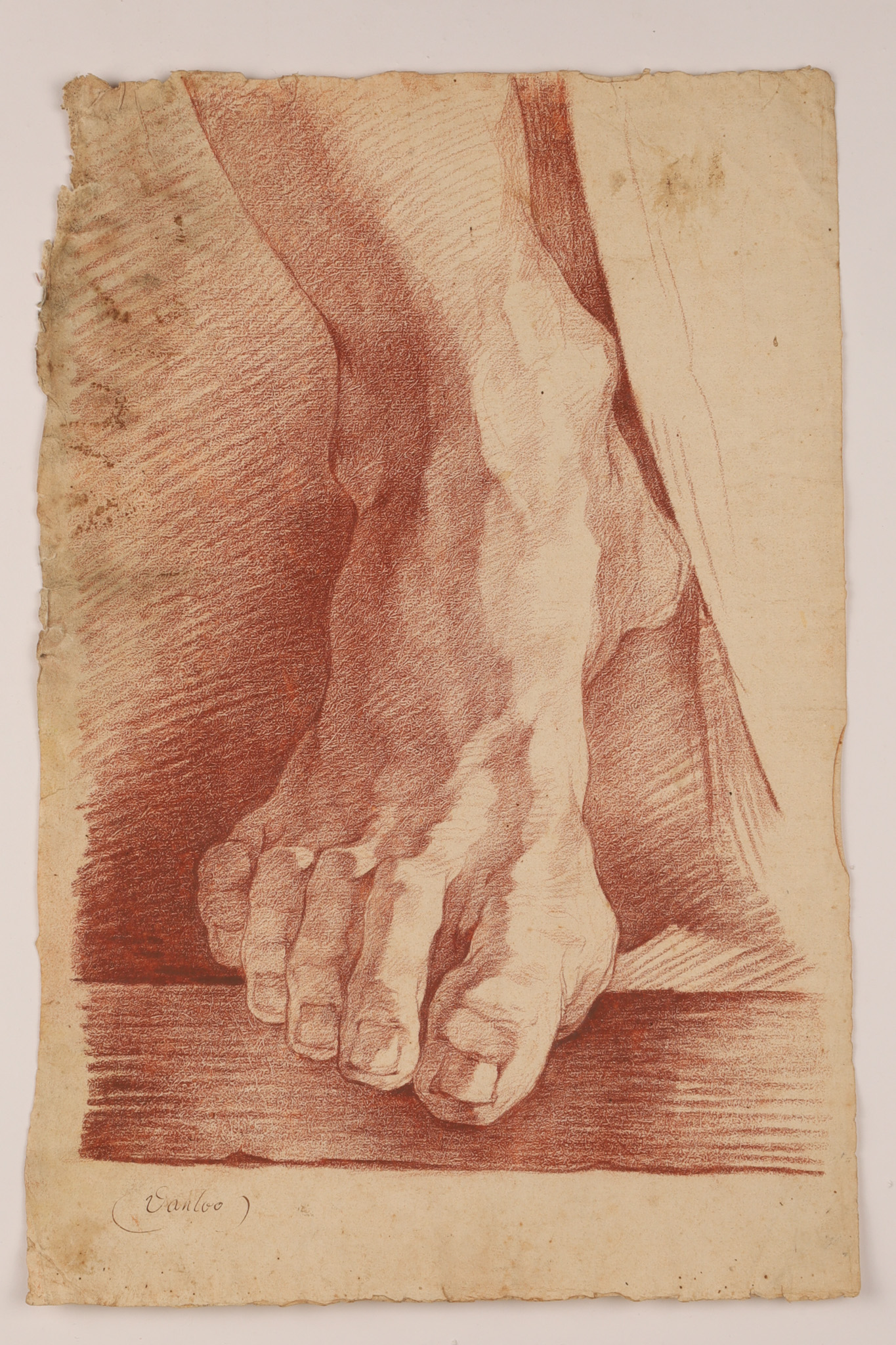
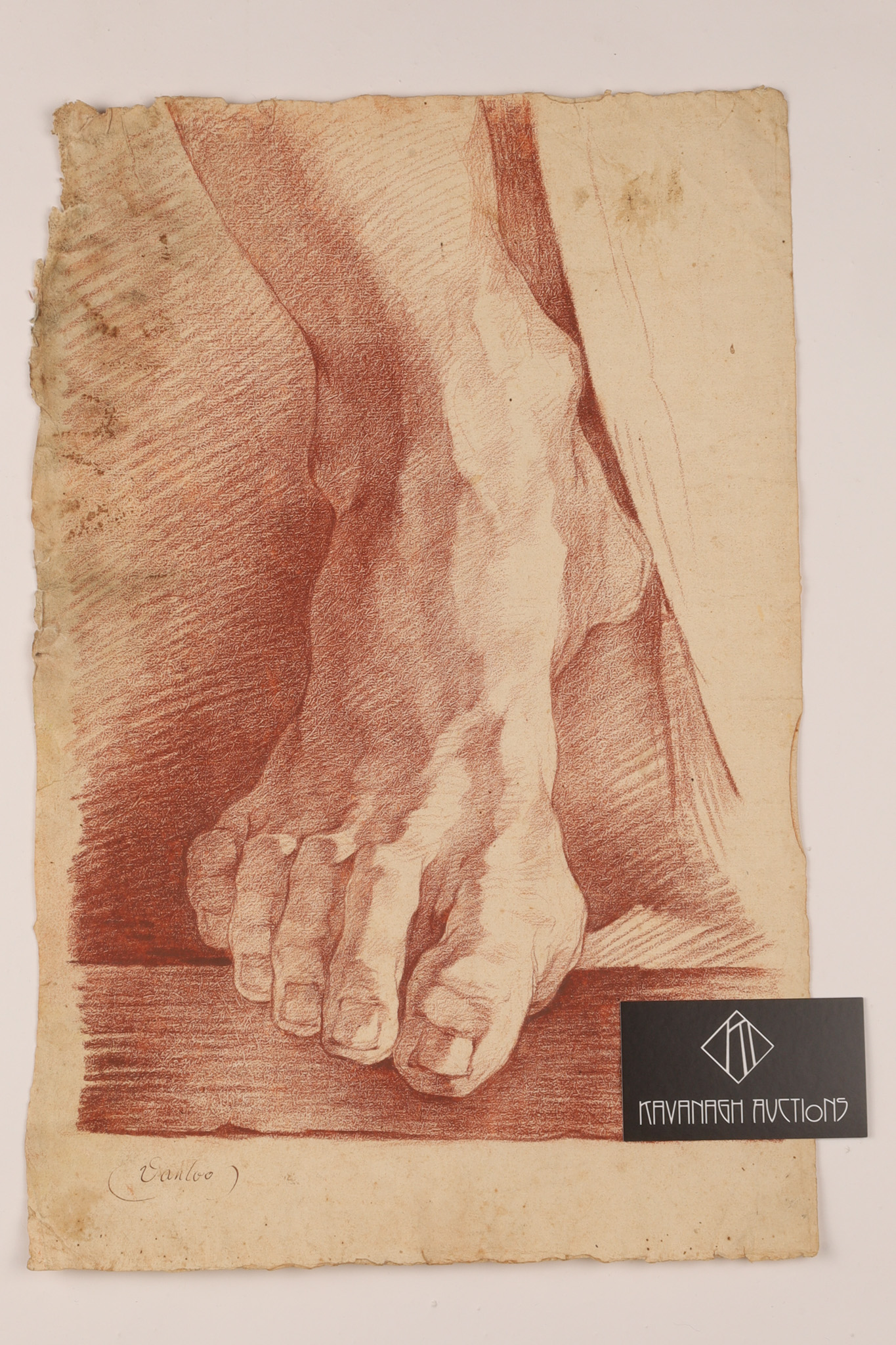
Study of a Foot
Sanguine on laid paper
France, mid-18th century
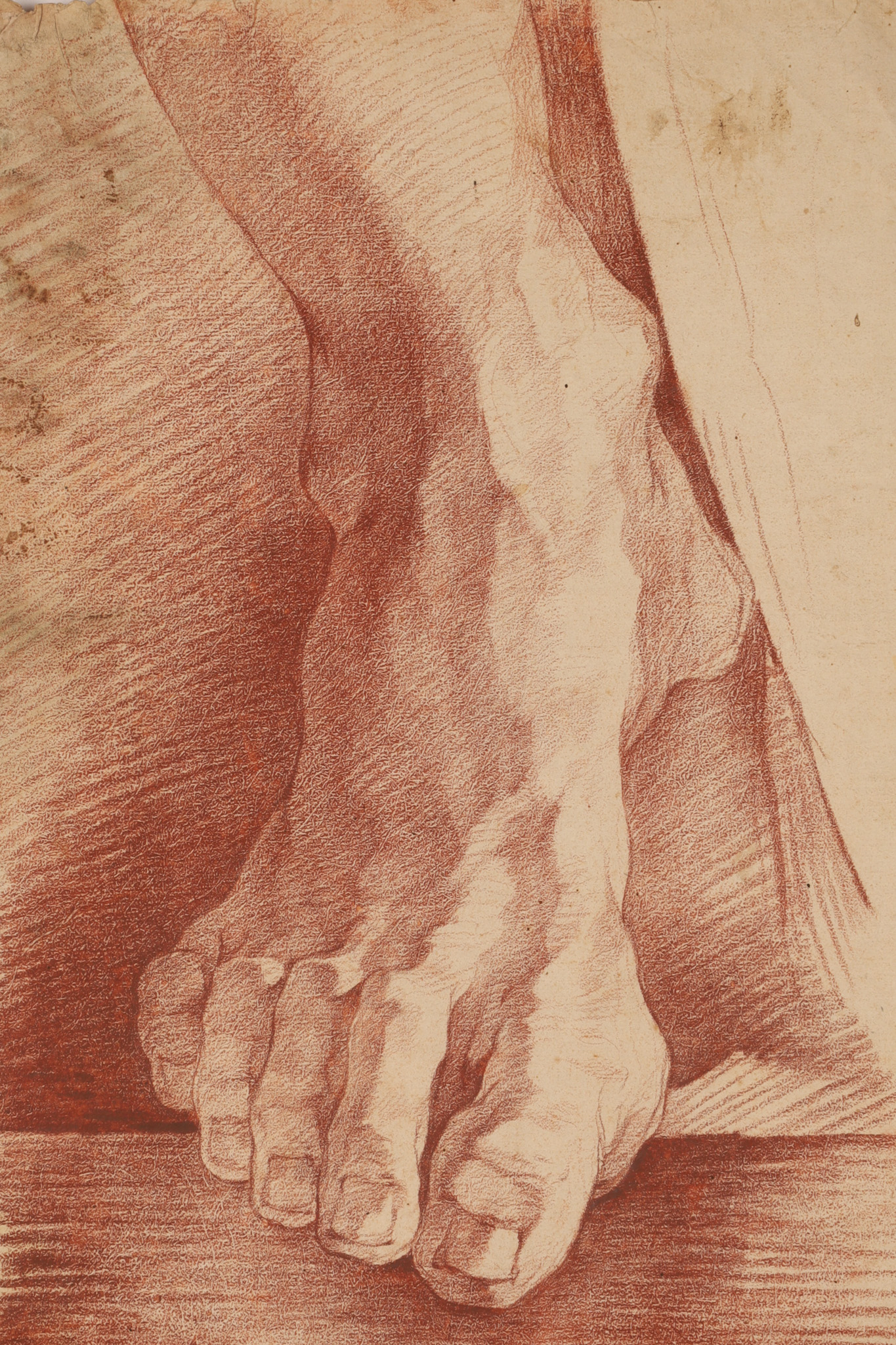
A finely executed academic study of a male foot rendered in sanguine on laid paper. The drawing demonstrates confident structural construction through disciplined contour and controlled tonal gradation. The modelling is achieved with layered hatching and subtle pressure variation, creating convincing volume and anatomical articulation, particularly in the tendons, toe joints, and arch.
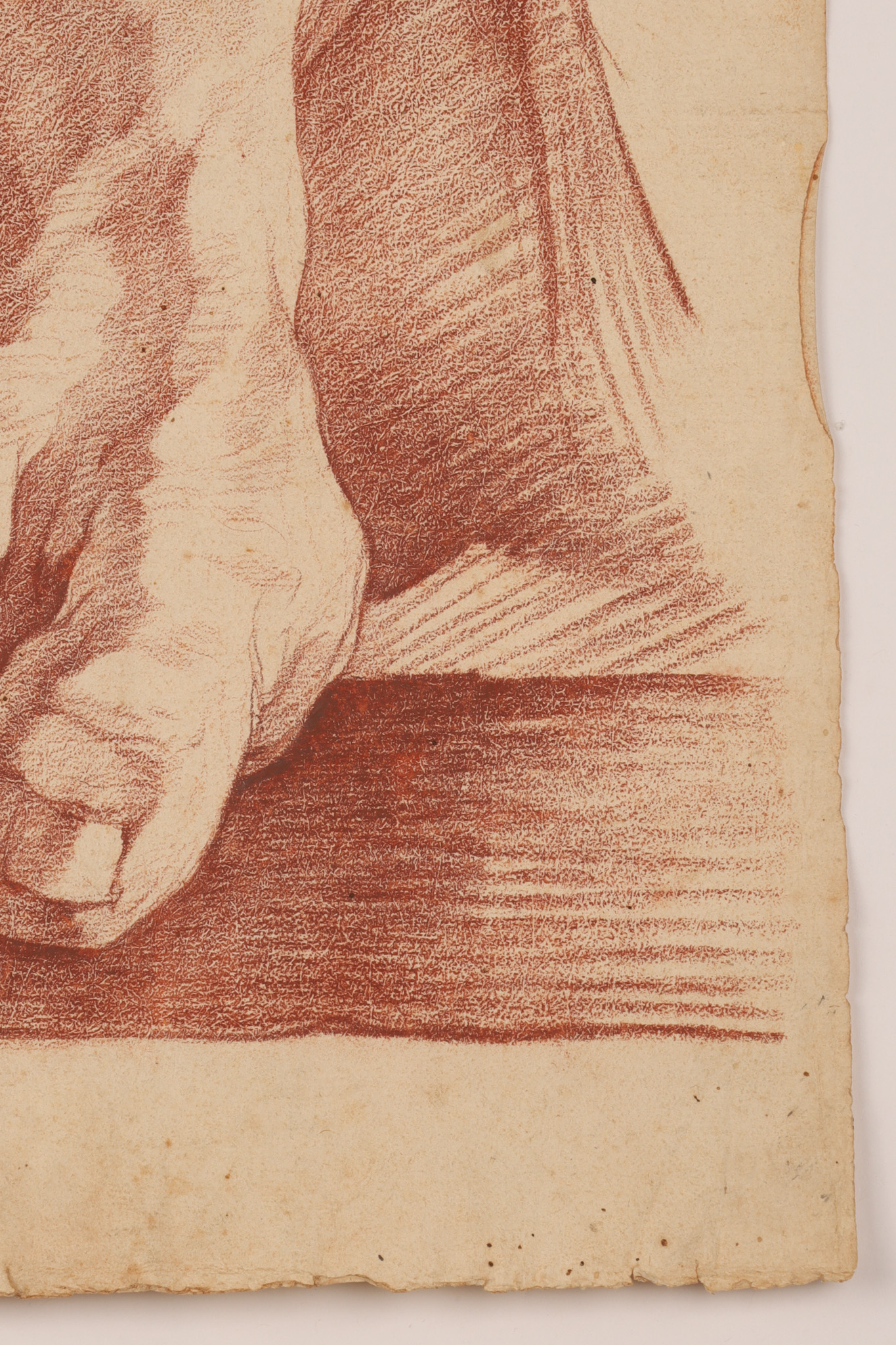
The foot rests upon a block, a classical academic device used in life-room practice to isolate form, establish weight, and control light direction. The cast shadow is handled with restraint, reinforcing the sense of mass without flattening the composition. The economy of means and absence of corrective reworking suggest an assured hand rather than a tentative student exercise.
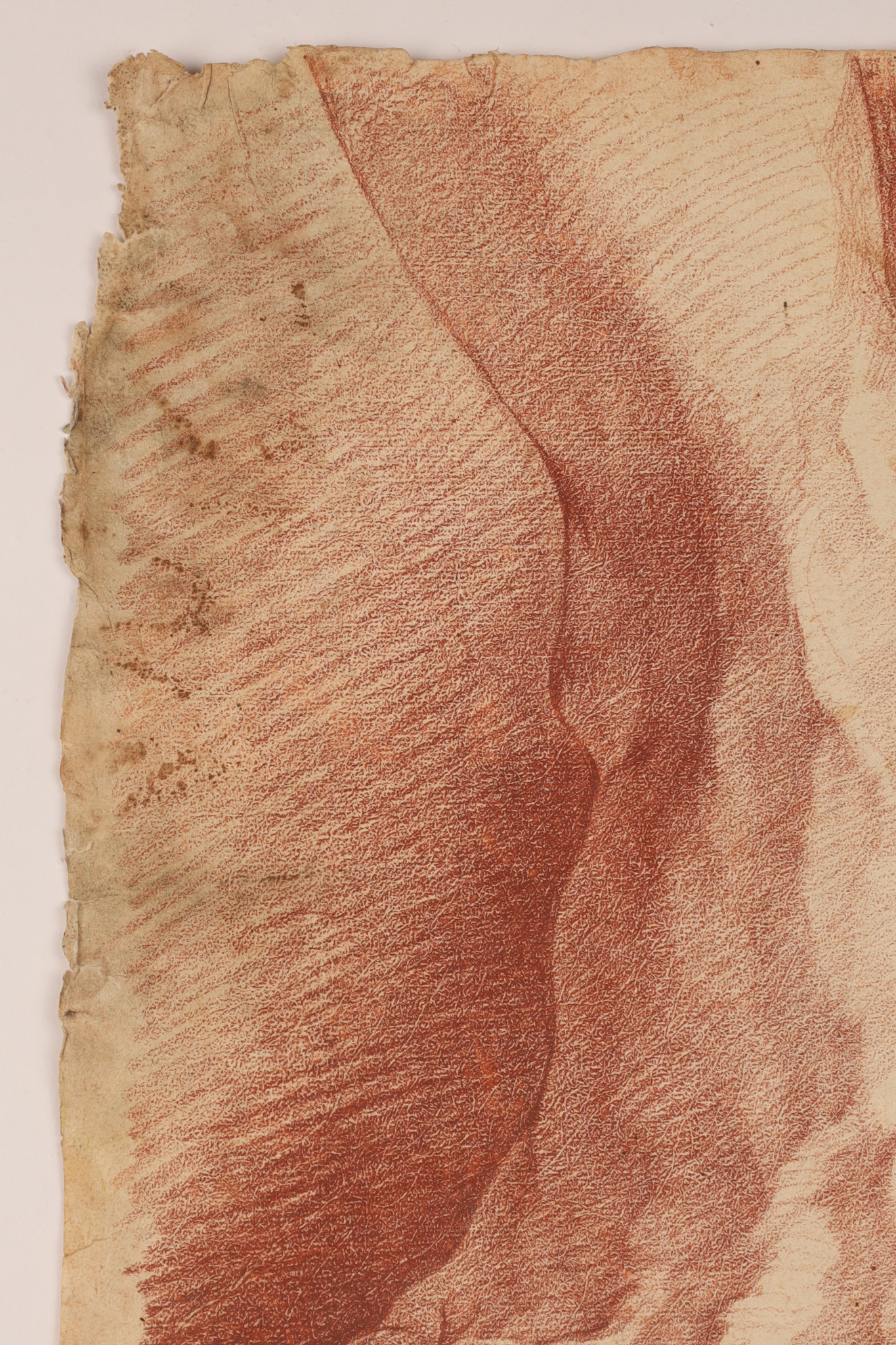
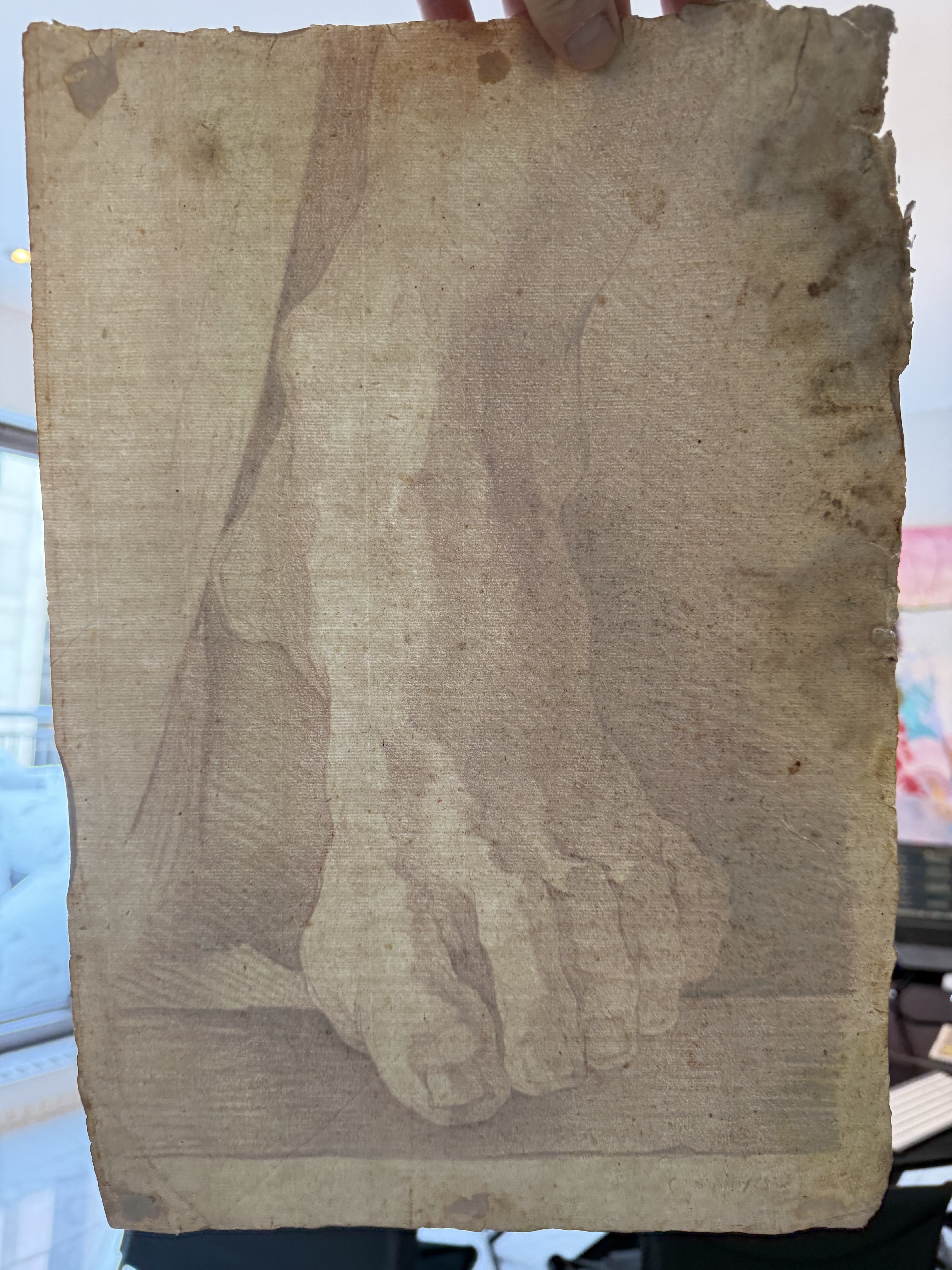
The sheet is executed on period laid paper consistent with 18th-century French production.
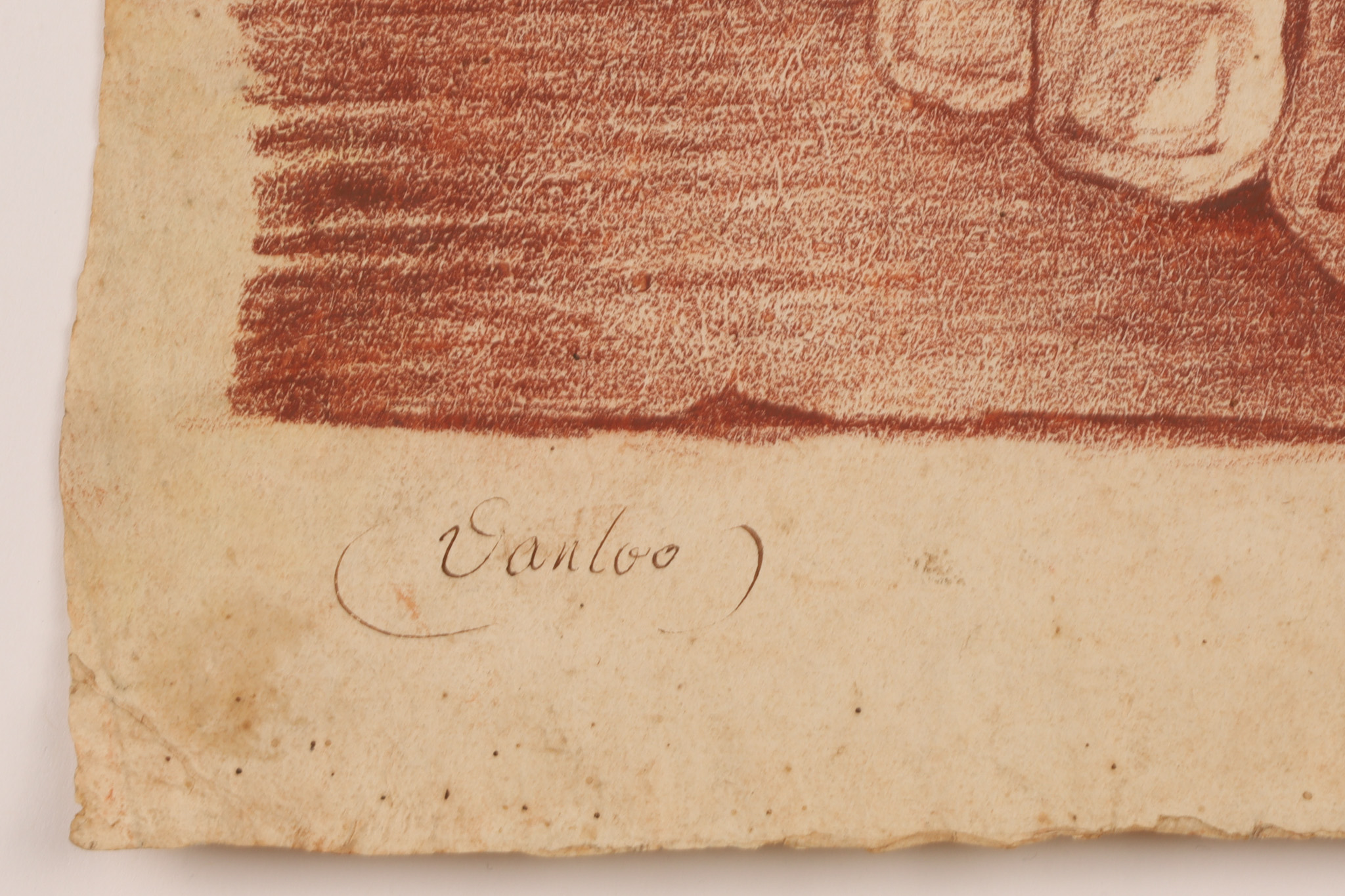
An inscription "Van Loo" appears in the lower margin. Such inscriptions are frequently encountered on 18th-century academic sheets and may represent either an autograph notation or an early identifying hand.
Details
Origin: France
Date: Mid-18th century
Medium: Sanguine on laid paper
Dimensions: 43 × 28 cm (sheet)
Condition: Age toning, minor edge wear, scattered small losses consistent with period handling; inscription to lower margin.
Catalogue Note
Carle Van Loo (1705-1765) was one of the most accomplished and influential painters of 18th-century France. Born into the distinguished Van Loo dynasty of artists, he trained in Italy before establishing himself in Paris, where he became a central figure of the French Royal Academy. His career culminated in his appointment as Premier Peintre du Roi under Louis XV in 1762.
Share this lot: