
Antiques, Decorative and Fine Arts Auction

Antiques, Decorative and Fine Arts Auction
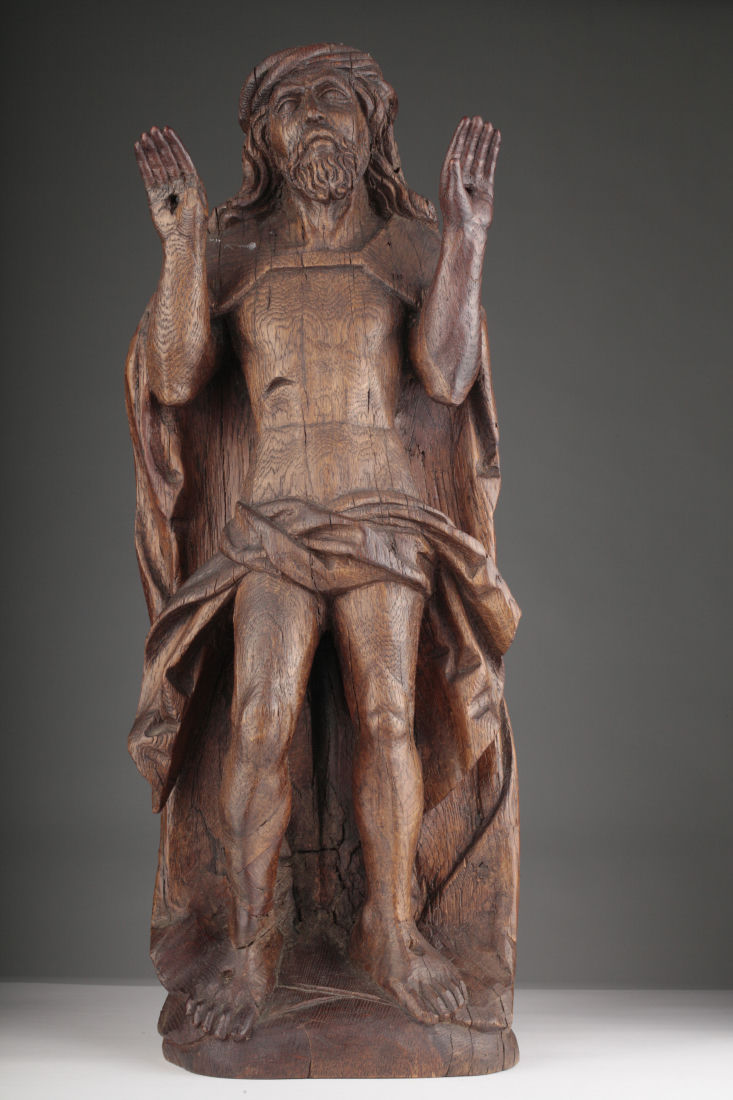
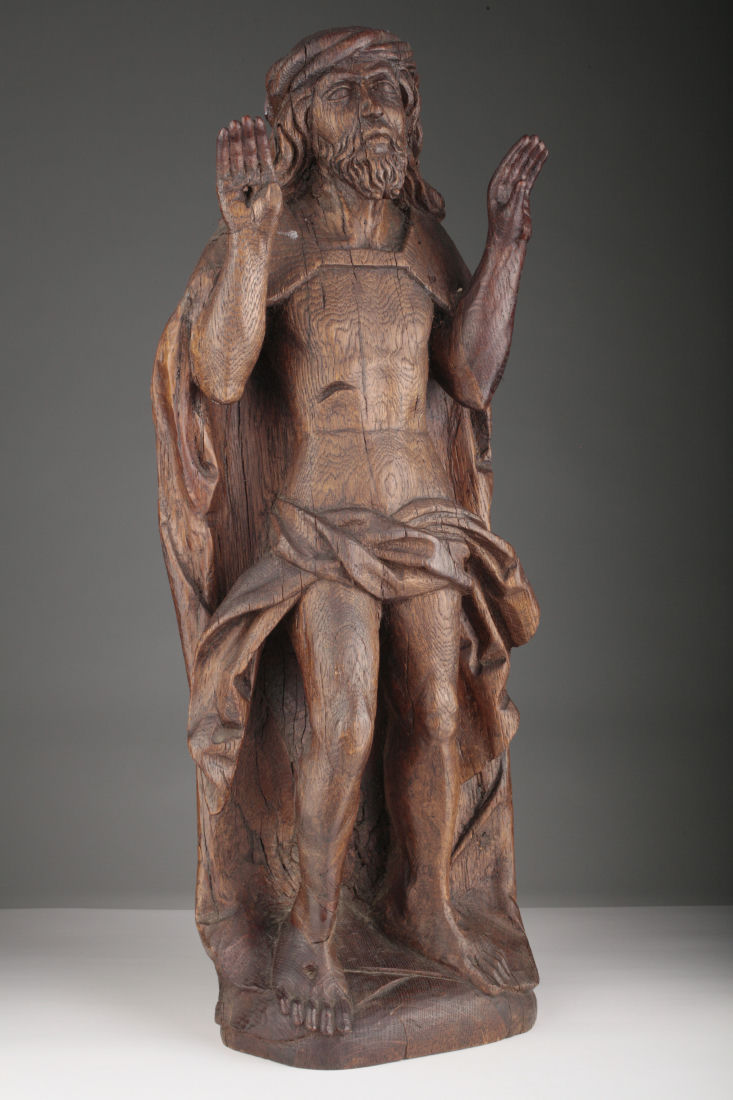
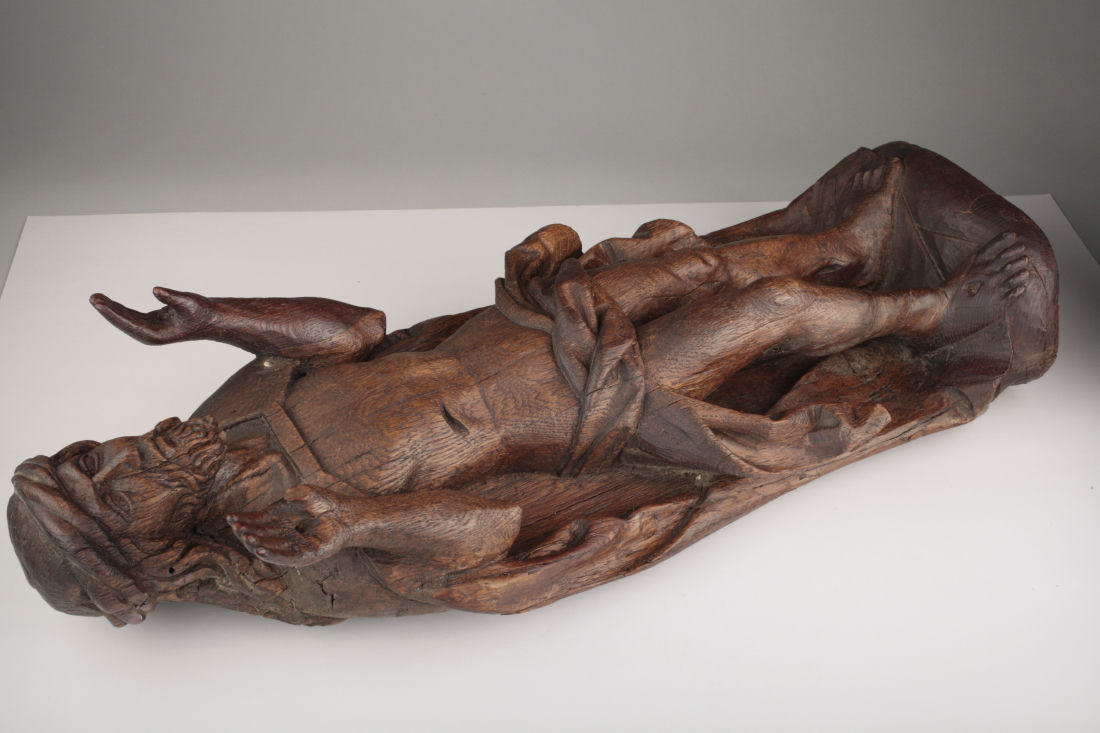
Lot 235: Northern European Late Gothic Carved Oak Figure of Christ Displaying the Wounds, circa 1500–1530
2026-12-05T16:00:00Z
Start price: CAD $20
Estimated price: C$ 20 - C$ 50,000
Lot 235:
Northern European Late Gothic Carved Oak Figure of Christ Displaying the Wounds, circa 1500–1530
Description
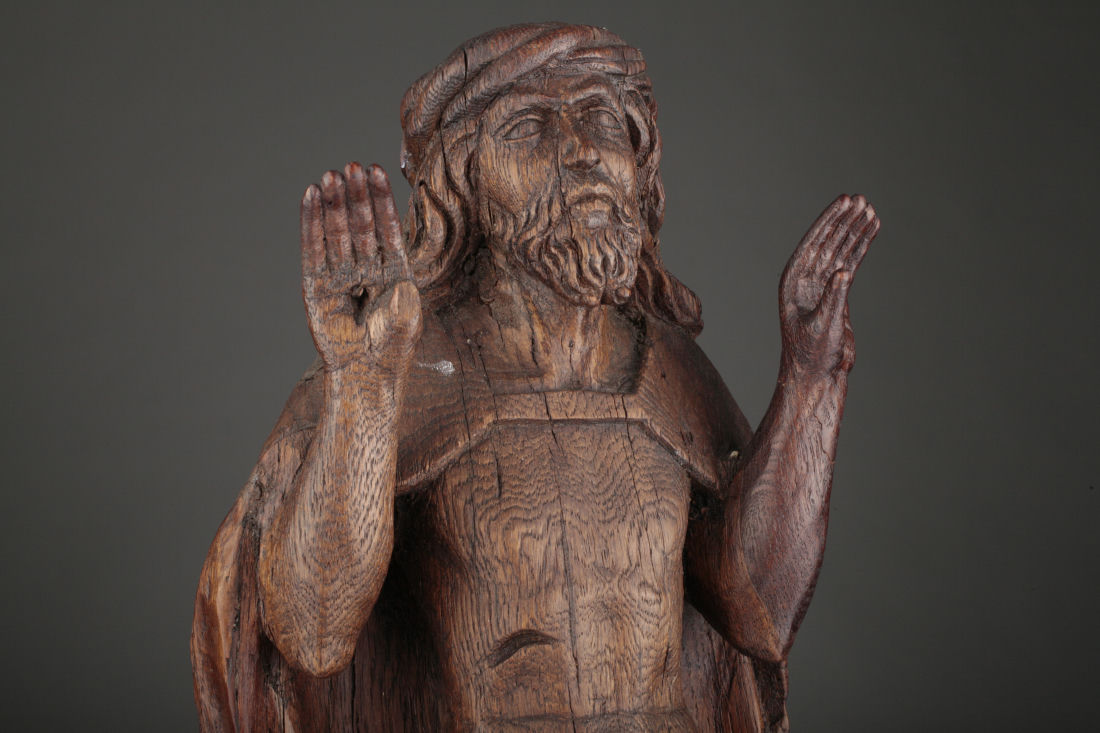
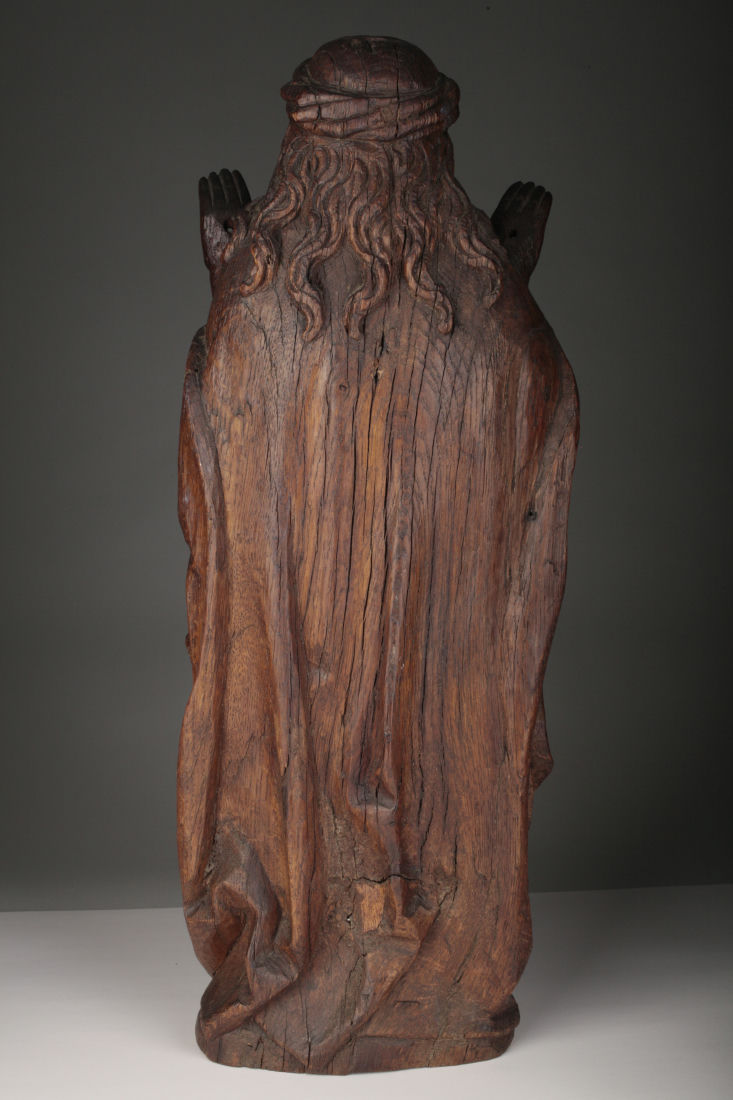
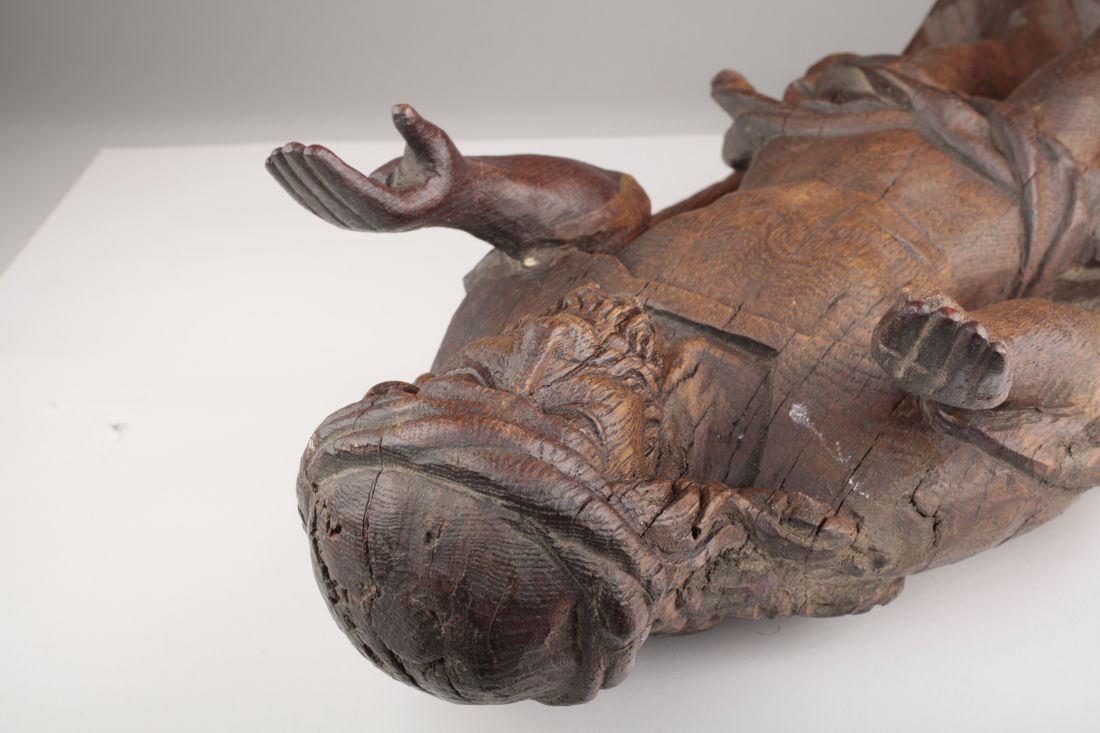
A substantial carved oak devotional figure of Christ displaying the wounds, conceived in the late Gothic Northern European tradition and stylistically consistent with the Lower Rhine / eastern Netherlands / Southern Netherlandish sphere, circa 1500–1530. Christ is shown seated or supported, with both hands raised to expose the wounds of the Passion in the devotional gesture known as ostentatio vulnerum, closely related to the Man of Sorrows / Christ of Pity iconographic tradition.
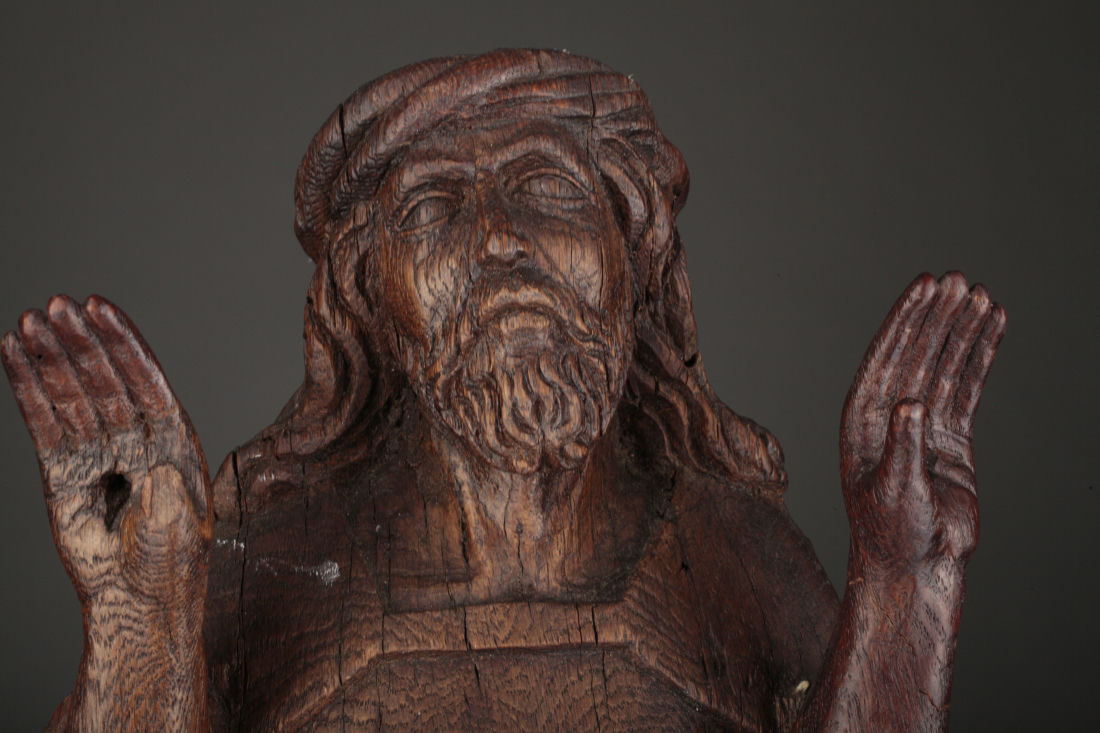
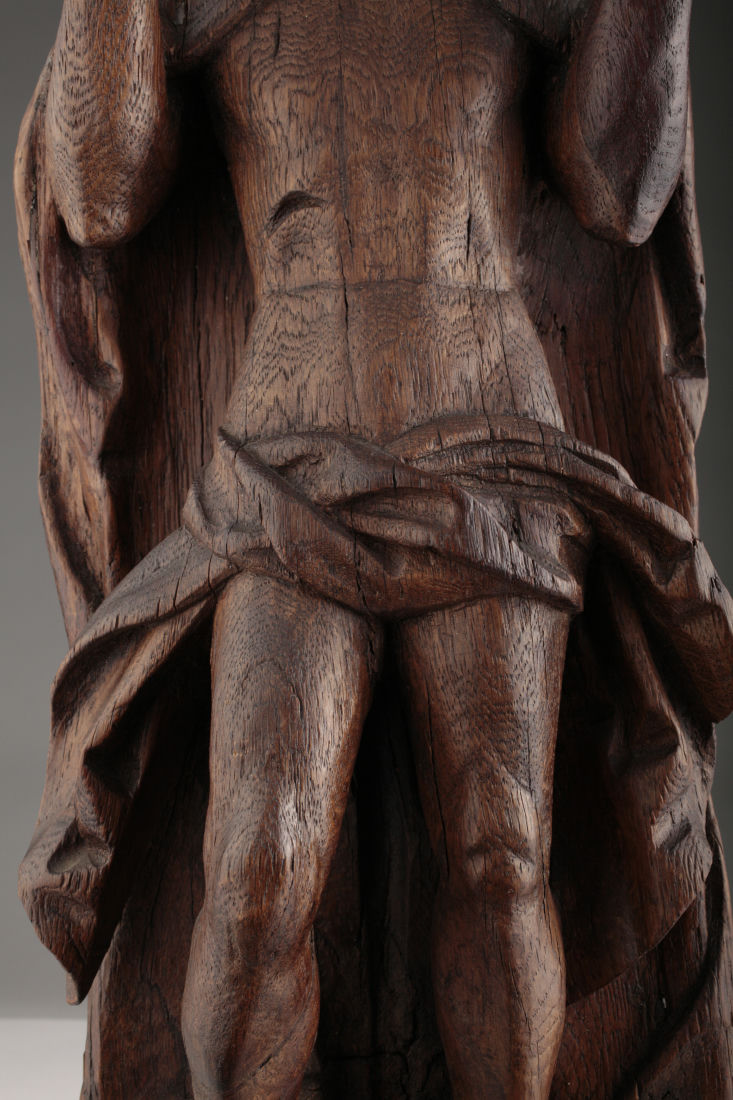
The figure is carved largely in the round from a substantial oak section, with deeply incised facial features, strongly delineated almond-shaped eyes, elongated nose, curling beard and linear hair, together with angular drapery and emphatic surface tooling characteristic of northern late-medieval sculpture. The rear is fully worked, with the mantle, hair and silhouette continuing around the figure.
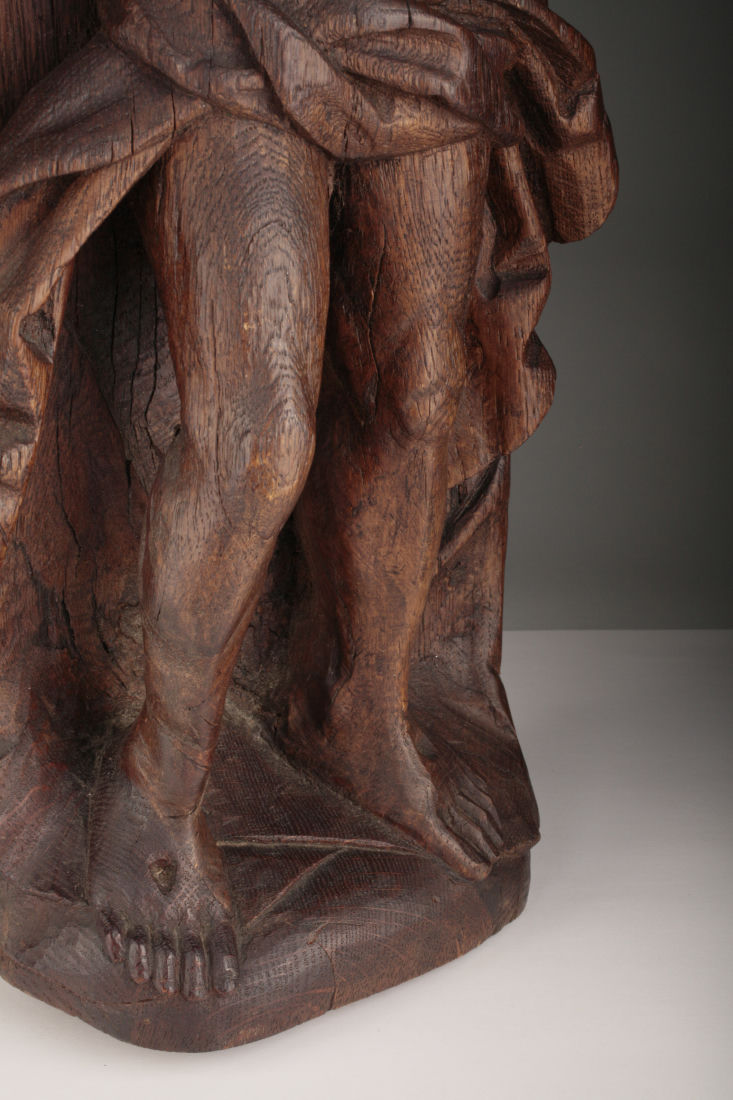
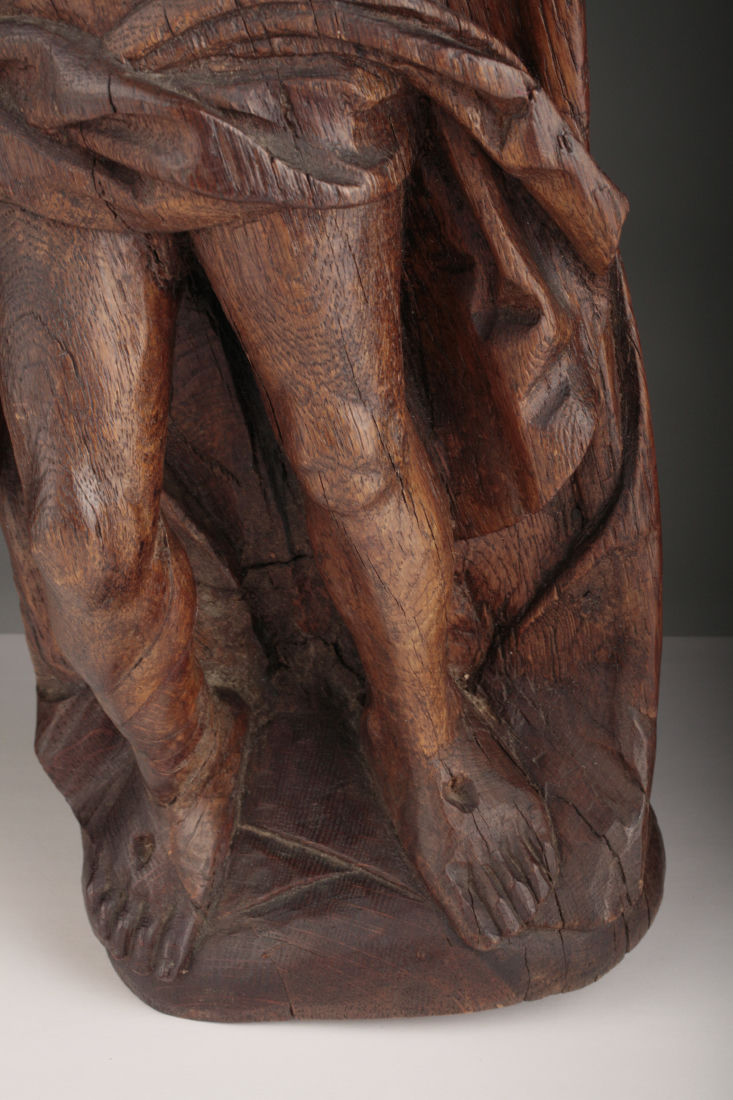
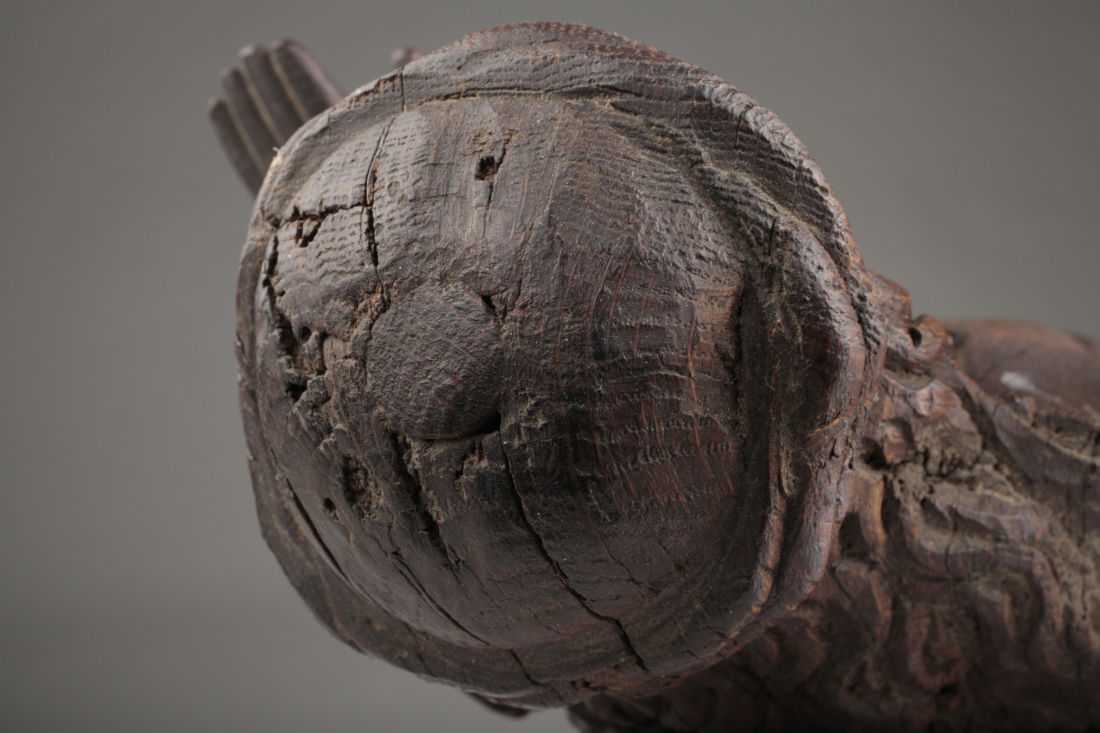
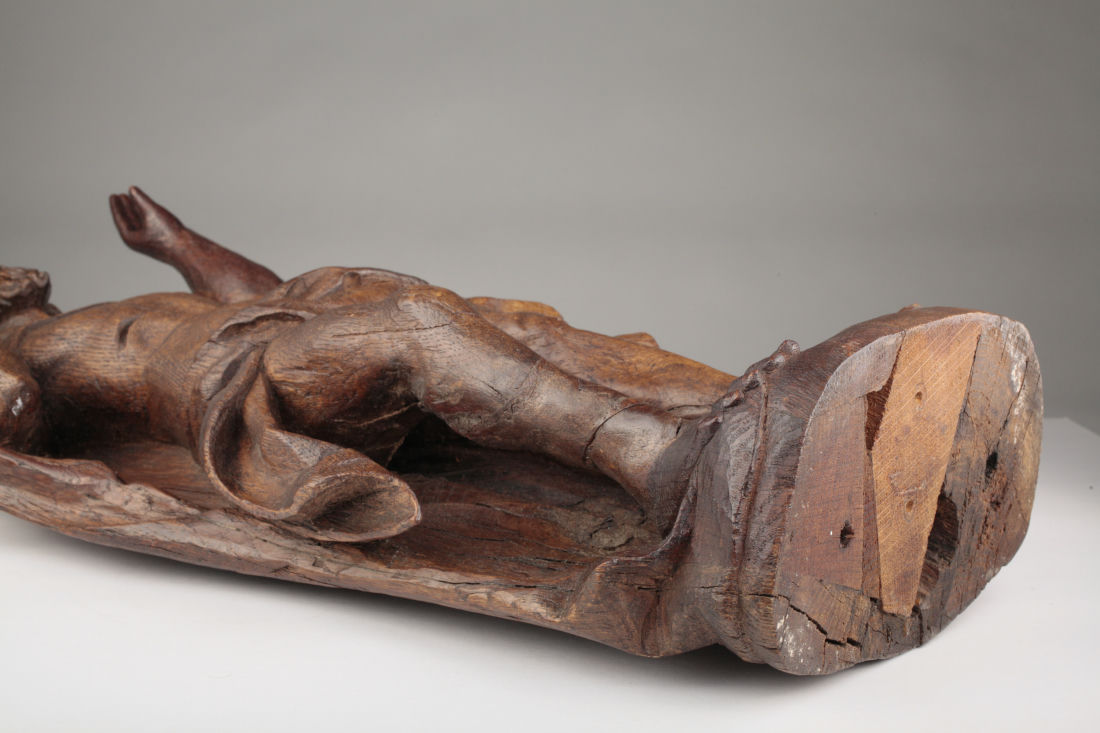
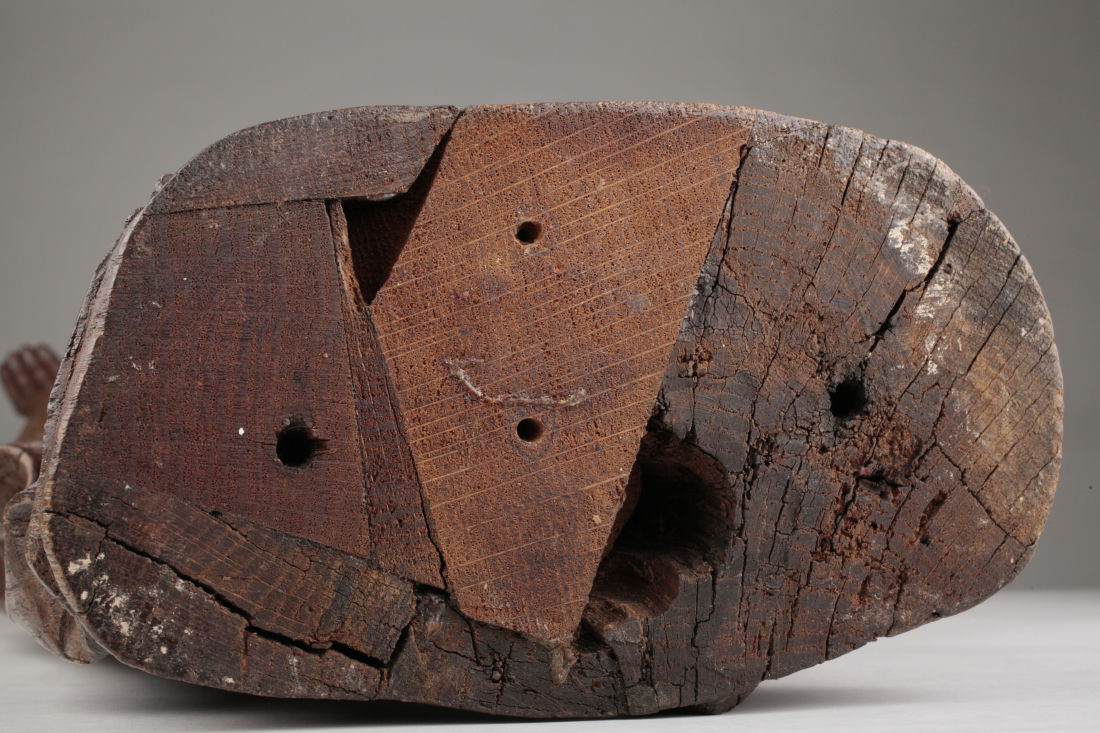
The sculpture shows extensive age-related cracking, shrinkage and historic restoration. The lower section has been partially cored and subsequently plugged with later wooden blocks, while the arms and hands show differing periods of restoration and replacement. The head also contains a drilled cavity closed with a fitted wooden plug, a feature of particular interest in the context of medieval devotional sculpture, where such cavities could serve structural, liturgical or reliquary purposes. The surface appears to have been stripped or refinished at some stage, with little or no surviving original polychromy visible.
Northern Europe, probably Lower Rhine or eastern Netherlands, late 15th/early 16th century style.
Carved oak.
Condition: extensive old splits, losses, repairs, replacements and later surface treatment consistent with considerable age and a long history of intervention.
Strong search keywords
Late Gothic Christ, Man of Sorrows, Christ Showing His Wounds, ostentatio vulnerum, carved oak Christ, Lower Rhine sculpture, Netherlandish Gothic sculpture, Flemish oak sculpture, Brabant sculpture, medieval devotional sculpture, Gothic religious carving, circa 1500 oak sculpture, reliquary cavity, carved wood Christ.
Dimensions: Width: 20.32 cm × Height: 57.15 cm × Depth: 12.7 cm
This carved oak figure of Christ belongs stylistically to the Northern European Late Gothic tradition, circa 1500–1530, with the closest working context in the Lower Rhine / eastern Netherlands. Its elongated physiognomy, strongly delineated eyes, linear hair and beard, angular drapery and frontal devotional presentation are consistent with sculpture from that region and period. More significantly, its construction closely parallels documented late-medieval oak sculpture.
Lucretia Goddard Kargere’s study of the Metropolitan Museum’s Kalkar-school Saint Roch is especially relevant. That sculpture was carved from a large oak log and exhibited retained pith, radial shrinkage cracking, hollowing or coring to reduce instability, and later replacement of failed areas with different wood. The present sculpture shows the same general technical pattern: substantial oak-log construction, partial coring, extensive longitudinal and radial cracking, losses at the base and later inserted wood blocks of visibly different character. Kargere also documents separately attached elements such as hands and other projections, providing an important technical context for the differing states of restoration visible in the present arms and hands.
A second highly relevant comparison is the technical study of the medieval wooden Saint from Nousiainen, which documented a deep drilled cavity in the head closed by a fitted wooden plug. CT examination showed that such cavities could originate as workshop features associated with handling during preparation and polychromy, while in some cases they were later used for the deposition of relic material. The present figure likewise has a deliberately drilled and plugged cranial cavity. Without radiographic examination its original purpose or contents cannot be established, but the feature is specifically documented in medieval devotional sculpture and is therefore technically significant.
Taken together, the sculpture presents a coherent group of features: large oak-log construction, partial coring, retained core wood, shrinkage cracking, later structural inserts, restored projecting elements and a plugged cranial cavity. None of these elements alone establishes a medieval date, but their convergence is substantially more meaningful than surface age alone and is consistent with the figure’s Late Gothic stylistic character. The two most relevant technical parallels are the documented woodworking practices of the Kalkar school and the constructional evidence examined in the Nousiainen medieval sculpture.
References
Lucretia Goddard Kargere, “The Kalkar School of Carving: Attribution of a Wooden Polychromed Sculpture, ” Metropolitan Museum Journal, Vol. 35, 2000.
Katri Vuola et al., “Medieval Wood Sculpture of an Unknown Saint from Nousiainen: From Materials to Meaning, ” Mirator, 19:1, 2018.
Condition report:
This sale is made without warranty whatsoever at the sole risk and peril of the buyer. ALL SALES ARE FINAL. Cette vente se fait sans aucune garantie, aux risques et périls de l\'acheteur. Toute vente est définitive. IT IS THE RESPONSIBILITY OF THE BUYER TO VERIFY THE CONDITION AND/OR AUTHENTICITY OF THE ITEM, EITHER IN PERSON DURING OUR VIEWING HOURS PRIOR TO AUCTION OR THROUGH REQUESTED CONDITION REPORTS. Although care is taken to photograph and describe the item, absence of a condition report does not imply perfect condition. All bids are final and are subject to our terms and conditions.
Share this lot: