
Antiques, Decorative and Fine Arts Auction

Antiques, Decorative and Fine Arts Auction
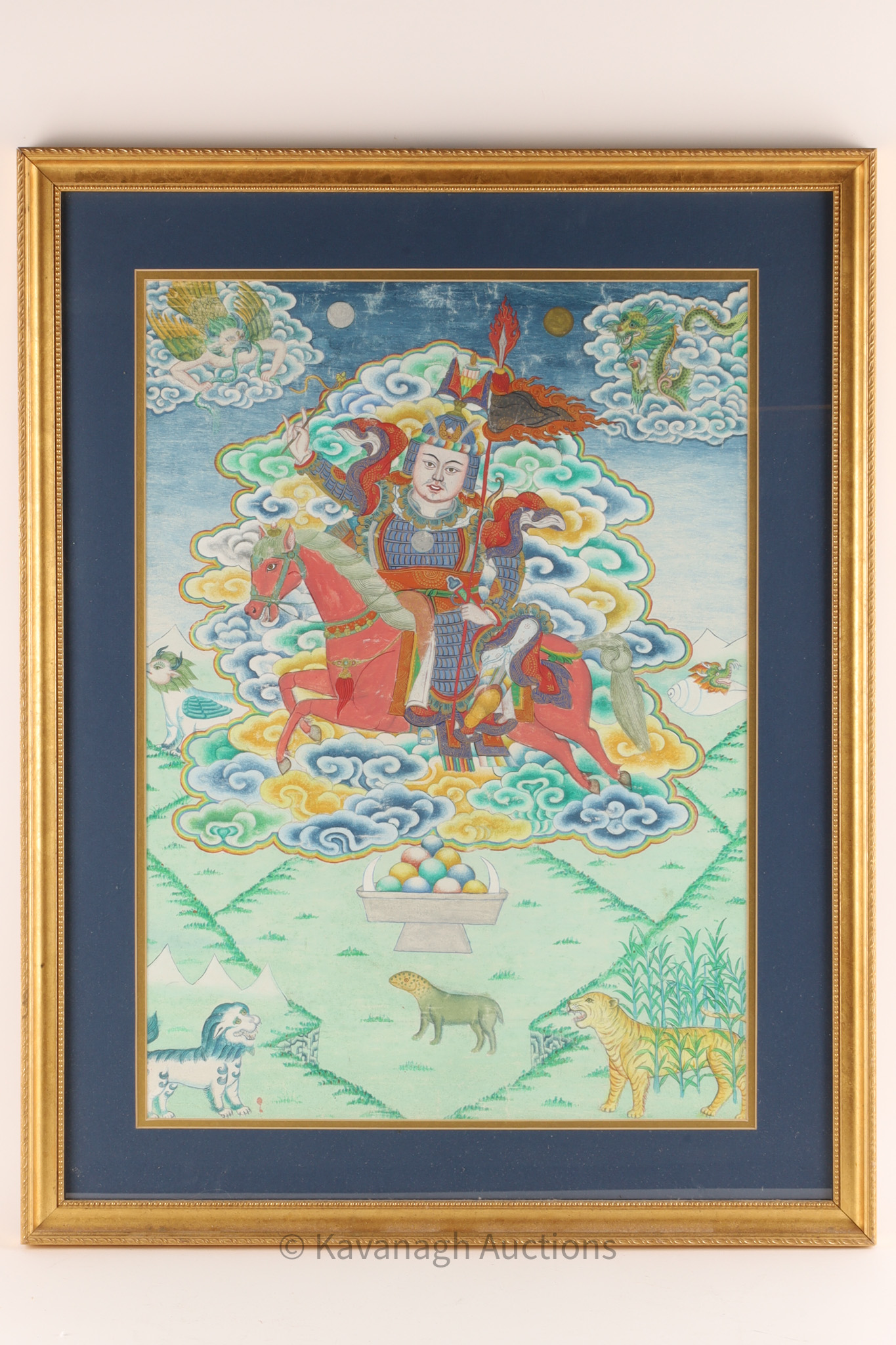
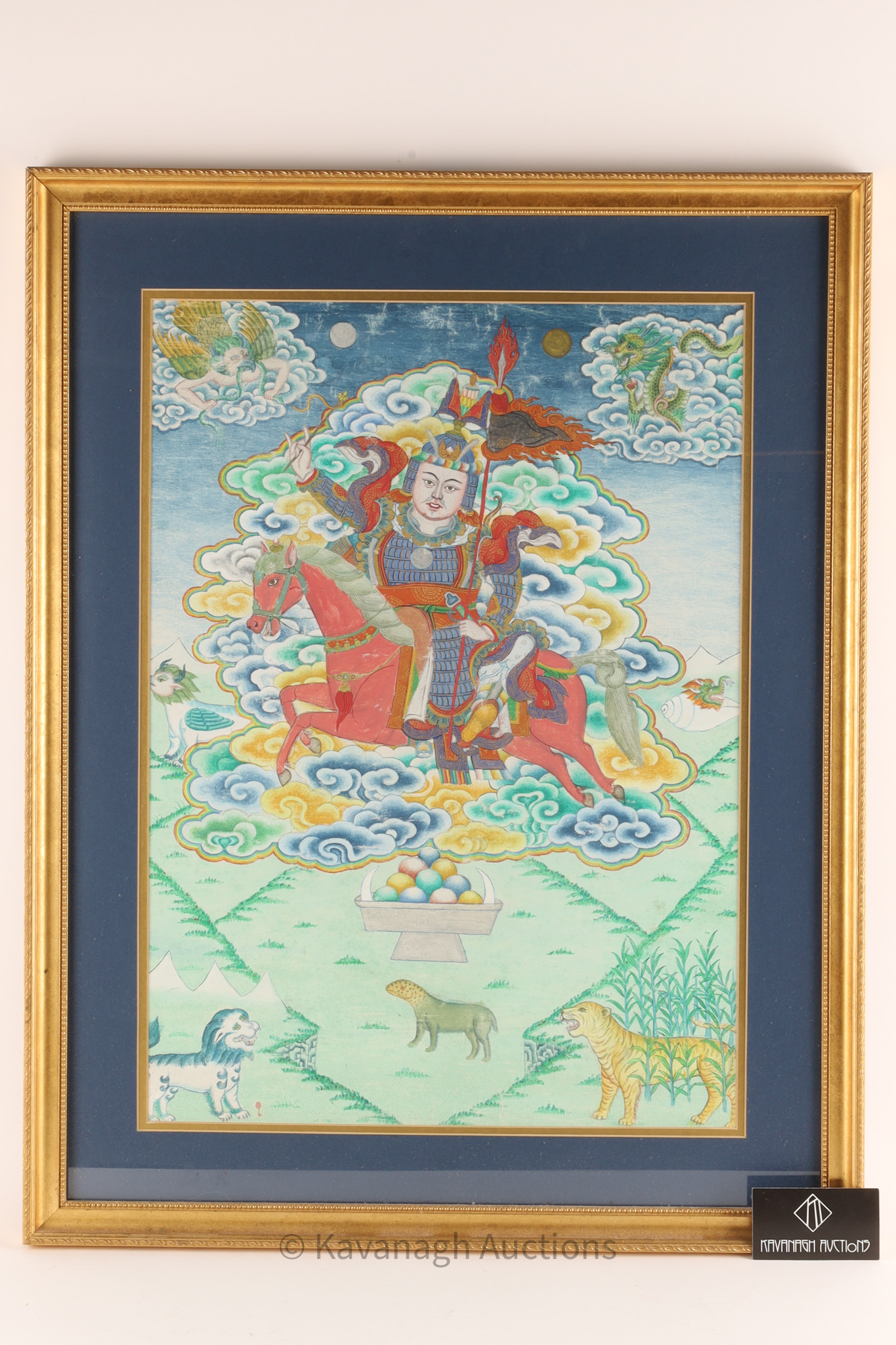
Lot 110: Antique Mongolian Thangka of King Gesar, 19th C
2026-04-25T15:00:00Z
Start price: CAD $50
Lot 110:
Antique Mongolian Thangka of King Gesar, 19th C
Description
A Mongolian Thangka of King Gesar: Use, Setting, and Meaning in a 19th-Century Aristocratic Context
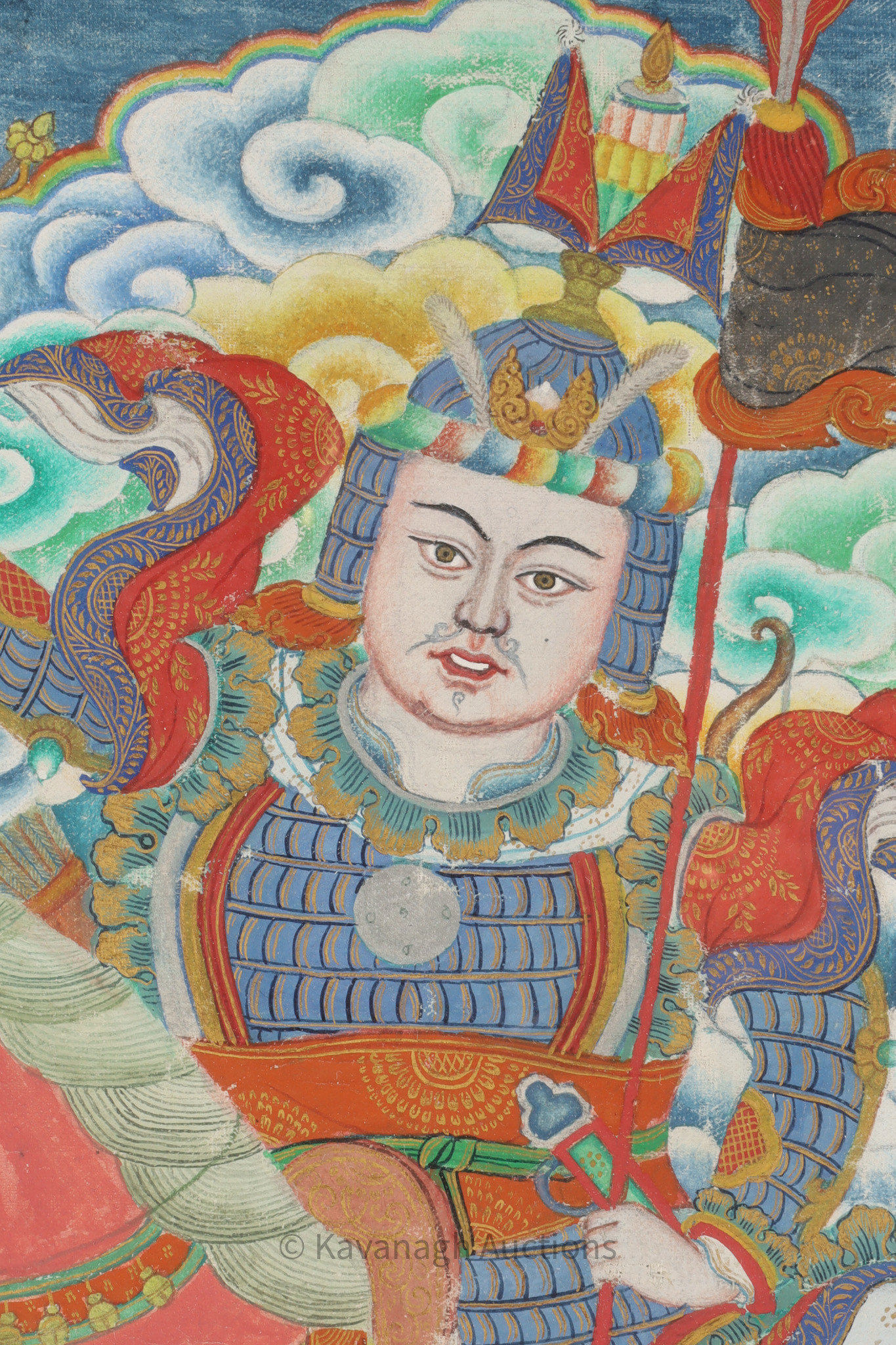
This 19th-century Mongolian thangka (Tibetan: ཐང་ཀ་, thang ka) presents the mounted sovereign identified with King Gesar (Tibetan: གེ་སར་; Mongolian: Гэсэр; Chinese: 格萨尔王), the epic ruler of Ling. The painting does not narrate a specific episode from the Gesar epic. Instead, it renders the hero in archetypal form: armored, composed, cosmically sanctioned, and positioned between heaven and earth. The work belongs to a devotional tradition, yet its visual language is unmistakably one of sovereignty.
To understand where and why such an image would have been displayed, one must situate it within 19th-century Mongolian religious and social practice, particularly in aristocratic households.
⸻
Iconographic Structure and Sovereignty
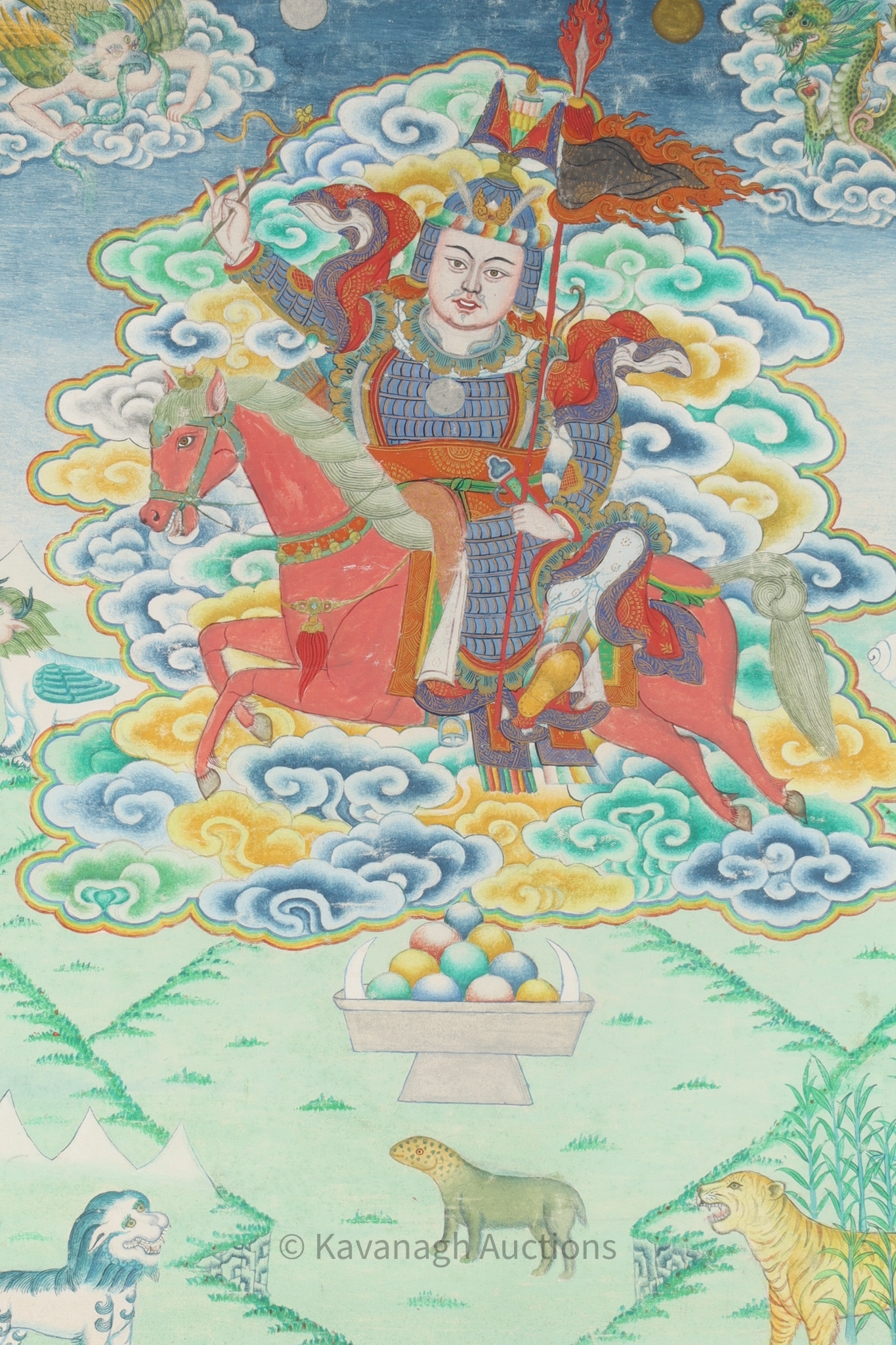
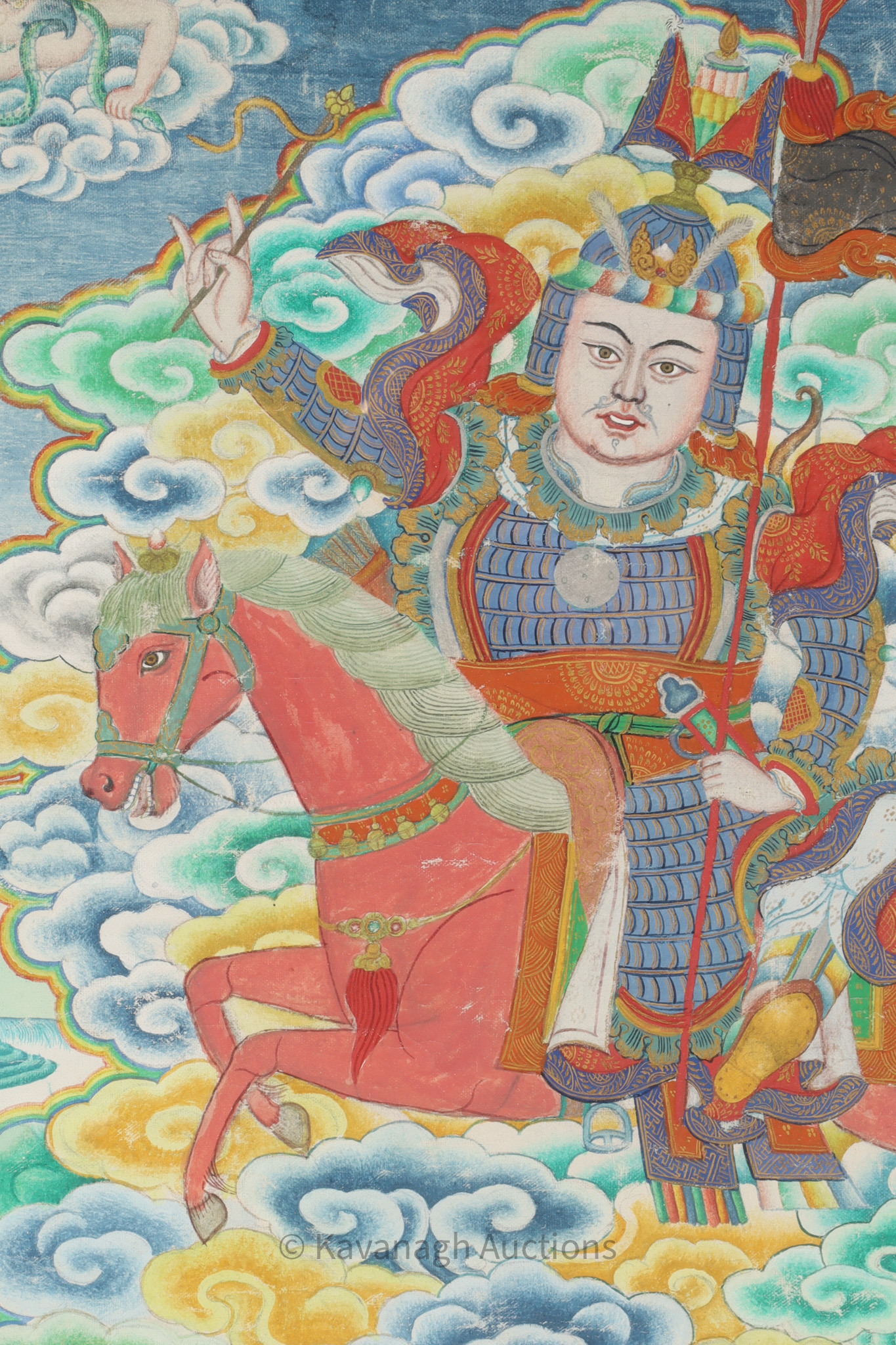
At the center rides the mounted ruler, clad in lamellar armor (Sanskrit: kavaca; Tibetan: གོ་ཁྲབ་; Mongolian: хуяг). The armor signifies disciplined martial authority rather than wrathful tantric force. The absence of skull crowns, flame halos, or trampling enemies distinguishes the figure from formal dharmapāla protectors such as Mahākāla (Sanskrit: महाकाल) or Begtse (Tibetan: བེག་ཙེ་). The expression is controlled and composed. This is sovereignty stabilized, not violence enacted.
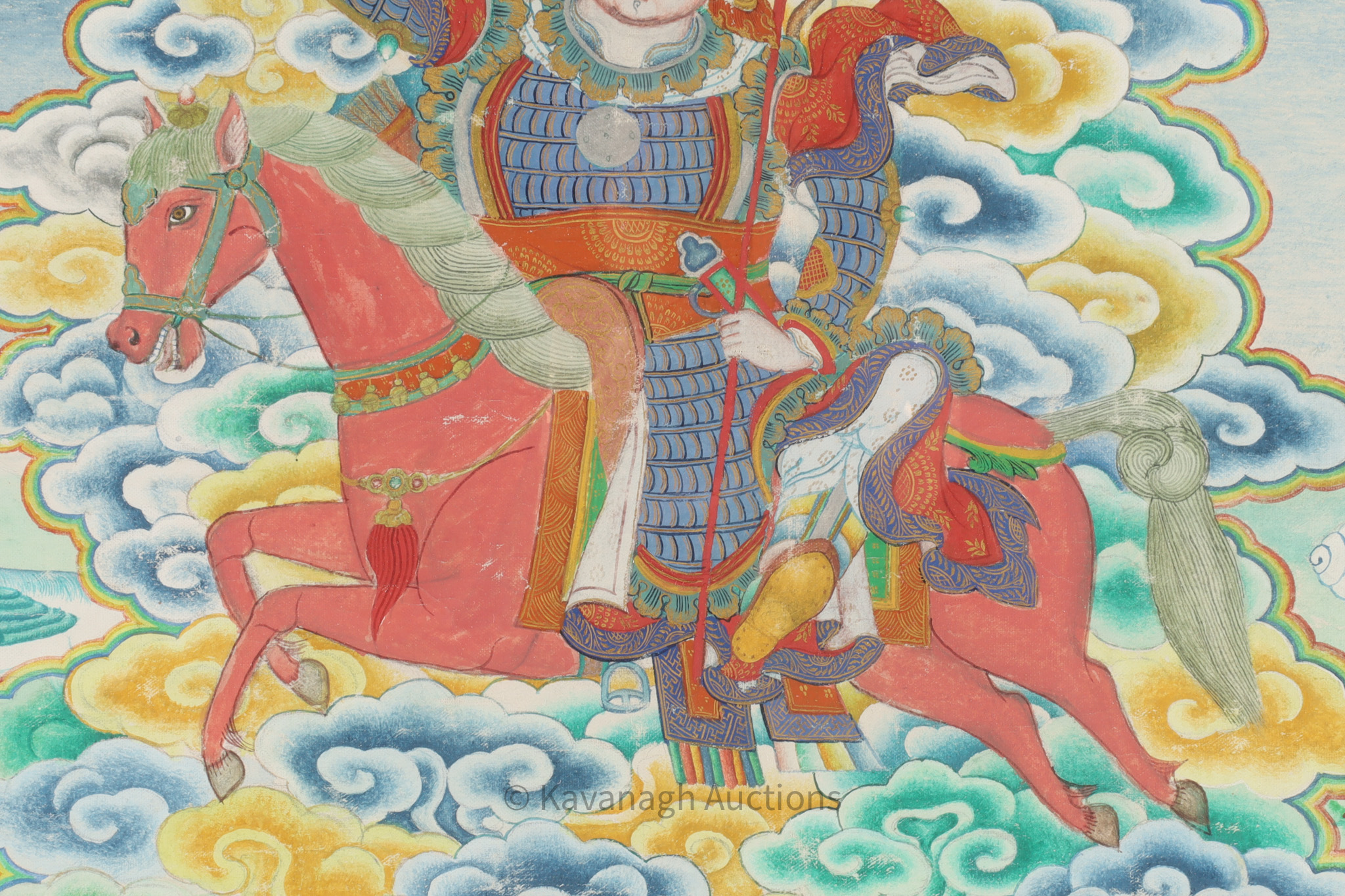
The ruler rides a red horse (Sanskrit: aśva; Tibetan: རྟ་; Mongolian: морь) facing left. In Himalayan compositional logic, direction carries symbolic weight. A left-facing orientation often suggests protection and preservation of established order rather than outward conquest. The horse is supported by clouds rather than grounded on terrain, placing the figure within a liminal celestial sphere.
In his hand he holds a vertical victory banner (Sanskrit: dhvaja; Tibetan: རྒྱལ་མཚན་; Mongolian: ялалтын туг; Chinese: 幢). The banner is upright, not wind-swept, communicating authority already secured. The composition thus depicts kingship at equilibrium.
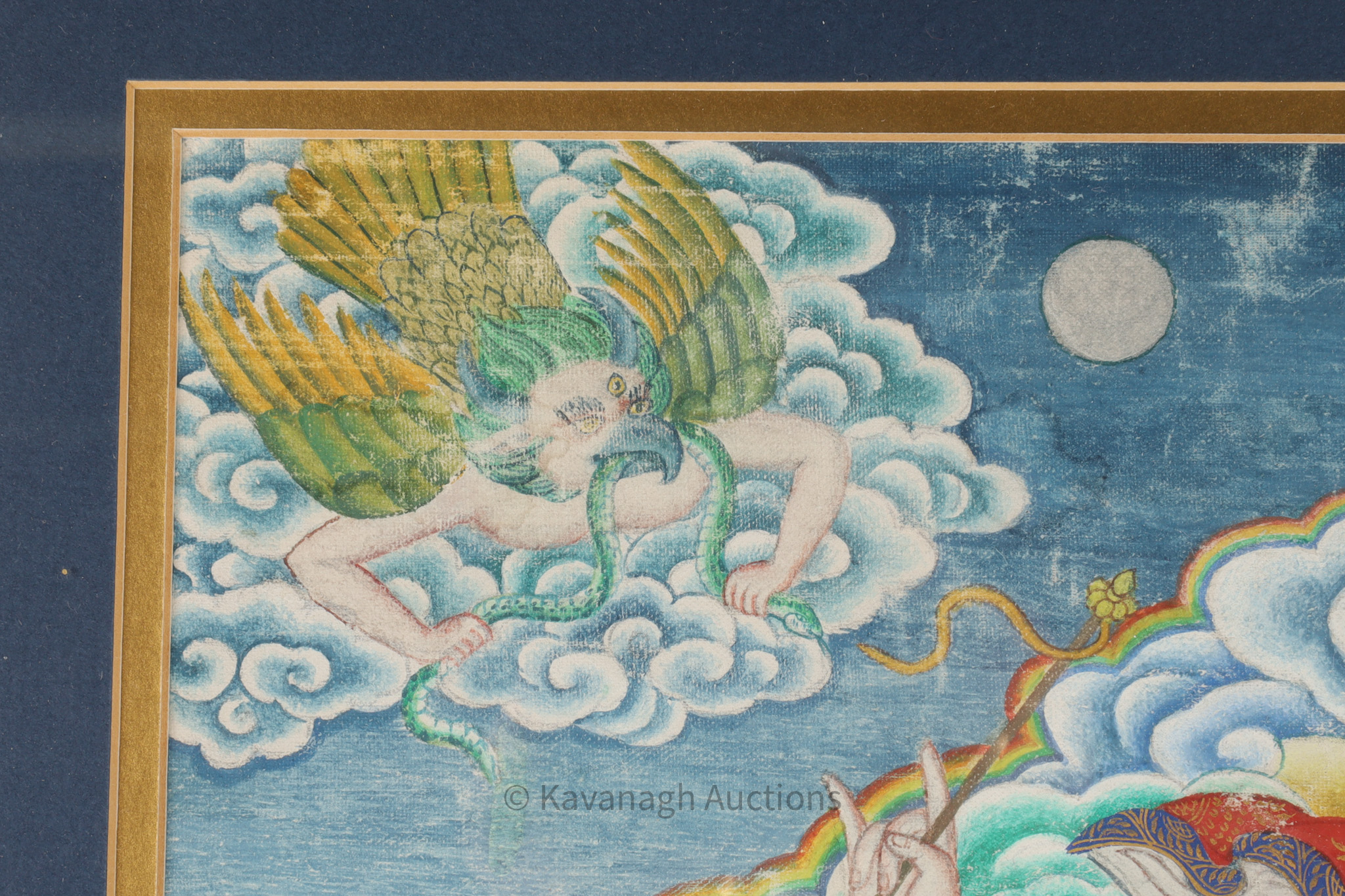
Above the sovereign appear a dragon (Sanskrit: nāga; Tibetan: ཀླུ་; Mongolian: луу; Chinese: 龙) and a garuda (Sanskrit: garuḍa; Tibetan: ཁྱུང་; Mongolian: хангарьд). These sky beings represent elemental polarity—water and air, depth and height. Their presence signals celestial acknowledgment rather than adversarial tension. The sun and moon (Sanskrit: sūrya and candra; Tibetan: ཉི་མ་ and ཟླ་བ་; Mongolian: нар and сар) crown the scene, completing the cosmological register.
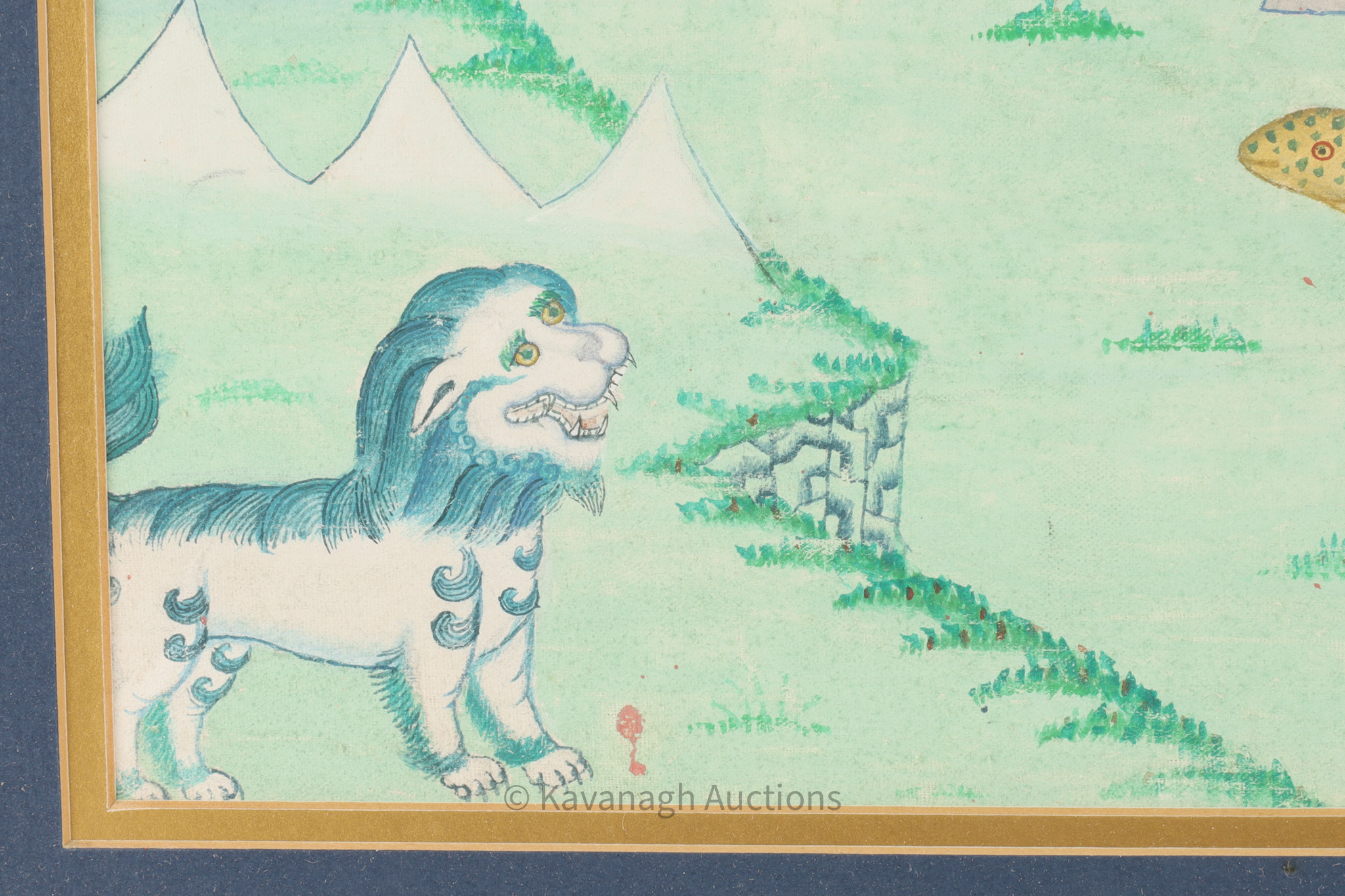
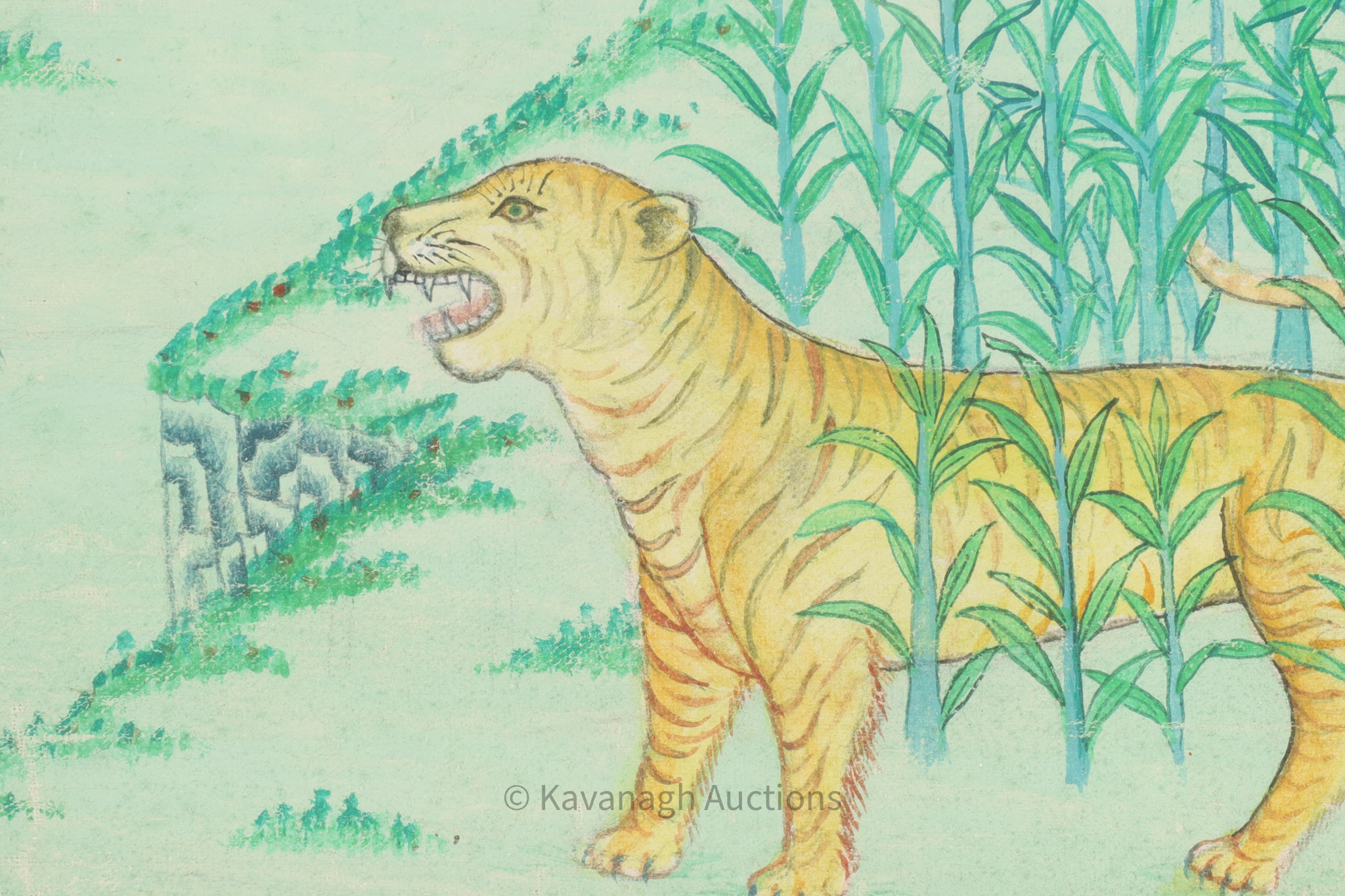
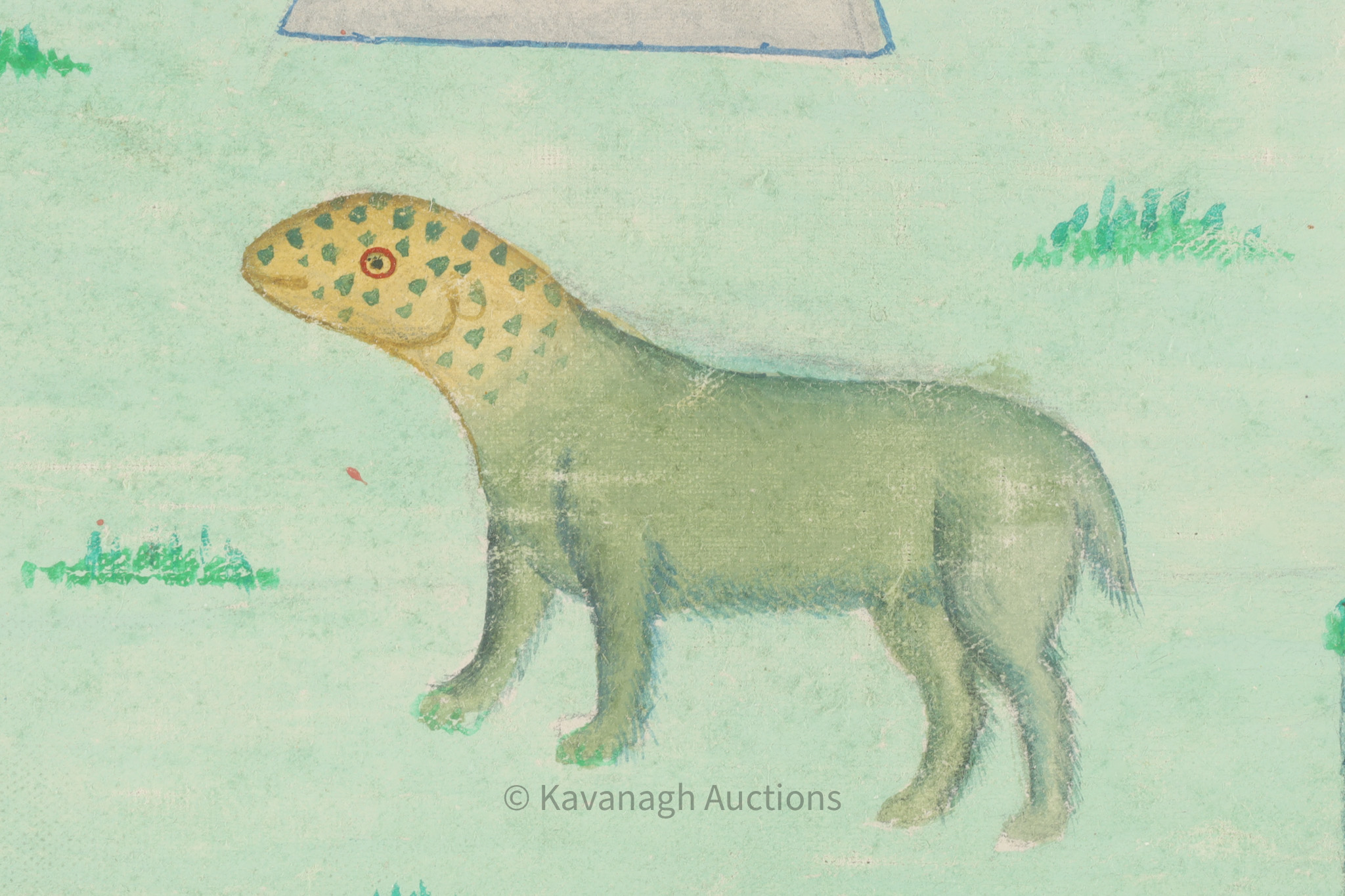
Below, a symmetrical band of animals grounds the image in terrestrial authority. The snow lion (Sanskrit: siṃha; Tibetan: སེང་གེ་) represents fearless sovereignty; the tiger (Sanskrit: vyāghra; Tibetan: སྟག་) signals territorial strength; a horned mythic beast evokes frontier power. Together they form a terrestrial counterpart to the celestial upper register.
Structurally, the thangka forms a vertical axis:
Heaven — dragon, garuda, sun, moon
↓
Mediator — mounted sovereign
↓
Earth — animal band
The ruler stands at the pivot of this axis, functioning as mediator between cosmic mandate and terrestrial order.
⸻
Placement in 19th-Century Mongolia
The question is not whether the image encodes power—it clearly does—but where such imagery would have functioned socially.
In 19th-century Mongolia, particularly in Khalkha regions under Qing suzerainty, aristocratic households maintained domestic altars within the ger (yurt). These altars typically included:
• Images of Śākyamuni Buddha
• Tsongkhapa (Tibetan: ཙོང་ཁ་པ་)
• Protective deities
• Occasionally epic or cultural heroes
Gesar occupied a unique position in Mongolian religious life. He was neither solely an epic figure nor a strictly monastic deity. He represented heroic kingship, martial virtue, and protective sovereignty. In aristocratic contexts, displaying Gesar affirmed alignment with an archetype of rightful rule.
Such an image would most plausibly have hung in a noble household shrine space, visible to family members and guests. It functioned as a declaration of identity and protection. It did not serve as imperial propaganda in the modern sense. There are no explicit dynastic inscriptions, no identifiable court seals, and no heraldic clan emblems (tamga, Mongolian: тамга) incorporated into the composition. Instead, the work operates at the level of political theology.
In Mongolian society, sovereignty and cosmology were intertwined. Authority was legitimate insofar as it harmonized heaven and earth. A noble family displaying Gesar signaled participation in that order: disciplined power under celestial sanction.
⸻
Political Theology, Not Propaganda
The painting communicates power, but not in the narrow sense of state patriotism. It encodes the model of the righteous ruler—conceptually analogous to the Sanskrit cakravartin—whose authority rests upon cosmic balance and moral discipline.
In a domestic aristocratic setting, this image would have functioned simultaneously as:
• A devotional protector
• A statement of martial virtue
• An affirmation of legitimate authority
• A cultural alignment with epic kingship
It is political in language, but devotional in placement. It proclaims that the household stands under the paradigm of ordered sovereignty, where martial force is restrained by cosmic law.
The thangka therefore embodies stabilized power. Not conquest in progress, but order secured. Not propaganda of a regime, but participation in a cosmological model of righteous rule.
In the 19th-century Mongolian ger of a noble family, such an image would have been both blessing and declaration: an assertion that authority, lineage, and protection were harmonized under heaven.
Details
Type: Thangka painting (framed)
Subject: King Gesar
Medium: Pigment on cloth or paper (likely gouache/mineral pigments; not examined out of frame)
Dimensions:
Frame: 23 x 30 in
Sight: 16 x 23 in
Frame: Gilt frame with blue mat
Origin: Mongolia
Condition:
Appears well preserved under glass
Minor frame wear
Not examined out of frame
Share this lot: