Antiques, Decorative and Fine Arts Auction
Lot 332:
Ancient Egyptian Painted Wood Fragment of Wadjet, ex-Mariette Collection
Description
Ancient Egyptian Painted Wood Fragment Depicting the Cobra Goddess Wadjet, Formerly in the Collection of Auguste Mariette, Late Period, ca. 664-332 BCE
:
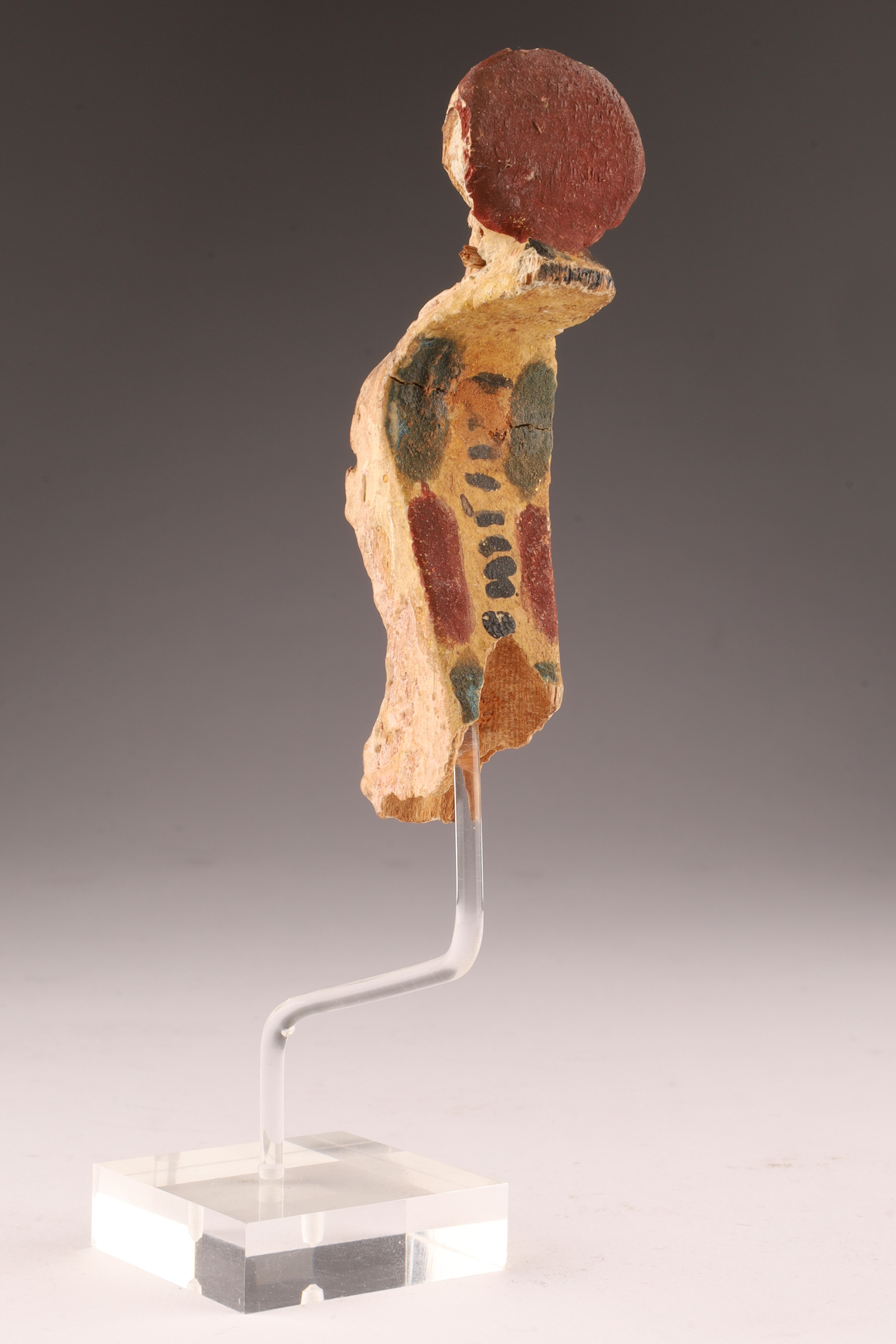
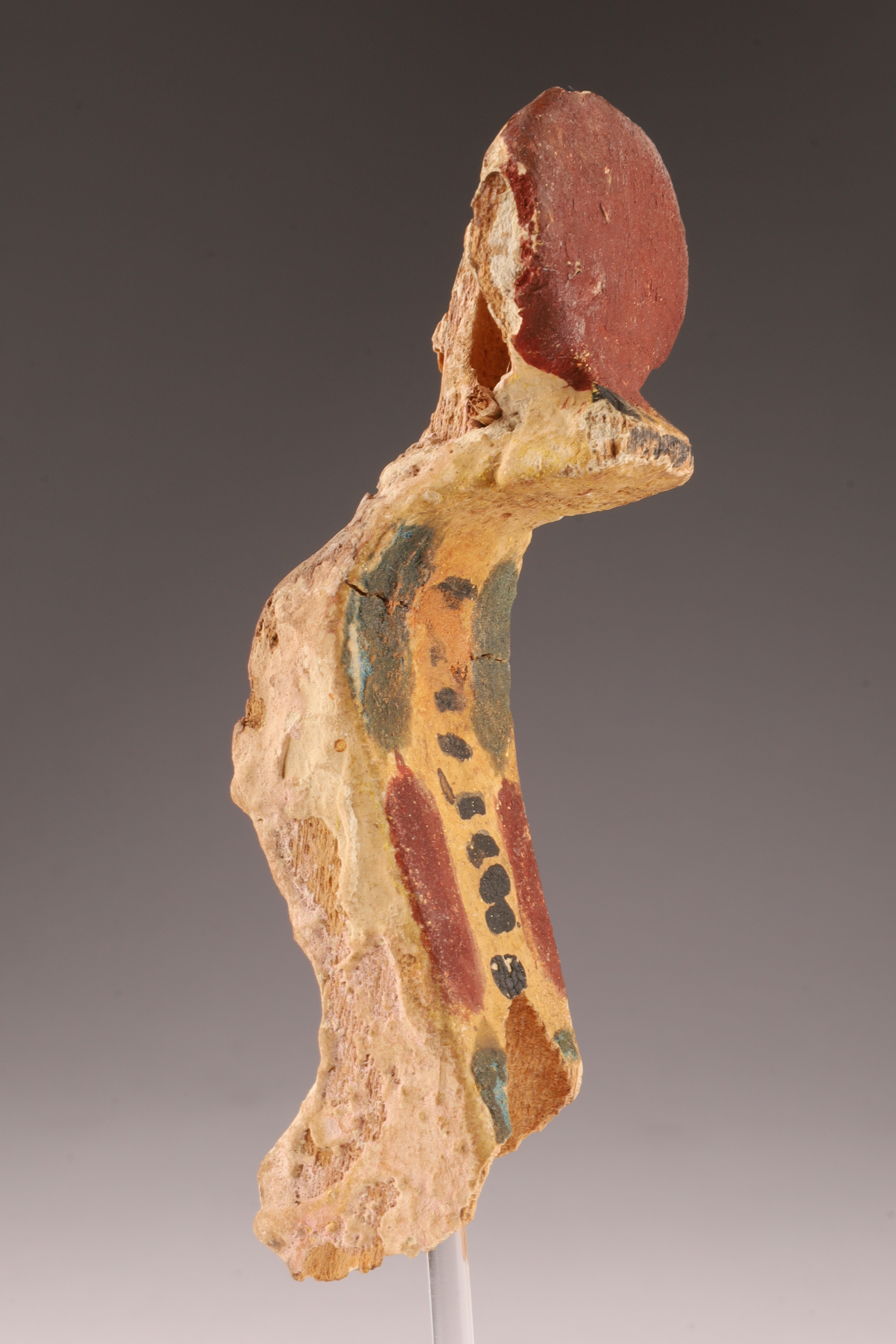
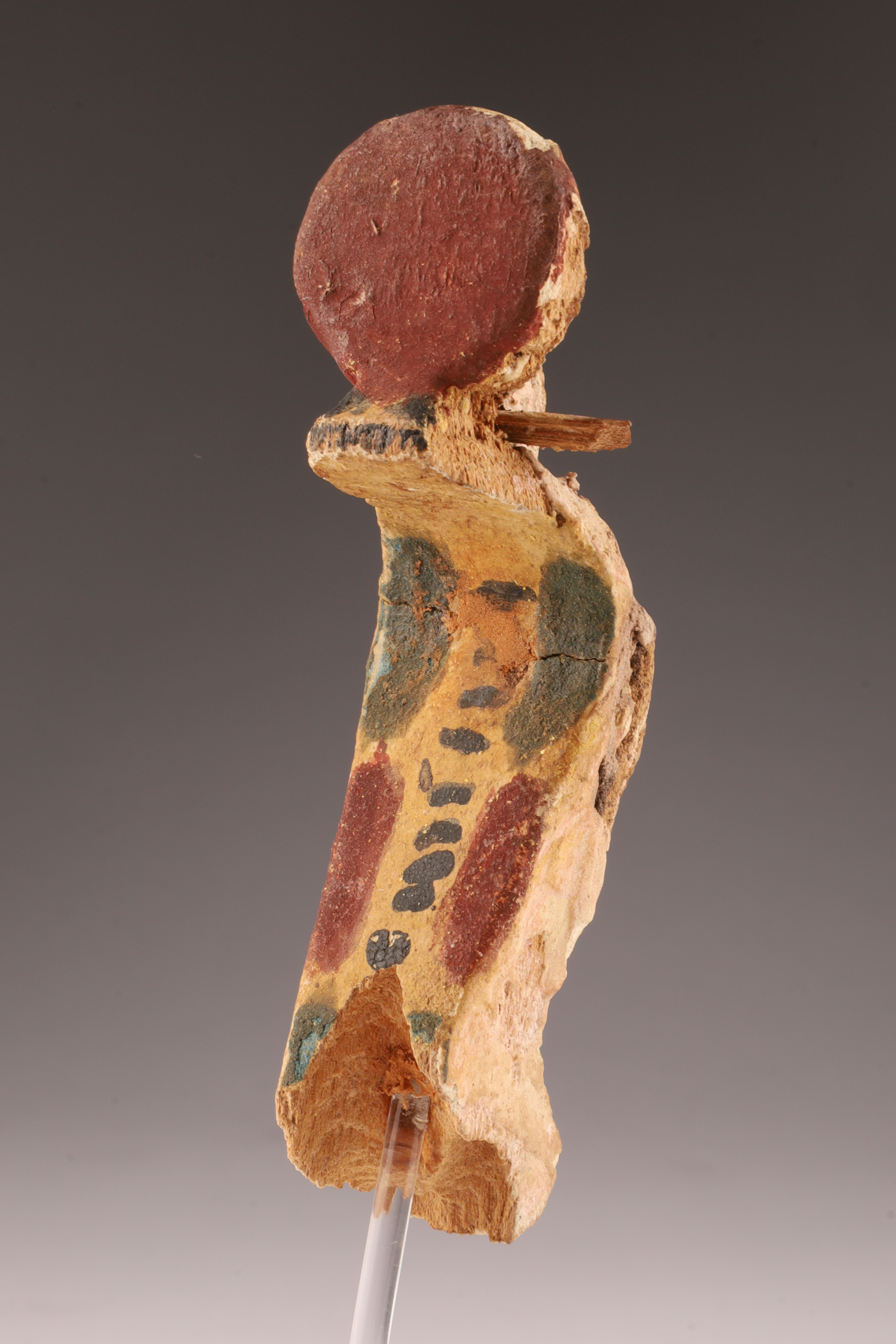
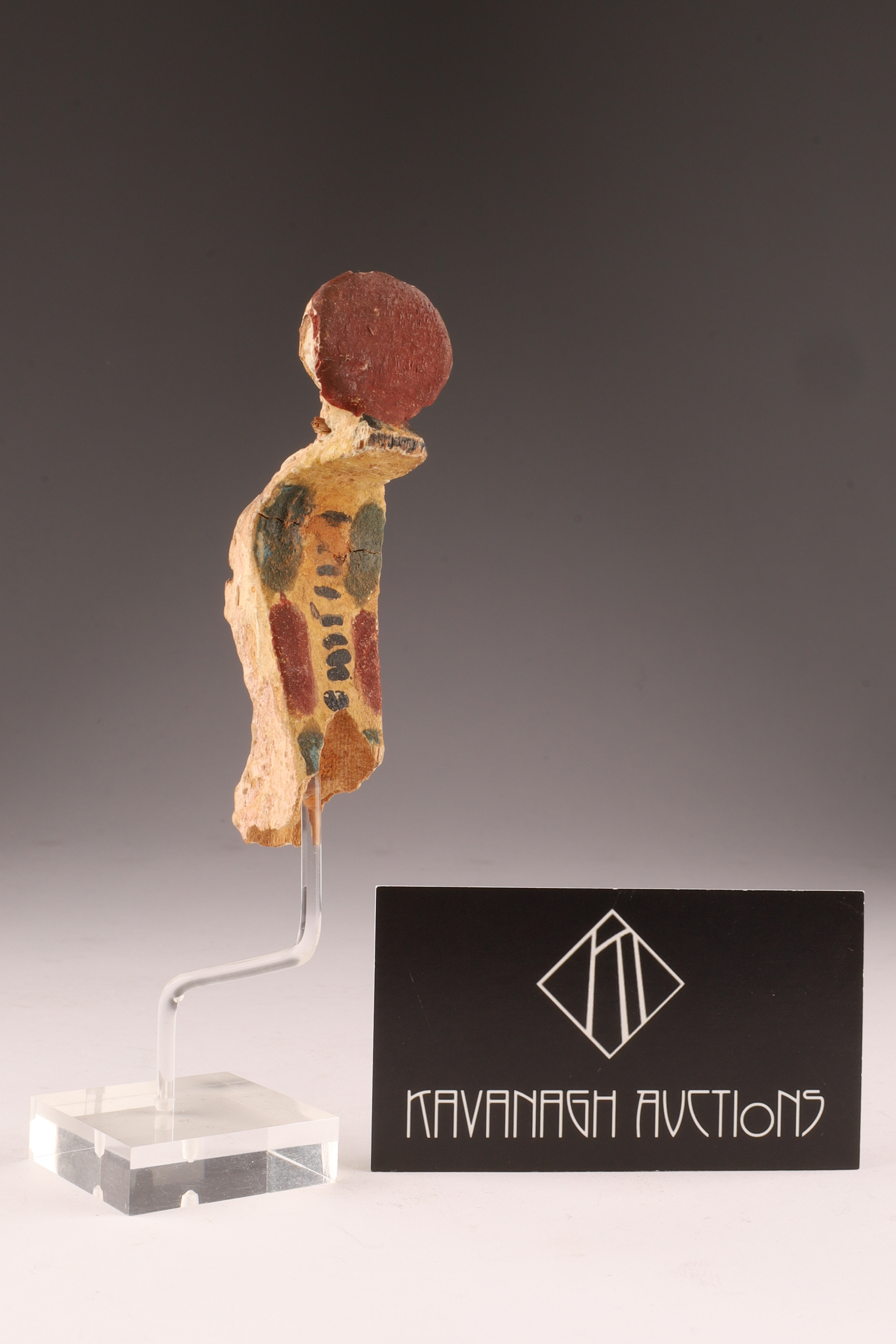
A rare and evocative ancient Egyptian polychrome wood fragment depicting the uraeus cobra crowned with the solar disk, probably representing the goddess Wadjet, divine protectress of Lower Egypt and personification of the Eye of Ra. The figure retains striking traces of its original polychromy, deep red for the solar disk, alternating green and ochre bands on the serpent’s body, and black hieroglyphic markings, applied over gesso on carved wood.
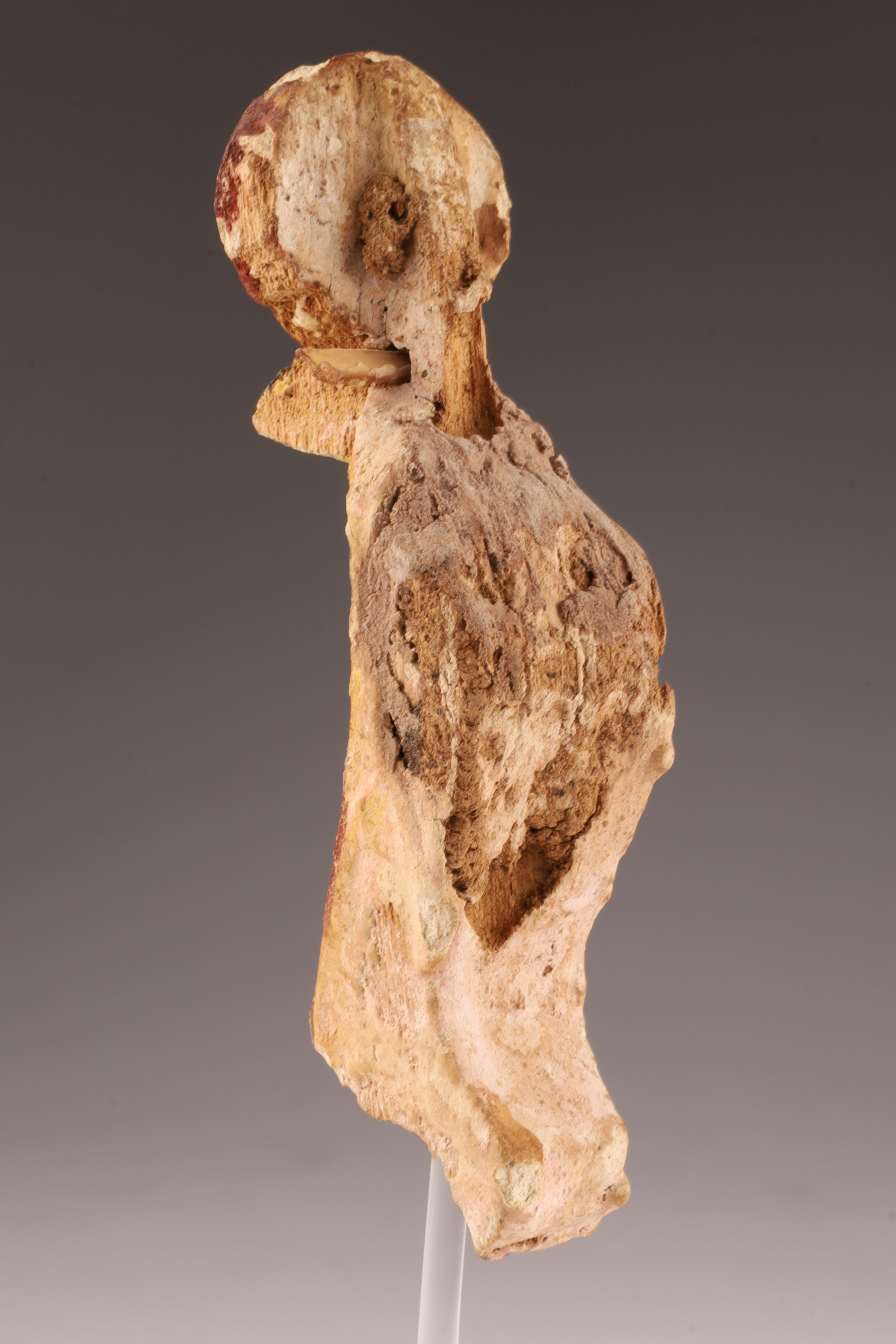
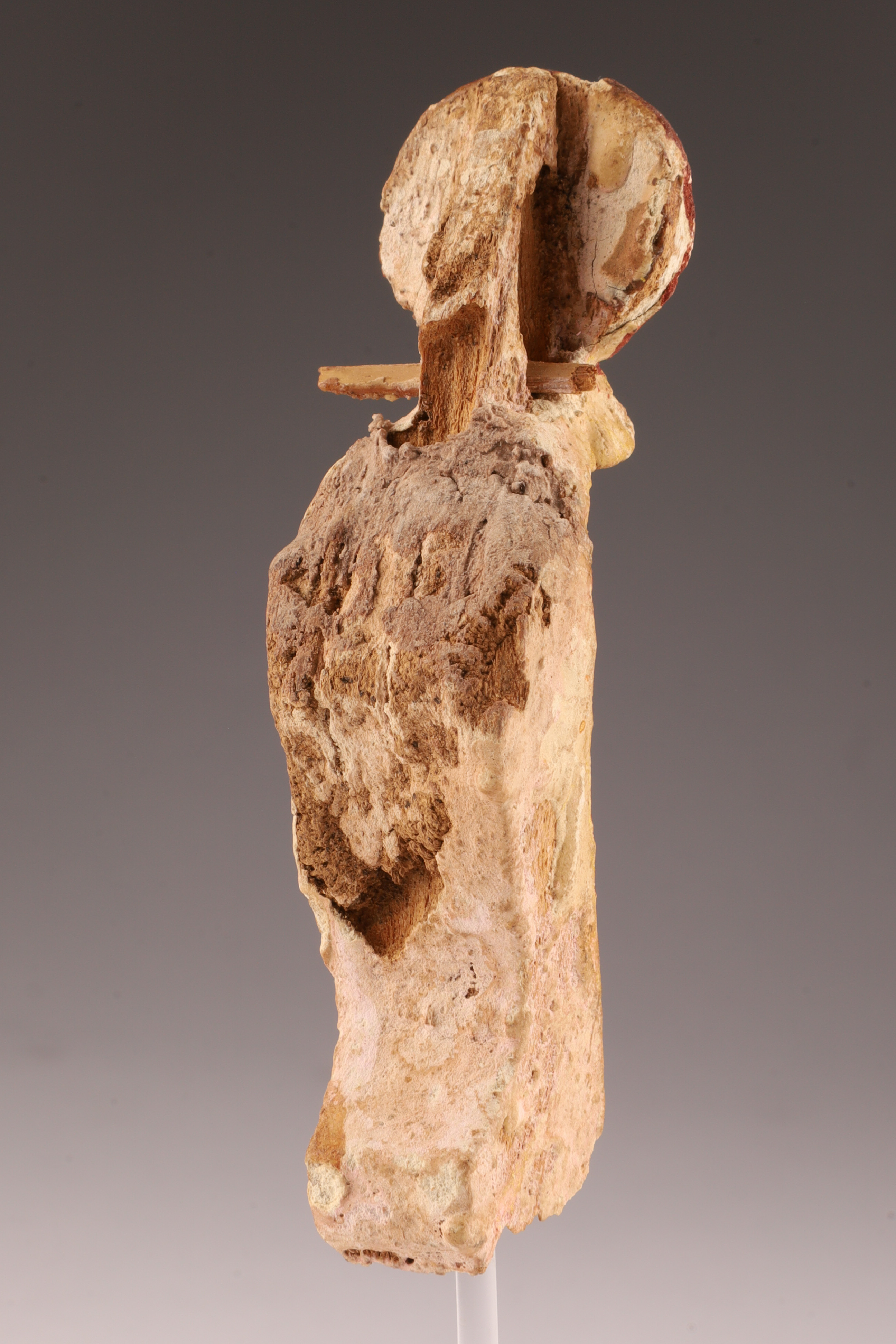
The reverse shows age-worn surface encrustation typical of ancient burial conditions. Most likely a fragment from a painted wooden coffin (sarcophagus) or small shrine, the piece once formed part of the protective iconography that surrounded the deceased, invoking Wadjet’s power as guardian of resurrection and royal renewal. Mounted on a clear acrylic display stand.
Height: 10 cm (fragment only); 12 cm including stand
Material: Carved wood with gesso and original polychrome pigment
Date: Late Period, ca. 664-332 BCE
Condition: Fragmentary with losses and pigment flaking; remnants of red, green, and black pigment visible; stabilized and mounted on modern stand
Provenance: Purportedly from the collection of Auguste Mariette (1821-1881), the celebrated French Egyptologist and founder of the Cairo Museum; thence by descent in a Boulogne-sur-Mer family (France), acquired prior to 1970.
Importance:
This fragment is not only a vivid survival of ancient Egyptian painted wood sculpture but also carries distinguished provenance. Auguste Mariette—one of the founders of Egyptology—discovered the Serapeum at Saqqara and was instrumental in creating the Cairo Museum. Few objects today can be traced to his personal collection, most of which was dispersed among families in his native Boulogne-sur-Mer.
The subject, a painted wooden uraeus crowned with the solar disk, representing the goddess Wadjet, is rarely preserved in portable form. While uraei in stone or faience are well attested, wooden examples with intact polychromy are exceptionally scarce. This piece offers a unique insight into the colour, symbolism, and artistry of Egyptian funerary decoration, uniting vivid imagery with world-class provenance.
A rare ancient Egyptian polychrome wood fragment depicting the uraeus cobra crowned with the solar disk, probably representing the goddess Wadjet, divine protectress of Lower Egypt and personification of the Eye of Ra. The figure retains striking traces of its original polychromy—deep red for the solar disk, alternating green and ochre bands on the serpent’s body, and black hieroglyphic markings—applied over gesso on carved wood.
The reverse shows age-worn surface encrustation typical of ancient burial conditions. Most likely a fragment from a painted wooden coffin or shrine, the piece once formed part of the protective iconography that surrounded the deceased, invoking Wadjet’s power as guardian of resurrection and royal renewal.
Condition: Fragmentary with losses and pigment flaking; remnants of red, green, and black pigment visible; stabilized and mounted on modern stand.
Provenance: Formerly in the collection of Auguste Mariette (1821-1881), founder of the Cairo Museum; thence by descent in a Boulogne-sur-Mer family (France), acquired prior to 1970.
Importance: A vivid survival of ancient Egyptian painted wood sculpture with exceptional provenance linking it to one of the founders of modern Egyptology.
Share this lot: